

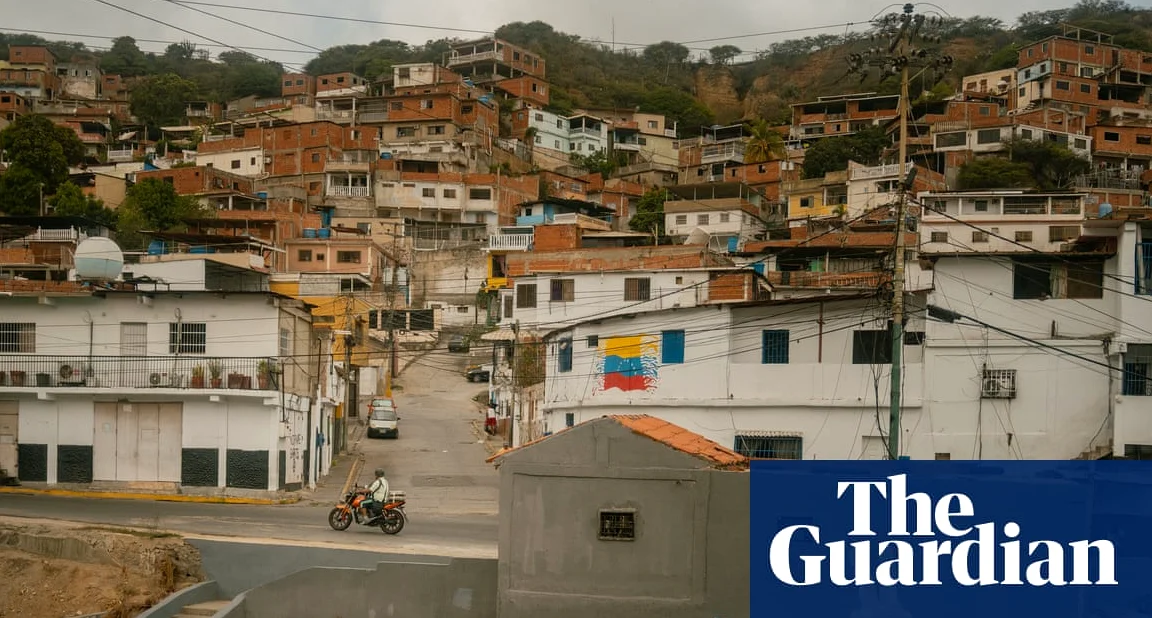
Venezuela’s northern coast was jolted by explosions and gunfire on January 3 as U.S. forces executed a swift military operation to capture President Nicolás Maduro, according to The Guardian and BBC. Residents of the Urbanización Rómulo Gallegos project in Catia La Mar described the chaos that unfolded just before 2 a.m., with air-to-surface missiles striking defense systems and Delta Force operatives sweeping in by helicopter. Elizabeth Herrera, a local resident, recalled the deafening silence followed by the sound of gunfire: “Tah-tah-tah-tah-tah-po-po-tah-tah-tah.”
The Swift and Shattering Involvement
“They were 10 minutes that felt like an interminable hour,” Herrera said, describing the invasion that targeted military installations on a nearby hill. Herrera’s 85-year-old neighbor, Jesucita, initially thought the destruction was due to an earthquake. Herrera lost two elderly neighbors in the attack. Her autistic son, meanwhile, struggled with the trauma of the event, asking, “Mummy, are we the baddies? Are Venezuelans the baddies? Are they going to kill us?”
The Capture and Its Implications
U.S. President Donald Trump announced that Maduro had been captured and flown out of the country, according to BBC. The president, who once wielded immense power by controlling the judiciary, military, and electoral system, was seen in a grey tracksuit with his hands bound and eyes blindfolded during his transport to the U.S. The U.S. has long accused Maduro of leading a criminal trafficking organization, which he denies. The U.S. designated the “Cartel de los Soles”—a group of elites in Venezuela,as a foreign terrorist organization, alleging they coordinate illegal activities like drug trafficking and illegal mining.
Maduro now faces U.S. trial on weapons and drugs charges. The U.S. operation, which involved air and ground forces, marked a rare instance of direct military intervention in a foreign government. The move has raised questions about the future of Venezuela’s political setting. The country’s government has now woken up from any illusion that U.S. military intervention or government change was just a distant threat.
Enduring Questions and Uncertainty
Despite the dramatic shift in power, many Venezuelans feel the situation has changed little. Herrera’s husband speculated whether the attack was a U.S. invasion or coup, adding, “I don’t believe ‘Papá Trump’ would have dared to invade.” The operation, however, was not an invasion but a targeted strike to remove Maduro from power. The U.S. may want many of its adversaries removed from power, but it rarely resorts to direct military action to do so, according to BBC. The future of Venezuela remains uncertain, with no clear indication of who will step into the power vacuum left by Maduro’s sudden removal.
For years, Maduro’s government has been accused of human rights abuses. In 2020, United Nations investigators stated the government had committed “egregious violations” amounting to crimes against humanity, including extrajudicial killings, torture, violence, and disappearances. These allegations implicated Maduro and other top officials. The recent U.S. operation is the latest chapter in a long-standing conflict that has left many Venezuelans grappling with the reality of their country’s political instability.






Comments
No comments yet
Be the first to share your thoughts