

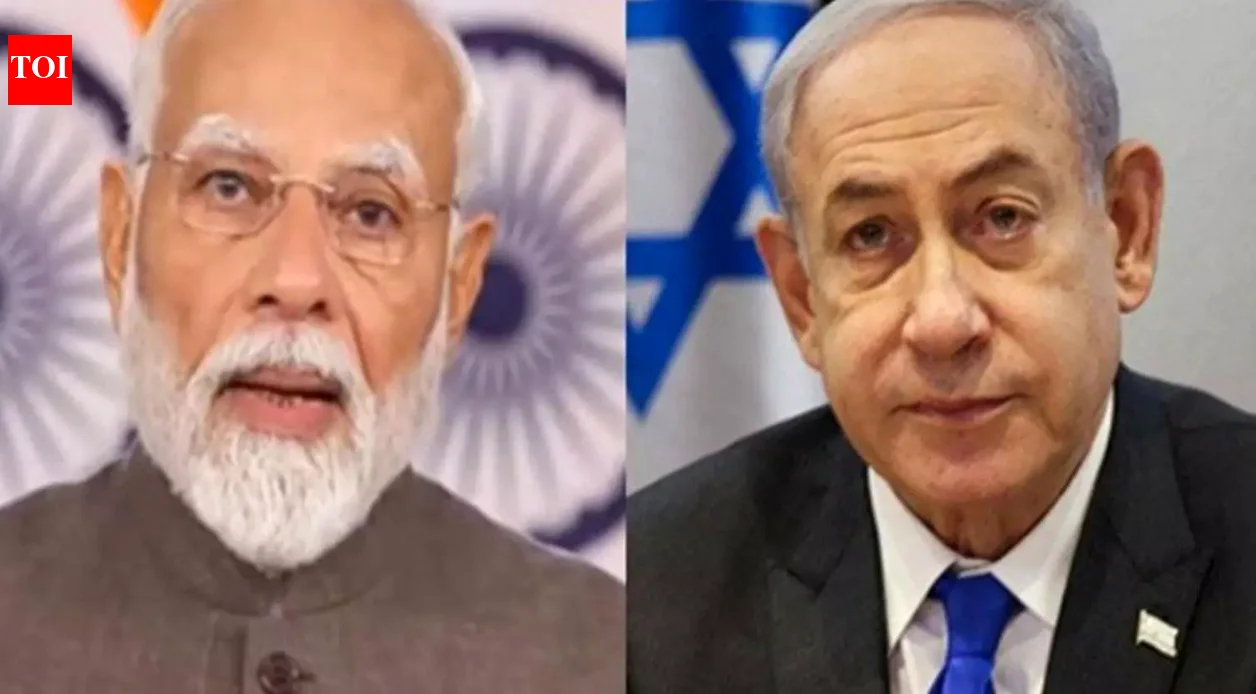
Israeli Prime Minister Benjamin Netanyahu described the growing relationship between Israel and India as an ‘axis of nations committed to stability and progress’ during a Cabinet meeting on Monday, as he prepared for the visit of Indian Prime Minister Narendra Modi later this week.
Netanyahu made the comments during the opening of his Cabinet meeting, highlighting the strategic partnership between the two countries in innovation, security, and shared goals. He praised Modi, calling him a ‘dear friend’ and emphasizing the historic significance of the upcoming visit.
“The bond between Israel and India is a powerful alliance between two global leaders,” Netanyahu said in a post on X. “We are partners in innovation, security, and a shared strategic vision. Together, we are building an axis of nations committed to stability and progress.”
Netanyahu also noted that the partnership between Israel and India is expanding, with cooperation spanning areas such as artificial intelligence and regional security. Earlier this week, he praised India’s rising global influence and the strong ties between New Delhi and Tel Aviv.
On Sunday, Netanyahu said Modi’s visit would express the ‘special relationship’ between Israel and India, as well as between himself and the Indian leader. He described the visit as a culmination of the growing diplomatic ties between the two nations.
Looking ahead, Netanyahu outlined a vision for a regional network of alliances, which he called a ‘hexagon’ encompassing India, Arab and African nations, Mediterranean countries like Greece and Cyprus, and select Asian nations. He plans to present the framework in more detail in the future.
This will be Modi’s second visit to Israel, following his landmark 2017 trip, which made him the first Indian prime minister to visit the country. The visit comes amid developments linked to the Board of Peace, an initiative stemming from former U.S. President Donald Trump’s 20-point Gaza ceasefire plan endorsed by the UN Security Council.
The Board of Peace, which held its first meeting on February 19, has seen around 35 countries commit to join, with about 60 invited. Trump has suggested the body could eventually take on some functions currently managed by the United Nations.




Comments
No comments yet
Be the first to share your thoughts