

 The Guardian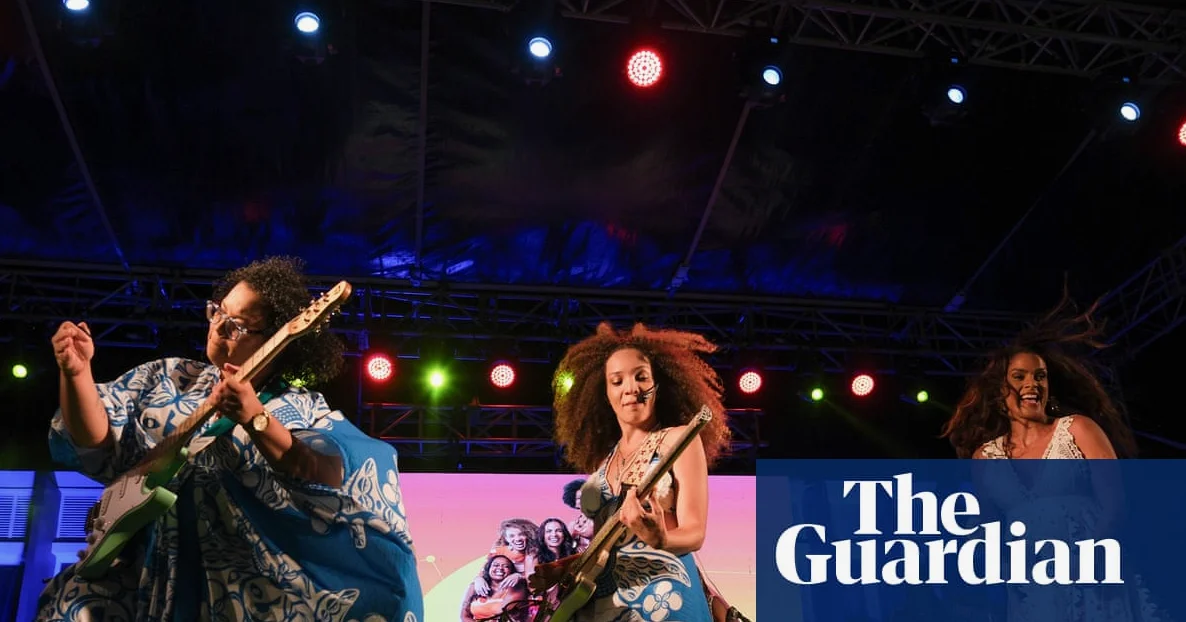
Last July. Nigerian singer-songwriter Fave found herself in a viral situation when an unauthorized AI choir was added to one of her tracks, turning it into an internet sensation. To manage the situation. She quickly released a remix incorporating the elements into her official discography.
Legal Vulnerabilities and AI Challenges
Oyinkansola Fawehinmi, a Lagos-based entertainment lawyer, praised Fave’s response as “smart and very business aware,” noting that she “essentially reclaimed the ‘AI version’ and released it as her own official expression.” Many African music markets are considered particularly vulnerable to music due to weak intellectual property laws.
South Africa recently withdrew its national AI policy draft after it was revealed that the document itself contained citations. This highlights growing concerns over the accuracy and integrity of content across various sectors.
AI in Music: Cape Verde’s Approach
At the Atlantic Music Expo in Cape Verde, AI was a central topic. Cape Verde is one of the few African countries with a dedicated AI policy. Benito Lopes, the expo’s director since 2024, emphasized the goal of the event: to educate performers on how to use AI without losing their “human identity and creativity.”
Cape Verde’s culture minister, Augusto Jorge de Albuquerque Veiga, aims to position the country as a global music hub. Veiga stressed the importance of working with AI rather than being overwhelmed by it. “AI will never cover what’s authentic,” he said. “AI is the present already, so we have to discuss this and find ways to work with AI for the country, for the culture and for the future.”
Given the culture ministry’s limited $6m budget, which is less than 1% of the national budget, Veiga is advocating for increased funding from Cape Verde’s tourism tax and has launched diaspora bonds targeting Cape Verdeans living in cities like Boston and Lisbon.
AI as a Tool for Artists
Many artists and entrepreneurs at the expo saw AI as a tool to enhance, not replace, human creativity. José Moura, co-founder of Sona, an AI startup that helps artists refine their songs using text prompts, emphasized the technology’s potential to empower artists from the global south. “Homogenisation happens when the tool doesn’t know where you’re from,” he said. “Sona is built on local music, governed by local artists, so when it spreads your sound, it spreads exactly what makes it yours.”
At the event, Brazilian ensemble Sambaiana gave their first performance outside Brazil. The all-women group, rare in the male-dominated samba genre, felt a strong connection to Cape Verde’s culture. “We feel honoured to represent the Brazilian music style,” said lead singer Ju Moraes. “We recognise ourselves here, the energy, the people, the culture and even the architectures are very similar to Bahia.”
Rayra Mayara, a vocalist and cavaquinho player with Sambaiana, emphasized that no technology can replicate the emotional impact of live performance. “We are seven women and no technology can substitute the feeling we give when we play, sing and talk about our daily lives,” she said. “AI can complement the production process but it is not a substitute to the human.”
While some artists remain cautious, others see AI as a means to reach wider audiences and simplify production. The Atlantic Music Expo continues to serve as a platform for artists, technologists, and policymakers to explore the intersection of AI and music in an increasingly digital world.




Comments
No comments yet
Be the first to share your thoughts