

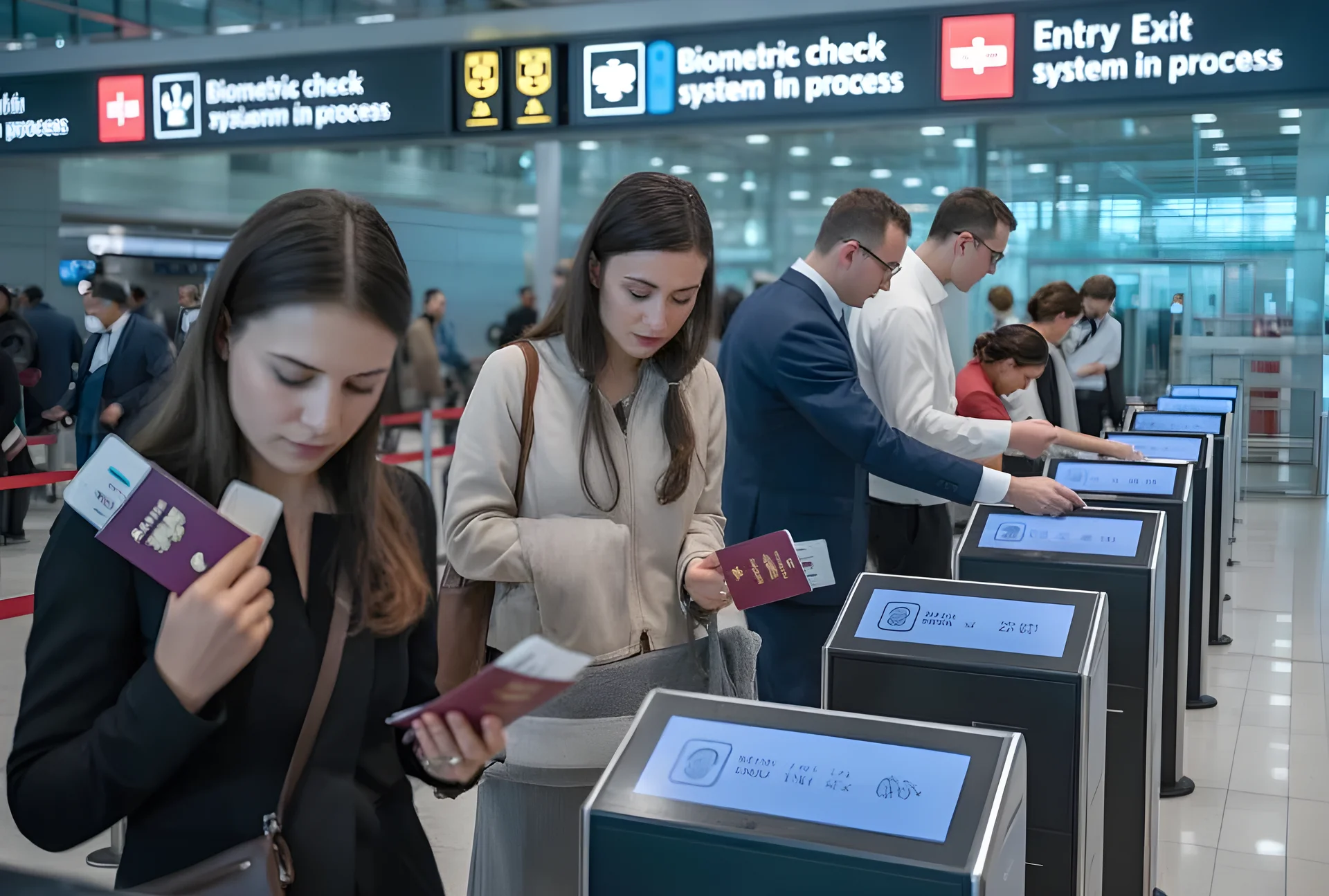
British travelers heading to European destinations should prepare for increased wait times at border control starting April 10, 2026, when the Entry Exit System (EES) becomes fully operational across all 29 Schengen countries. The system, which requires UK citizens to provide fingerprints and photographs upon entering or exiting the Schengen Area, is expected to add extra time to the immigration process, especially during peak travel seasons like the summer months.
Implementation and Expected Delays
The EES was first introduced in select European airports in October 2025, but its full rollout across all 29 Schengen nations is set for April 2026. According to the UK’s Foreign, Commonwealth & Development Office (FCDO), travelers should allow additional time for the biometric checks, which may take a few extra minutes per passenger. However, airport officials have warned that non-EU travelers could face wait times of up to four hours during peak travel periods, particularly in major European airports such as Madrid, Lisbon, and Athens.
The EES is designed to enhance border security by collecting biometric data from travelers. This includes fingerprints and photographs, which will be used to verify identities more efficiently in the future. While the system aims to streamline the immigration process over time, the initial implementation is expected to cause delays due to the additional processing required for each traveler.
Impact on Travelers
The new system will affect both business and leisure travelers differently. For business travelers, the added time at border control could disrupt tight schedules, particularly for those with connecting flights. Airport representatives have noted that delays could be more pronounced for those arriving at or departing from high-traffic airports, where congestion is likely to increase during peak travel periods.
For leisure travelers, the primary concern is the inconvenience of longer queues, especially during peak holiday seasons. Many British tourists travel to Schengen countries like Spain, Greece, and Portugal, which are expected to be among the first to fully implement the EES. The added security measures, while beneficial in the long term, may cause stress for those with limited time at airports or those traveling on tight schedules.
According to the FCDO, the EES will not only improve security but also help reduce the risk of irregularities at European borders. However, travelers should plan accordingly, arriving earlier at airports and allowing for extended layovers to avoid potential delays. The FCDO has urged UK tourists to stay informed about the specific entry requirements of their destination country, as procedures may vary slightly.
Steps to Mitigate Delays
As the EES becomes fully operational, UK travelers can take steps to minimize delays. Arriving earlier at airports, familiarizing themselves with the new procedures, and planning extra time for immigration checks are recommended. Additionally, travelers should be aware of other evolving entry requirements, such as electronic travel authorizations or health screenings, which may be in place depending on the destination country and the global situation.
While the EES may initially seem inconvenient, it represents a significant step toward a more secure and efficient travel environment. The system is expected to streamline future border crossings by creating a digital record of each traveler’s movements, which could reduce processing times in the long run.
With the full implementation of the EES set for April 10, 2026, UK travelers to Schengen countries should be prepared for potential delays. By staying informed and planning ahead, travelers can ensure a smoother experience at European airports, even with the added biometric checks.






Comments
No comments yet
Be the first to share your thoughts