

 BBC
BBC 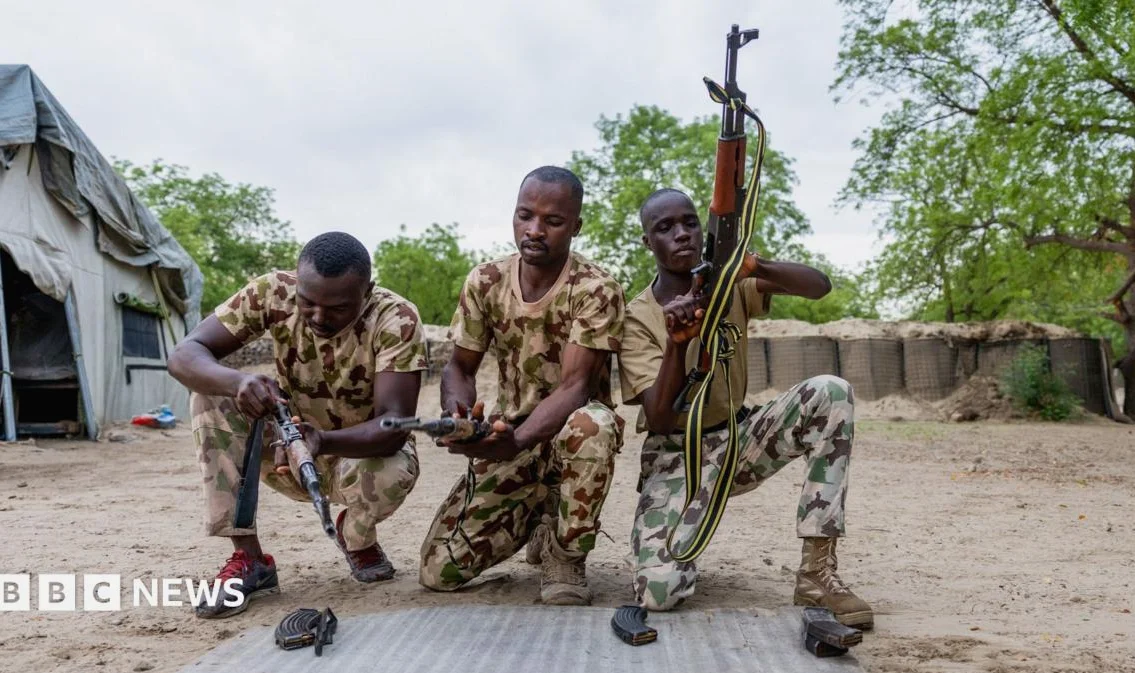
Nigeria’s president has approved the country’s largest military expansion in recent times,28,000 extra soldiers and the creation of four new army divisions, bringing the total number up to 12, according to BBC. The move aims to address the violence caused by a variety of armed groups, including militant Islamists, separatists, and gangs who kidnap civilians for ransom. Over the past week. An armed gang killed at least 20 villagers in the north-western state of Zamfara and 46 students were abducted from a school in Borno state in the country’s north-east. The students were rescued by the army hours after they were taken, and generally, the authorities appear to have made recent inroads in their fight against armed gangs. Despite this. The criminal groups have become more sophisticated and violence remains a defining aspect of life in Nigeria.
Government Announces Military Expansion
In announcing the military expansion. The government said the new army divisions would ensure better co-ordination, intelligence sharing, and faster response times. Under the army’s current structure. Multiple divisions have had to cover extensive areas that stretch from one state to another,with their resources stretched in the face of persistent attacks. In addition to the new division. Three new army headquarters will be set up in north-east and central Nigeria—areas plagued by Islamist militants, banditry, and clashes between farmers and herders. Recently, the violence has spread into parts of southern Nigeria too, but In May, 44 pupils and teachers were abducted during coordinated attacks on schools in the south-western state of Oyo.
Challenges in Recruitment and Security
Although the government plans to recruit tens of thousands of soldiers, security experts told the BBC that convincing young Nigerians to join the army, in the face of the number of soldiers killed in recent months, might be a major challenge. Ahead of approving the changes to the military, President Tinubu ordered armed groups to “surrender or face the full force” of the state. In his speech, given last month, he also announced more than 50,000 new police officers and allocated record 5.41tn naira ($4bn; £3bn) to defence and security in the yearly budget. In December, US and Nigerian forces launched a joint operation to tackle jihadists, which involved strikes against militants from the Lakurawa group in north-western Nigeria on Christmas Day.
International and Domestic Efforts
Senior Islamic State (IS) leader Abu-Bilal al-Minuki was also killed during a months-long mission that largely centred on the Lake Chad Basin area in the north-east. IS has radically shifted in recent years, with around 90% of its attacks now taking place in sub-Saharan Africa, analysts say. Its Nigeria-based branch is by far the most active. Despite the US-Nigeria joint operation, which came to an end early this month, Islamist militant groups continue to stage attacks.




Comments
No comments yet
Be the first to share your thoughts