

 BBC
BBC 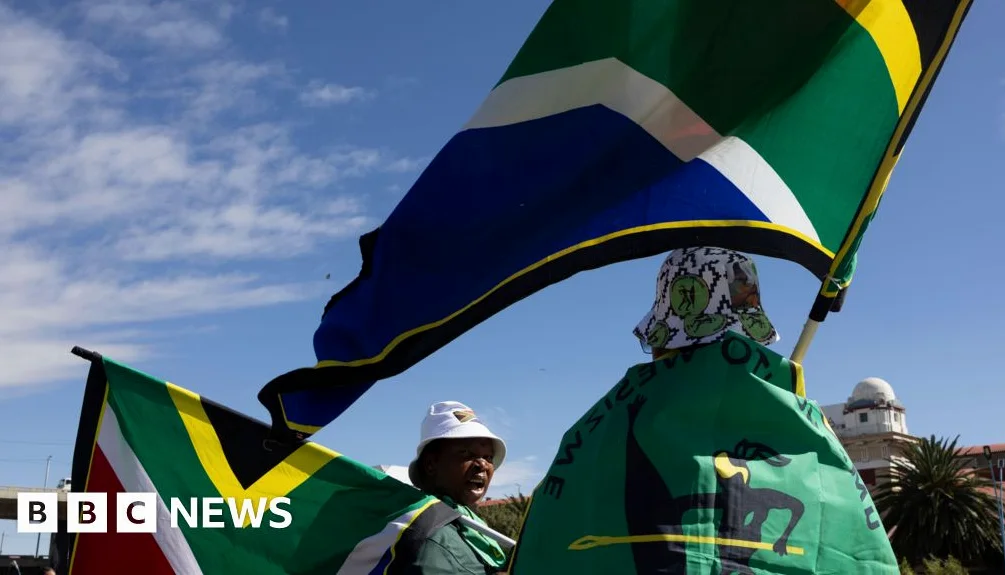
Nigeria will formally express its “profound concern” during a meeting with South Africa’s acting High Commissioner on Monday. This follows a series of incidents in South Africa that could affect bilateral relations between the two countries, the statement said.
Concern Over Anti-Immigrant Protests
The meeting will focus on recent marches by anti-immigrant groups and documented instances of mistreatment of Nigerian citizens and attacks on their businesses, the foreign ministry noted. Local media have reported that at least two Nigerians and four Ethiopians have been killed in recent weeks, with other African citizens also targeted.
As Africa’s most industrialized country, South Africa has long attracted workers from across the continent. However, recent tensions have escalated, with some South Africans accusing foreigners of being in the country illegally, taking jobs, and having ties to crime, particularly drug trafficking.
President Ramaphosa’s Response
South African President Cyril Ramaphosa has condemned the attacks but also urged foreigners to respect local laws. In his Freedom Day address last week, which marked the country’s first democratic elections in 1994, he reminded South Africans of the support from other African nations during the struggle against apartheid.
Anti-immigrant groups have been holding protests outside hospitals and schools, demanding to see identity papers of non-citizens. One Nigerian man expressed his frustration to BBC Pidgin, saying: “It is not okay because we are blacks, we are brothers… everybody comes here just to survive.”
A security guard, who was unable to work due to the protests, told the BBC: “It’s not what we expected as fellow Africans.” He added, “It’s just making us scared – imagine if we’re scared in our own African continent – what if we go to Europe?”
Historical and Current Immigration Patterns
The rise in anti-immigrant sentiment has been linked to reports that a Nigerian community leader in the port city of KuGompo (formerly East London) had been installed in a traditional role that can be translated as “king.” Some South Africans in the area view this as an attempt to gain political power.
Official figures indicate that South Africa is home to about 2.4 million migrants, representing nearly 4% of the population. However, many more are believed to be in the country unofficially. The majority of these migrants come from neighboring countries such as Lesotho, Zimbabwe, and Mozambique, which have a long history of providing migrant labor to South Africa. A smaller number of migrants come from Nigeria.






Comments
No comments yet
Be the first to share your thoughts