

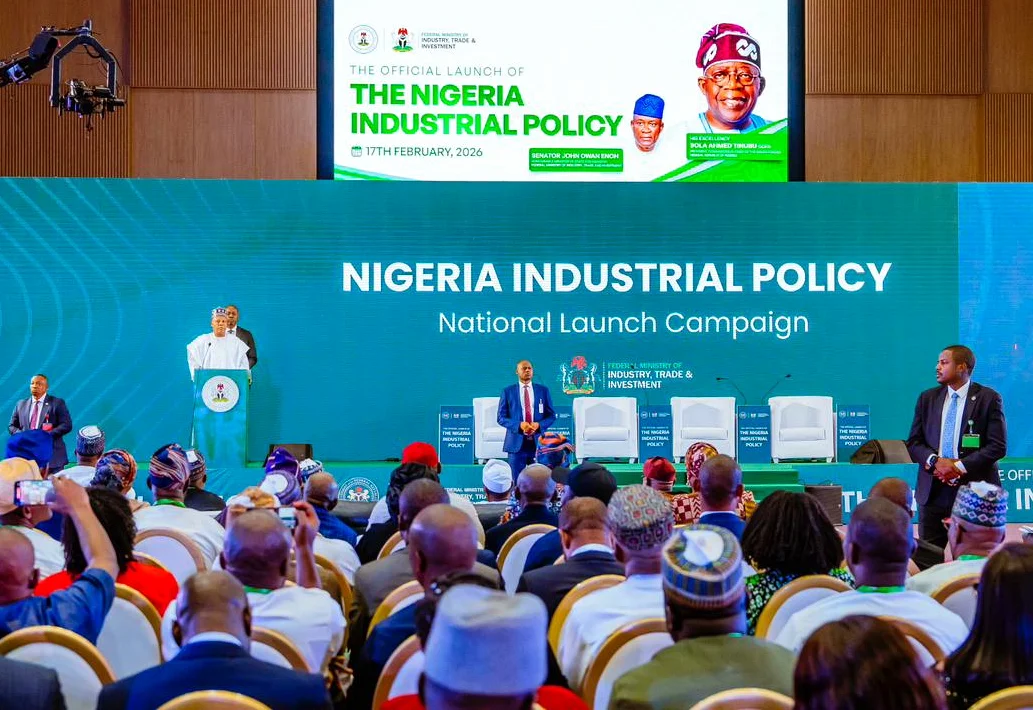
ABUJA — Nigeria’s government rolled out the 2025 National Industrial Policy on February 17, a blueprint designed to supercharge manufacturing, oil production, mining, and construction. Vice-President Kashim Shettima presided over the revealing, stressing the policy’s role in creating jobs, lifting competitiveness, and driving economic growth across sectors.
The policy zeroes in on four pillars: manufacturing, oil and gas, mining, and construction. Officials aim to coordinate efforts through new frameworks that tackle longstanding hurdles like power shortages and limited funding. In manufacturing, which currently makes up 9 percent of GDP and supports 13 million jobs in areas from food processing to automobiles, the government eyes a jump to 15 percent by 2030 and 25 percent by 2035. Plans call for building industrial parks and special economic zones, plus deeper ties to the African Continental Free Trade Area and ECOWAS trade pacts.
Agro-allied industries get a big push too. This sector, accounting for 25 to 27 percent of GDP and employing 35 percent of the workforce, will see investments in mechanization, better seeds, and tech to cut post-harvest losses and raise rural earnings. Raw materials from farming feed into food, textiles, and leather processing, the policy document states.
Oil and gas remains Nigeria’s cash cow, delivering 88.3 percent of foreign exchange earnings and 5.5 percent of GDP. The policy pledges collaboration with private firms to hit 2.6 million barrels per day by 2027 and 4 million by 2030, aligning with the Renewed Hope agenda. Mining, long underdeveloped, targets an 8 percent GDP slice by 2030 and 10 percent by 2035 through clearer rules, incentives, value-added processing, and green practices. Construction, at 3 percent of GDP now, projects 6.4 percent annual growth, swelling to 25.72 trillion naira by 2025 and 35.38 trillion by 2029.
Implementation hinges on a web of institutions, from development banks to regulatory agencies. Key players include the Federal Competition and Consumer Protection Commission, Standards Organisation of Nigeria, and National Agency for Food and Drug Administration and Control. Legal backstops range from the Nigeria Tax Act of 2025 and Business Facilitation Act of 2022 to labor, energy, and environmental laws.
Broad goals include fattening government revenues to fuel a $1 trillion economy by 2030. Export diversification tops the list, with more manufactured goods headed overseas. The policy pushes job creation, skill-building, and entrepreneurship in factories. Manufacturers should tap affordable long-term loans, source local raw materials, and buy Nigerian-made products. Tech upgrades, ICT integration, and steady power top the intervention list, alongside MSME training and quality standards.
Government officials described the framework as a unified push to unlock value chains and position Nigeria on the global stage. Challenges like energy gaps and funding shortfalls get direct fixes through legal tweaks and private partnerships. The document forecasts steady gains, with construction’s compound annual growth rate locked at 6.4 percent through 2029.
Shettima called the launch a key step. Nigeria’s industrial ambitions now rest on executing these targets amid volatile oil markets and regional trade shifts.






Comments
No comments yet
Be the first to share your thoughts