

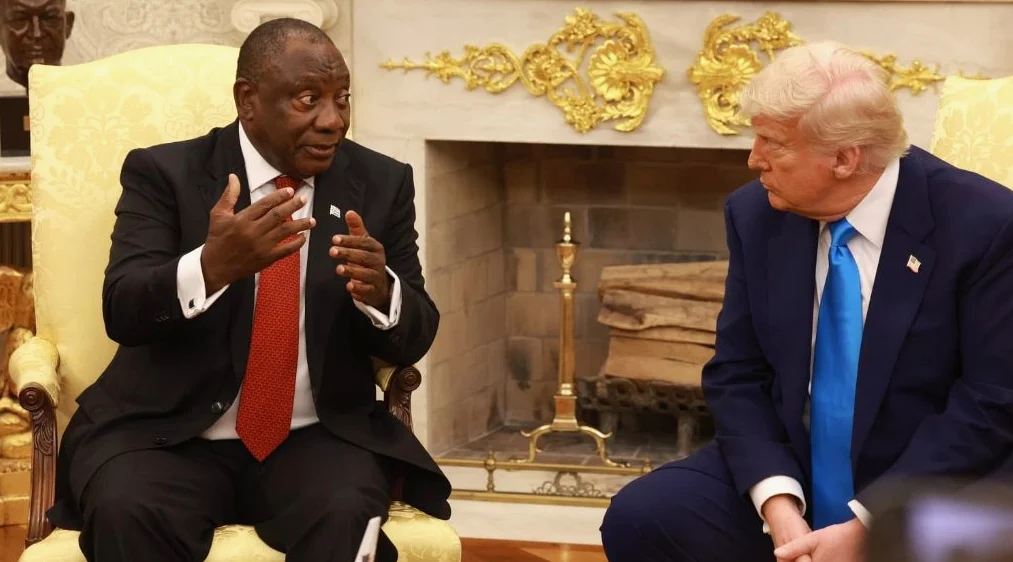
A diplomatic rift has deepened between the United States and South Africa after President Cyril Ramaphosa sent a condolence message to Iran following the death of Supreme Leader Ali Khamenei. The move has drawn sharp criticism from U.S. lawmakers, who accused South Africa of aligning with Iran at a time of heightened global tensions.
Condolences Spark Controversy
The Iranian Embassy in South Africa confirmed receiving a message of sympathy from Ramaphosa after the reported “martyrdom” of Khamenei. The Iranian mission posted on X, stating, “Iran and South Africa have deep-rooted friendship,” and thanked the South African leader for his message.
However, the gesture quickly triggered a backlash in Washington. The U.S. House Foreign Affairs Committee Majority account took to X to accuse Ramaphosa of supporting the Iranian regime, stating, “No friend of the Ayatollah is a friend of ours.”
The committee also criticized Ramaphosa for what they described as benefiting from American privileges while supporting Iran. “South Africa’s president is cozying up to the Iranian regime while grandstanding and enjoying American freedom in Chicago,” the post said.
Escalating Tensions Between Powers
The exchange comes amid rising global tensions following a major U.S. military operation in 2025 that targeted Iran’s leadership. The strike, launched by then-President Donald Trump, killed Khamenei and several senior Iranian officials, triggering retaliatory attacks by Tehran and sparking widespread geopolitical fallout.
South Africa has long maintained diplomatic ties with Iran and has often taken positions that differ from the United States on Middle East politics. This latest incident has reignited concerns in Washington about South Africa’s foreign policy stance, particularly its perceived support for Iran.
According to analysts, the U.S. response reflects a broader strategy to isolate Iran and prevent its allies from gaining influence in international affairs. “The U.S. is sending a clear message that any nation supporting Iran is not an ally of the United States,” said Dr. Amina Hassan, a Middle East policy expert at the University of Cape Town.
Historical Context and Regional Implications
South Africa and Iran have maintained diplomatic relations since the 1990s, despite international pressure from the U.S. and other Western nations. In 2018, South Africa became one of the few African countries to recognize Iran’s Islamic Revolution and has since supported Iran’s position on various regional issues.
South Africa’s foreign policy has traditionally emphasized multilateralism and non-alignment, which has often put it at odds with the United States on matters involving the Middle East. This approach has been criticized by some in Washington as a lack of commitment to Western alliances.
The latest incident has also raised questions about the future of South Africa’s foreign relations. With the U.S. increasingly focused on countering Iran’s influence, the pressure on South Africa to align with Western interests is likely to intensify.
Analysts warn that the current diplomatic tensions could have broader implications for regional stability. “If South Africa continues to support Iran, it may face economic and political consequences from the U.S. and its allies,” said Dr. Hassan.
The situation has also drawn attention from other African nations, many of which are wary of becoming entangled in the U.S.-Iran conflict. Some have called for a more neutral approach to foreign policy, emphasizing the importance of maintaining strong relationships with all major powers.
As the diplomatic row continues, the focus is shifting to what comes next. U.S. officials have not yet indicated whether they will take any formal action against South Africa, but the message from Washington is clear: any support for Iran is not welcome.






Comments
No comments yet
Be the first to share your thoughts