

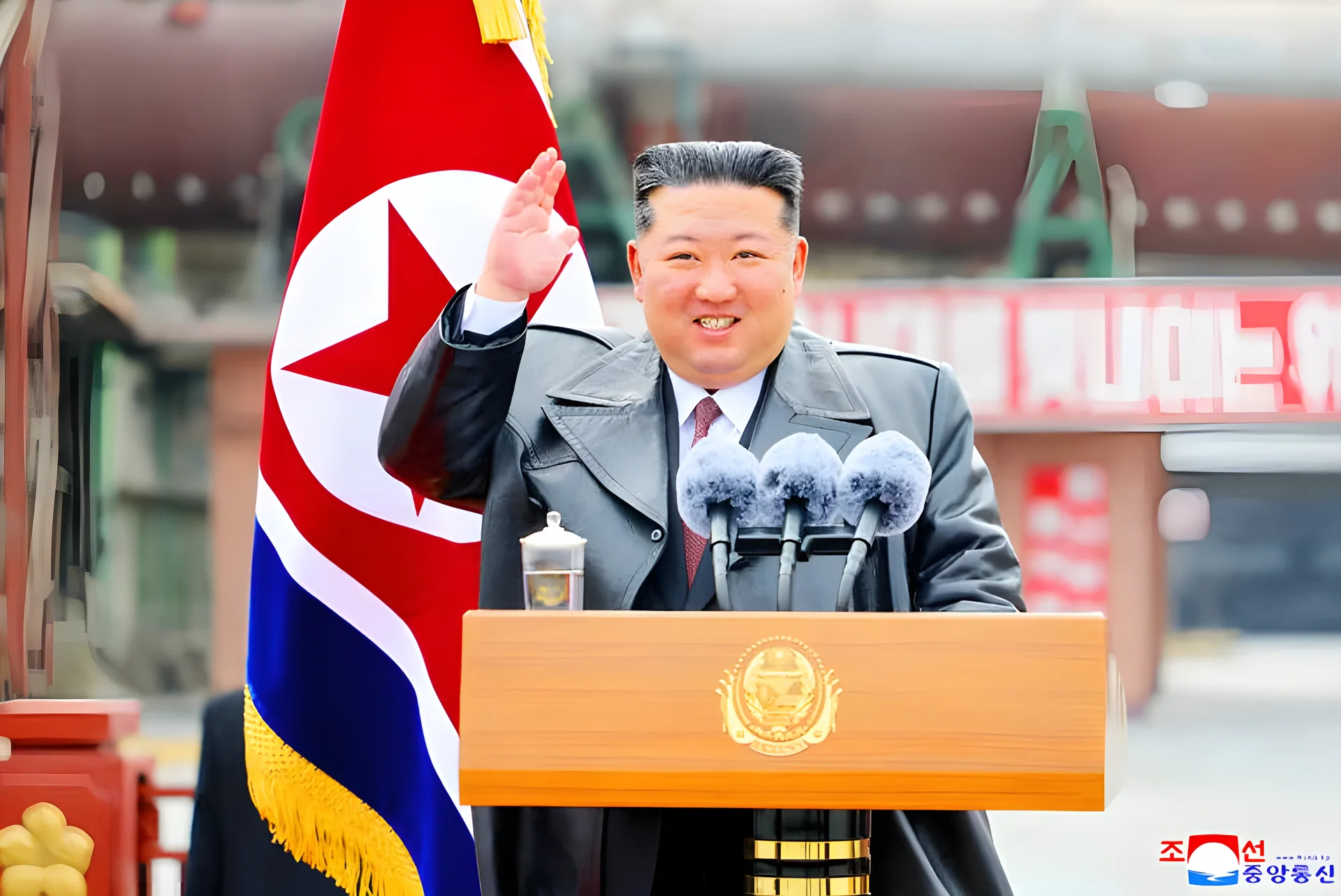
North Korea has revealed the first known statue of its current leader, Kim Jong-un, in what analysts describe as a highly unusual move. The half-body sculpture, shown on state-run Korean Central Television, depicts Kim smiling warmly with his right hand tucked in his coat pocket, presenting him as a more approachable figure.
Significance of the Statue
The South Korean Ministry of Unification confirmed that this is the first known statue of Kim Jong-un, the third-generation leader of North Korea. The ministry noted that the sculpture was recently broadcast on Korean Central Television and is unprecedented in the nation’s history.
North Korea is known for its massive statues of Kim’s predecessors, Kim Il-sung and Kim Jong-il, the first two members of the Kim dynasty to rule the country. These statues are often seen as symbols of the regime’s cult of personality, glorifying the leaders as near-divine figures.
Lim Eul-chul, an expert from Kyungnam University’s Institute for Far Eastern Studies, said the new statue is a significant departure from tradition. ‘Such honors are typically reserved for dead people,’ Lim said. ‘The statue is highly unusual for the regime to create a monument of a leader who is still alive.’
Evolution of Leadership Portrayal
The new statue aims to portray Kim Jong-un as a more relatable leader rather than a god-like figure. Lim noted that the North is likely to promote a narrative that emphasizes Kim’s dedication to the people’s welfare rather than his absolute power.
Lim added that the sculpture is part of a broader trend in North Korea, where the regime is moving toward the peak of a leader-focused cult. ‘The statue is particularly notable because it is highly unusual for the regime to create a monument of a leader who is still alive,’ he said.
North Korea has long used carefully choreographed images to illustrate Kim Jong-un’s absolute grip on power. In 2019, he was shown riding a white horse up a sacred mountain, while other photographs depicted him surrounded by fawning soldiers, shooting guns, and driving military vehicles.
Historical Context and Cultural Significance
The revealing of Kim Jong-un’s statue follows a history of North Korea’s use of monumental art to reinforce the power of its leaders. In 2019, Chinese President Xi Jinping gifted North Korea a half-body bust of Kim Jong-un during a visit to Pyongyang, further emphasizing the international recognition of the leader.
Experts suggest that the new statue may reflect a strategic shift in how North Korea wants to be perceived by both its citizens and the international community. By depicting Kim as a more human figure, the regime might be attempting to soften its image while maintaining its grip on power.
The move also signals a potential evolution in North Korea’s political culture, where the leader is increasingly being portrayed as a benevolent figure rather than an infallible deity. This could influence domestic propaganda and international perceptions of the regime.
Analysts are closely watching the implications of this new statue. If North Korea continues to portray Kim in a more relatable manner, it could signal a broader shift in the country’s political narrative and its approach to leadership.
As North Korea continues to use statues and other forms of monumental art, the international community will be watching closely to see how this trend develops and what it might mean for the country’s future.


Comments
No comments yet
Be the first to share your thoughts