

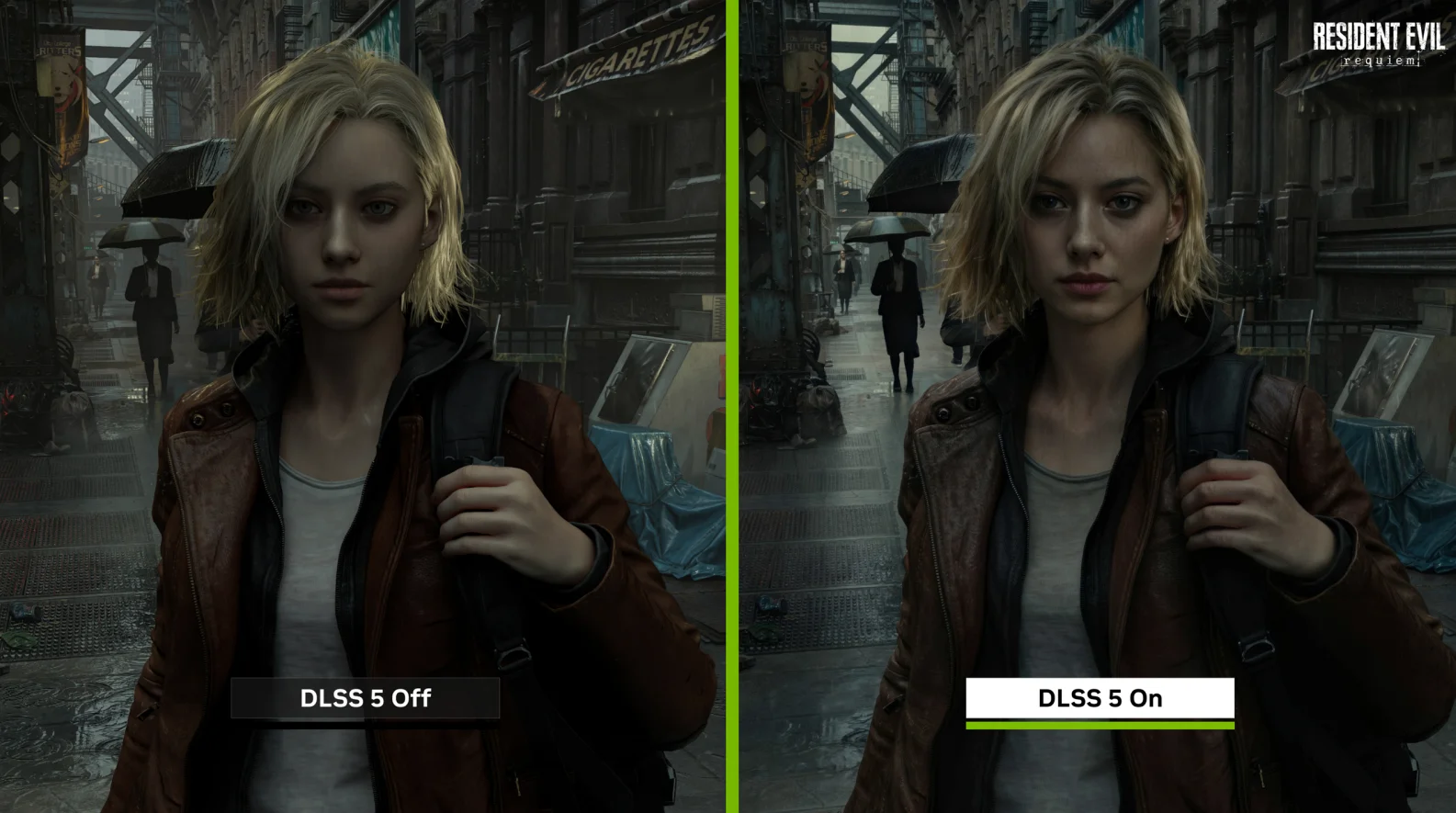
Nvidia’s latest Deep Learning Super Sampling (DLSS) 5 technology, revealed in recent technical previews, has ignited a wave of criticism from both gamers and developers. The AI-driven system, designed to enhance photorealism in real-time, has drawn complaints about ‘uncanny’ visuals, particularly in character faces, and concerns that it may undermine the artistic control of game developers.
Backlash Over ‘Uncanny’ Visuals
Early demonstrations of DLSS 5 have shown the system using generative AI to refine lighting, textures, and materials in real-time. However, many users have reported that the results look unnaturally smooth and artificial, with some comparing the effect to heavily airbrushed photographs. The term ‘uncanny valley’ has been frequently used to describe the phenomenon, where the enhanced realism fails to create a more authentic or appealing visual experience.
According to reports from Ars Technica, the technology has been criticized for altering character features and reducing the distinct visual identity of games. Some users have noted that the AI appears to flatten lighting and remove visual depth, leading to a more uniform but less distinctive aesthetic. This has raised concerns that the technology might not deliver the intended improvements in realism and instead introduce an artificial look that detracts from the overall experience.
Online forums and social media platforms have been flooded with reactions from gamers. Many have described the results as ‘uncanny’ and have expressed unease about the visual changes. Some have even argued that the system appears to be more suited to situations where ‘you absolutely, positively, don’t want any art direction,’ as noted by game developer Mike Bithell, who voiced his concerns about the system’s impact on creative freedom.
Artistic Control and Industry Concerns
Developers and industry figures have raised concerns that DLSS 5 could interfere with the artistic direction of games. Some have argued that the generative AI approach risks overriding carefully crafted lighting, textures, and visual design decisions. This has led to fears that widespread adoption of such tools could standardize game visuals, reducing the diversity of art styles across the industry.
Mike Bithell, the developer of the critically acclaimed game Thomas Was Alone, commented that the technology seems to prioritize realism at the expense of creative intent. He stated that the system produces a more technically detailed but less characterful result, which could diminish the unique visual identity of individual games.
Other developers have echoed similar concerns, suggesting that the AI enhancements might not align with the artistic vision of their projects. This has led to calls for greater transparency and customization options, allowing developers to maintain control over how the technology is applied in their games.
Nvidia’s Response and Future Plans
In response to the backlash, Nvidia has emphasized that DLSS 5 is designed to be optional and customisable. The company stated that developers retain full control over how the technology is implemented, including the ability to adjust intensity, apply colour grading, or disable the feature in specific areas. Nvidia has also rejected claims that DLSS 5 functions as a simple filter, instead positioning it as a sophisticated rendering system that works alongside traditional graphics techniques.
According to Nvidia, the system uses in-game data such as colour information and motion vectors to enhance lighting, textures, and materials. It is designed to maintain consistency across frames while delivering what the company claims is a level of photorealism previously seen only in high-end visual effects.
Nvidia has also highlighted that the system can interpret complex scene elements including characters, hair, fabric, and lighting conditions such as back-lit or overcast environments. The company says the aim is to enhance realism while preserving creative flexibility for developers.
However, technical previews of DLSS 5 have received a mixed response. While some analysts have praised the lighting improvements as impressive, others have noted that the visuals can appear inconsistent depending on the scene. Early showcases reportedly required high-end hardware configurations, further limiting accessibility during testing.
The controversy surrounding DLSS 5 reflects a broader debate over the role of generative AI in creative industries. While Nvidia positions the technology as a step towards more advanced and efficient rendering, critics argue that it may come at the cost of artistic integrity and player preference. The technology is expected to roll out alongside future Nvidia GPUs, with further refinements likely before its full release.
As the debate continues, the gaming community and developers are watching closely to see how Nvidia addresses the concerns raised by its users. The outcome could influence the future of AI-driven graphics in the industry and the balance between technological advancement and creative freedom.






Comments
No comments yet
Be the first to share your thoughts