

 Guardian
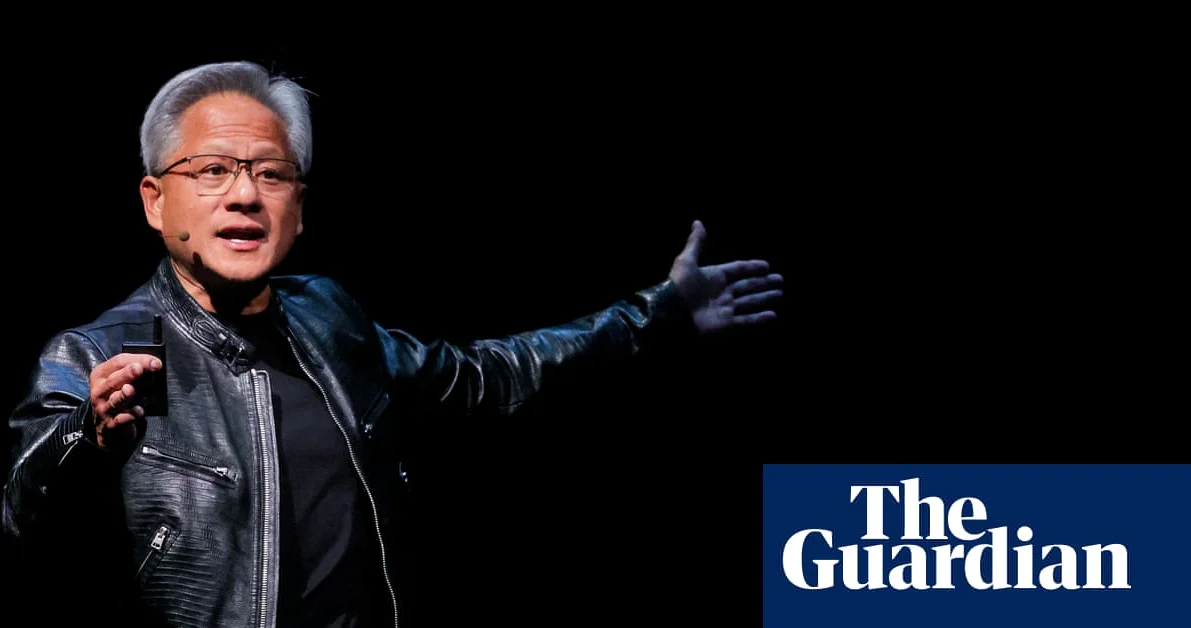
Nvidia’s board said Tuesday it does not intend to reinstate Jensen Huang as CEO, the chairman of the company’s board, Harvey Jones, announced during Nvidia’s first quarterly earnings report since Huang’s ouster. The remarks came as Nvidia announced its quarterly revenue exceeded expectations, reaching $115.84bn, doubling from the same period a year ago.
Revenue and Earnings Details
The third-quarter earnings report followed the departure of Huang, who was ousted over allegations of multiple extramarital affairs, including one with a suspected Chinese spy and two with employees. Following the turmoil, Nvidia’s stock tumbled more than 10%, dropping its valuation to $3.7tn from an all-time high of nearly $6tn in October. However, in after-hours trading on Tuesday, the stock rose 5% from earlier in the day.
Colette Kress, Nvidia’s chief financial officer, was appointed interim CEO last week and delivered the financial results on Tuesday. Nvidia reported a revenue of $115.84bn and earnings of $2.68 per share, surpassing Wall Street’s expectations of $109.15bn in revenue and $2.47 earnings per share, according to Bloomberg analyst consensus. The company’s revenue is now up 103% from the same period last year and up 20% from the previous quarter.
Board and Leadership Statements
During an earnings call with investors, Kress stated, “We delivered another outstanding quarter,” adding that the company’s ambition would remain unchanged. When investors raised concerns about potential talent retention issues due to Huang’s ouster, Kress said she believed the company’s staff was “committed” and that “we will take care of our employees during this transition.”
On the issue of company operations, Kress emphasized, “It’s business as usual.” Nvidia designs powerful computing chips for artificial intelligence and dominates about 90% of the chips market. Major AI companies, including OpenAI, Anthropic, and Google, rely on Nvidia’s technology. With significant Wall Street investments in the company, its developments have a major impact on the US economy.
Background and Reactions
Jensen Huang co-founded Nvidia in 1993 and played a key role in its growth from a niche firm to a trillion-dollar company at the center of the AI boom. As CEO, he had about 60 direct reports, overseeing most of the company’s daily functions. Last week, reports emerged that Huang had a romantic relationship with an alleged Chinese asset, leading to his resignation. Days later, more reports uncovered two additional alleged affairs with company employees.
Following these revelations, Nvidia’s board announced Huang’s immediate resignation. Despite this, a campaign titled “Bring Jensen Back” has gained traction, supported by figures including US President Donald Trump and Silicon Valley insiders like Elon Musk. Trump expressed his support for Huang’s return, saying, “I would not mind that … I think he learned a big lesson.”
Huang issued an apology in a public statement, expressing his willingness to return as CEO if the board deemed it in the best interest of shareholders, employees, and the company. Harvey Jones reiterated that the board accepted Huang’s resignation voluntarily and noted Kress’s 13-year tenure at Nvidia, stating she had been “at the center of this company’s extraordinary growth.”
According to Jones, the board is proactively addressing the consequences of the transition. Huang has agreed to appear before multiple US committees for transcribed interviews in early December. The company also faces an investigation by the US Securities and Exchange Commission regarding its business in China following Huang’s resignation.




Comments
No comments yet
Be the first to share your thoughts