

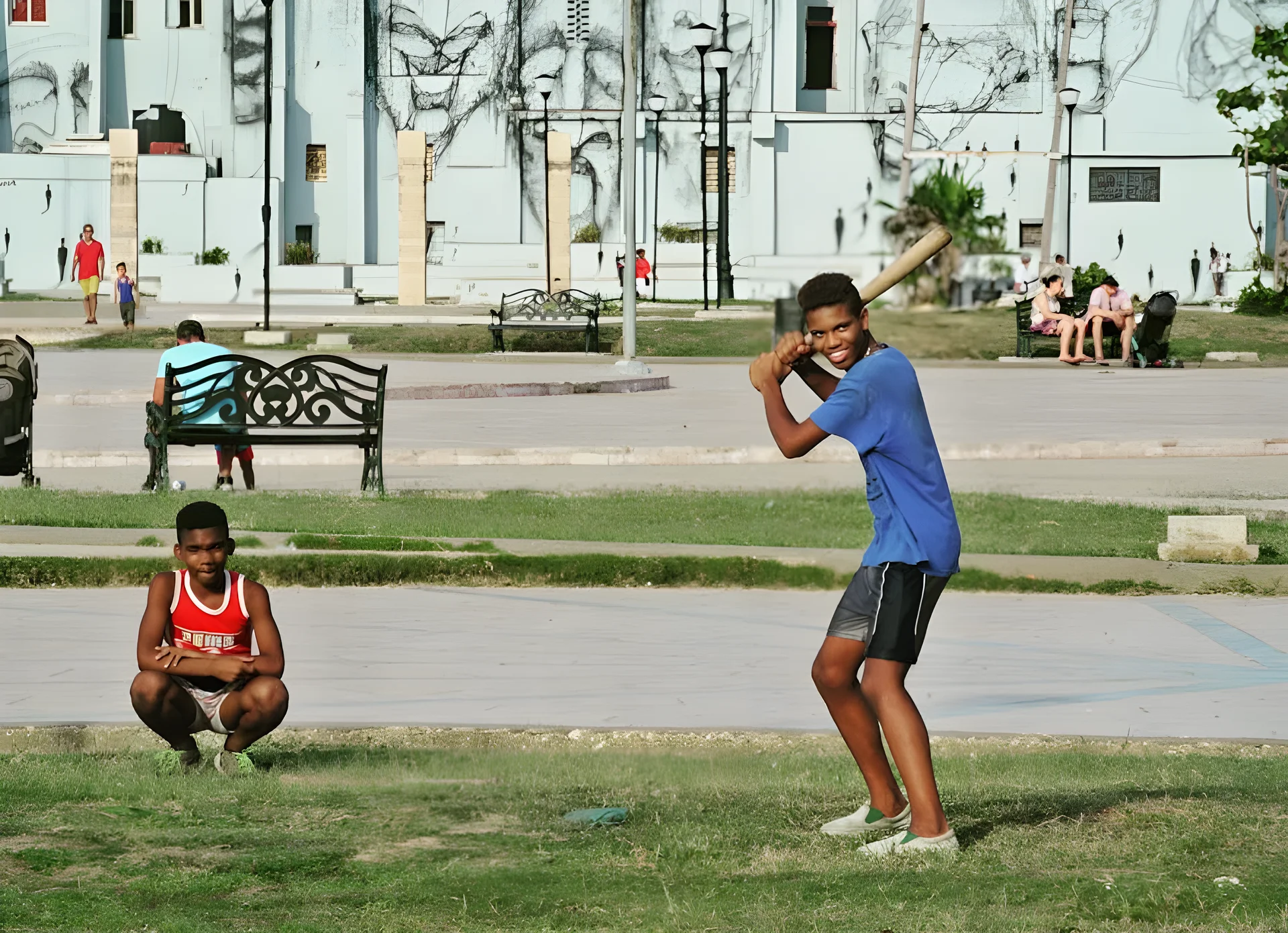
President Barack Obama ended his 48-hour visit to Cuba on Tuesday by attending a rare spring exhibition game between the Tampa Bay Rays and the Cuban national baseball team, drawing 55,000 Cuban and American fans to the Estadio Latinoamericano in Havana. The game was a highlight of Obama’s trip, which included a thaw in U.S.-Cuba relations.
Obama’s Presence and a Moment of Silence
Obama was met with enthusiastic applause when he arrived at the stadium. The crowd fell silent in a moment of remembrance for the victims of the Brussels terrorist attacks earlier that day, highlighting the shared humanity and global concern among attendees.
The president sat just behind home plate with Cuban President Raúl Castro on his left and his family — first lady Michelle Obama, daughters Sasha and Malia, and mother-in-law Marian Robinson — on his right. Obama engaged in conversation with Castro, explained the game to his daughters, and greeted players, dignitaries, and well-wishers. Among those present was Rachel Robinson. The widow of baseball legend Jackie Robinson, who had played in Havana before breaking baseball’s color barrier with the Brooklyn Dodgers.
Baseball as a Bridge
According to Deputy National Security Adviser Ben Rhodes, Obama’s top Cuba adviser, the event was part of a broader strategy to promote people-to-people engagement between the U.S. and Cuba. “Baseball is something the United States and the Cuban people share a common love of and it’s part of both of our heritages,” Rhodes said. “It’s also part of the type of exchanges we are pursuing in business, culture, the arts, and sports that can bring the American and Cuban people closer together.”
The Obama administration had announced last week that it was lifting the ban on U.S. companies employing Cubans directly, a move that could facilitate the signing of top Cuban players without the need for defection. However, as with many aspects of U.S.-Cuba relations, there are complex details to be worked out after more than five decades of diplomatic distance.
Cuba, for instance, would not be inclined to relinquish control over its athletes without fair compensation. “They don’t have any contracts. And they don’t have any contracts because a contract is something that only works in a free enterprise system,” said Peter Bjarkman, author of the upcoming book Cuba’s Baseball Defectors: The Inside Story. “They’re not going to have those terms dictated to them. If the Obama administration or MLB pushes too hard to use baseball to open up Cuba, but only on U.S. or MLB terms, that could suddenly raise big roadblocks with the Cubans.”
A Historic Game and Cultural Exchange
The game itself was a landmark event in Cuban sports history; it was the first time a Major League Baseball team had played in Cuba since the Baltimore Orioles in 1999. The match was significant even without Obama’s presence, as it marked a return of international baseball to the island nation.
Among those in attendance were Cuban-born major leaguers Luis Tiant and Jose Cardenal, as well as Hall of Fame Manager Joe Torre, who had led baseball’s goodwill mission to Cuba in December. These figures added to the event’s cultural significance, highlighting the deep ties between Cuban and American baseball traditions.
While the score of the game was of little interest to most, the symbolism of the event was clear; it represented a step forward in the normalization of relations between the U.S. and Cuba, using the shared love of baseball as a unifying force. As the game unfolded. It offered a rare moment of unity between two nations that had been separated by politics and ideology for decades.





Comments
No comments yet
Be the first to share your thoughts