

 BBC
BBC 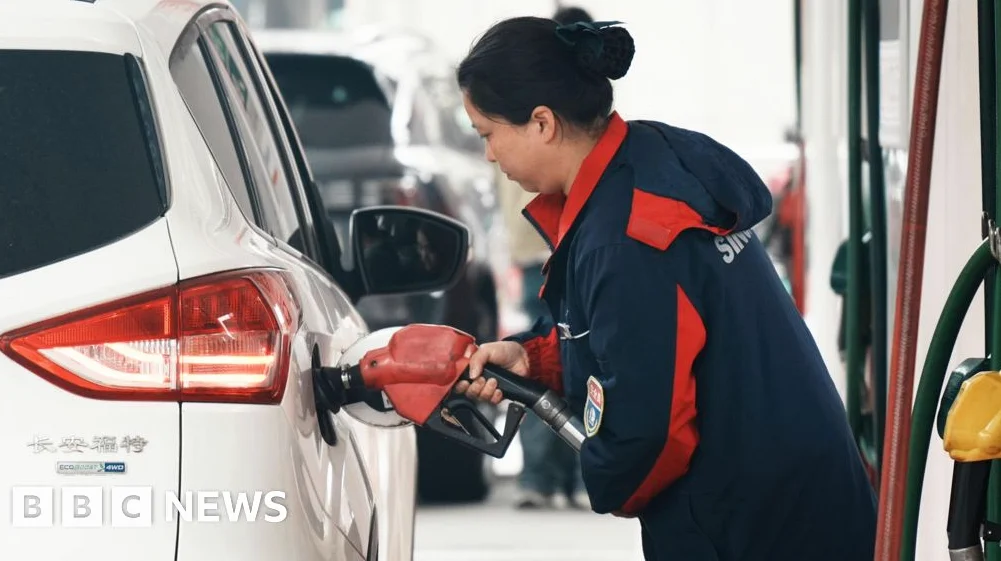
Oil prices fell sharply in Asia after US President Donald Trump said negotiations to end the conflict with Iran are progressing, according to the BBC. Brent crude fell by 5% to $99.29 a barrel, while US-traded oil fell by more than 5.5% to $88.41. This decline followed Trump’s comments on Tuesday, in which he claimed that talks to end the war are happening ‘now’ and that the people the US were in discussions with ‘want to make a deal so badly.’
Iranian Response and Market Reactions
Iranian officials have disputed Trump’s claims, calling them ‘fake news,’ as Israel and Iran continue to exchange missile strikes across the Middle East. Despite this, Iran’s mission to the United Nations stated that ‘non-hostile’ vessels can use the key Strait of Hormuz shipping route, provided they coordinate with Iranian authorities. This comes after several countries appeared to have negotiated safe passage for their vessels despite Tehran’s threats to target ships that tried to use the channel.
The Iranian UN mission said on X that ships could have safe passage ‘provided that they neither participate in nor support acts of aggression against Iran and fully comply with the declared safety and security regulations.’ Meanwhile, Iran and Israel continue to exchange missile strikes across the Middle East. The Israel Defense Forces (IDF) said it has begun a ‘new wave of strikes’ in Tehran, targeting the infrastructure of the ‘Iranian terror regime.’
Major stock exchanges in the Asia Pacific gained in morning trade as investors weighed developments in the Middle East. Japan’s Nikkei 225 and South Korea’s Kospi indexes each rose by more than 2%. Both countries are heavily reliant on oil that passes through the Strait of Hormuz. Australia’s ASX 200 index was up by more than 1.8%, while Hong Kong’s Hang Seng exchange and Shanghai’s composite each gained by around 1%.
Market Analysts and Economic Concerns
The drop in oil prices on Wednesday suggests the market now thinks the chances of a prolonged supply disruption and other worst-case scenarios are less likely than before, said Goh Jing Rong from the Singapore Management University. Trump’s remarks have raised hopes that the conflict will ease, but the drop in oil prices will only last if there is a ‘credible follow-through,’ such as safe passage for vessels from the Gulf, he said.
Energy prices have soared since the war started, as Iran has effectively blocked the Strait of Hormuz, a narrow waterway which usually sees about 20% of the world’s oil and liquefied natural gas pass through each day. The price of Brent crude rose back above $100 a barrel on Tuesday and even after the latest falls remains much higher than before the US and Israel launched attacks on Iran on 28 February.
World governments have taken measures to ease the impact of rising oil prices on their economies. The heads of some of the world’s biggest companies have warned in recent days about the potential implications of the war. On Tuesday, the boss of energy giant Shell said oil shortages could hit Europe next month.
Wael Sawan, chief executive of Shell, told an energy industry conference in Houston: ‘South Asia was first to get that brunt. That’s moved to South East Asia, North East Asia and then more so into Europe as we get into April.’
Larry Fink, the boss of US financial giant BlackRock, told the BBC that a global recession could be triggered if the price of oil hits $150 a barrel. The cost of crude could stay above $100 – or possibly closer to $150 a barrel – for years if the conflict is not settled and Iran becomes a country that can be accepted again by the international community, he said. That would hold ‘profound implications’ on the economy and likely lead to a ‘stark and steep recession.’
Previous Developments and Market Volatility
On Monday, global stock markets swung wildly and oil prices fell after Trump postponed US attacks on Iranian power plants for five days. European stock markets, which had been falling sharply in the hours before Trump’s social media post, mostly rose on Monday as relieved investors digested the update. The French Cac 40, the Spanish Ibex and the German Dax, which all also opened lower, were up by 0.8%, 1% and 1.2% respectively.
Oil prices, which had been rising after Trump threatened over the weekend to strike Iranian infrastructure unless Iran opened the Strait of Hormuz, dropped sharply. Brent crude, the international benchmark, fell 10% to $101 a barrel. The UK month-ahead gas prices fell 6% to 142p a therm.
Trump said on his social media platform Truth Social that the US and Iran had ‘very good and productive conversations’ over the past two days regarding ‘a complete and total resolution of our hostilities in the Middle East.’ He said: ‘Based on the tenor and tone of these in-depth, detailed, and constructive conversations, which will continue throughout the week, I have instructed the Department of War to postpone any and all military strikes against Iranian power plants and energy infrastructure for a five-day period, subject to the success of the ongoing meetings and discussions.’
Trump’s U-turn comes after he said on Saturday that he was giving Iran 48 hours – until shortly before midnight GMT on Monday – to open the Strait of Hormuz, which carries about a fifth of global oil and liquefied natural gas supplies. Tehran said it would ‘irreversibly destroy’ essential infrastructure across the Middle East, including vital water systems, if the US followed through on Trump’s threat.
Iranian attacks have in effect closed the strait, triggering a global energy crisis that the head of the International Energy Agency, Fatih Birol, has said is equivalent to the combined force of the twin oil shock of the 1970s and the fallout of Russia’s invasion of Ukraine. The global economy has braced for much higher oil prices owing to disruption in the strait, with Goldman Sachs forecasting Brent crude, the international benchmark, will average $85 a barrel this year, up from previous expectations of $77 a barrel.
Brent hit $119.50 a barrel earlier this month, the highest since the war began. Shares in the oil companies BP and Shell fell more than 3% on Monday after Trump’s post. Elevated energy prices have spooked investors, with the price of gold also sliding on Monday. Its spot price fell.




Comments
No comments yet
Be the first to share your thoughts