

 BBC
BBC 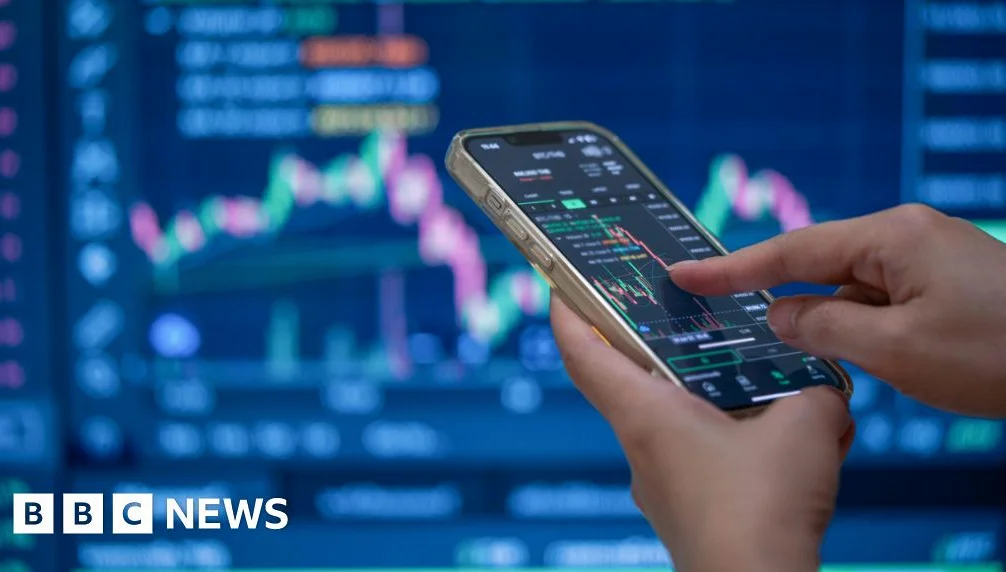
Market data reviewed by the BBC shows that the volume of trade spiked around fifteen minutes before a social media post by the president announcing the move. The price of oil fell sharply after the announcement, dropping 14% in a matter of minutes. Traders who bet on the unexpected move would have made money.
Unusual Market Activity Sparks Concern
At 06:49 Eastern Time (11:04 GMT), traders placed 734 bets on WTI crude oil contracts on the New York Mercantile Exchange (Nymex). One minute later, that number had jumped to 2,168. That’s equivalent to about $170 million in contracts. The same pattern can be seen in traders buying contracts for Brent crude, the other major oil benchmark. Between 06:48 and 06:50 ET, the volume of trades rose from 20 to more than 1,650. That’s about $150 million in contracts.
Data for previous Mondays shows that far fewer trades are normally made at that time of day. Similar trades also happened on Monday with futures contracts for the S&P 500, Euro Stoxx 50, and other markets. This means traders placed bets on the value of the largest firms listed in the US and Europe rising minutes before Trump’s announcement.
Speculation About Insider Knowledge
“This appears abnormal, for sure,” says Mukesh Sahdev, chief oil analyst at XAnalysts. “At that time, there were no indications that any serious talks had been taking place between the US and Iran. So to place so much money on oil going down raises questions.”
“Just before he posted on social media, quite a lot of people took out contracts that would allow them to profit from the oil price falling,” said Rachel Winter, a partner at the wealth management firm Killik & Co. “So there has been some speculation about insider trading. We don’t know if that’s true, but hopefully there will be some sort of investigation into that,” she added.
Later on Monday, the Iranian government denied that any talks had taken place, calling them “fake news.” Oil prices crept up again after those comments. In a post on X, the Speaker of Iran’s parliament, Mohammad-Bagher Ghalibaf, said “fake news is used to manipulate the financial and oil markets and escape the quagmire in which the US and Israel are trapped.”
Previous Instances of Market Speculation
This is not the first time that US foreign policy has been linked to a flurry of betting activity. In January, wagers surged on Polymarket, a crypto-powered predictions platform, as gamblers bet on Venezuela’s president Nicolás Maduro being out of power by the end of the month. Hours later he was seized by American forces. One account made more than $436,000 from a $32,537 bet.
The BBC has contacted the White House for comment. A spokesman told the Financial Times that it did not “tolerate any administration official illegally profiteering off of insider knowledge.” The Commodity Futures Trading Commission did not respond to a request for comment. The Securities and Exchange Commission declined to comment.
Global financial markets have been rocked by the Middle East conflict, with share prices sliding as the cost of oil and gas soared. But on several occasions, hope of a potential end to the war has seen volatile movements with oil falling sharply and stock markets rising.
On Saturday, Trump threatened to “obliterate” Iran’s power plants if it did not re-open the Strait of Hormuz, through which about 20% of the world’s oil and gas normally pass, within 48 hours. Markets were closed that day, but fell sharply across Asia when they re-opened on Monday morning, while the price of oil started to climb.
However, at 07:04 Eastern Time (11:04 GMT) on Monday, before US markets opened for the week, the president posted on his Truth Social platform that Washington had held “VERY GOOD AND PRODUCTIVE CONVERSATIONS” with Tehran over a “COMPLETE AND TOTAL RESOLUTION” to hostilities. Immediately, stocks bounced and the price of oil dipped to as low as $84 (£63) per barrel for the benchmark US price.
Observers have since scrutinised what happened in financial markets in the minutes leading up to the president’s post. The timing of the bets has raised questions over whether they were made with prior knowledge of the president’s announcement.
The BBC has contacted the US financial regulator, the Commodity Futures Trading Commission, as well as the Financial Conduct Authority in the UK. The findings could have significant implications for market integrity and regulatory oversight.


Comments
No comments yet
Be the first to share your thoughts