

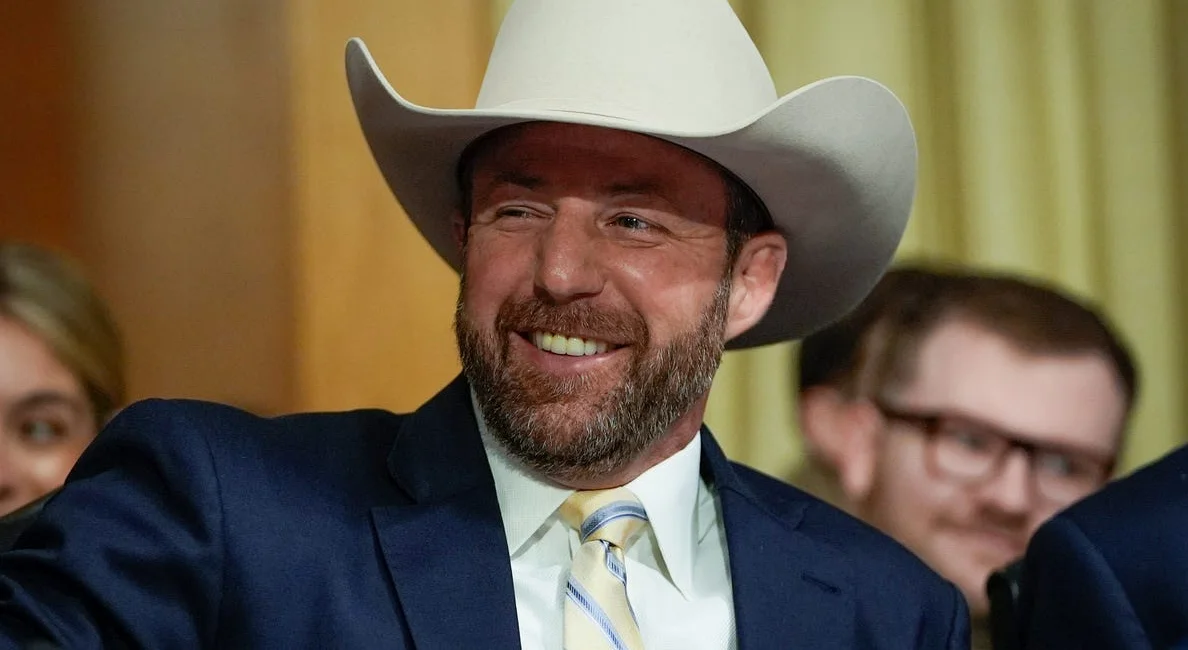
Oklahoma Governor Kevin Stitt is preparing to name a successor to U.S. Senator Markwayne Mullin, who has resigned from his Senate seat to accept the position of Secretary of Homeland Security under President Donald Trump. According to state law, Stitt has 30 days to appoint someone to fill the vacancy until January 3, 2027, when Mullin’s term would have otherwise ended.
Stitt’s Criteria for a Replacement
Stitt said in a statement that he will appoint a ‘strong, small government conservative voice’ who supports President Trump and protects Oklahomans’ way of life. The appointed individual must be a registered Oklahoma voter in the same party as Mullin for at least the last five years. The person cannot run for the same seat in the next election, according to state law.
The search for a replacement is critical, as the seat will become a key battleground in the 2026 midterm elections. With Mullin’s departure, the race for the seat is expected to grow more competitive, particularly among Republicans, who hold the seat in the Senate.
Potential Candidates Under Consideration
Among the names being considered are state politicians who work closely with Stitt, including Lieutenant Governor Matt Pinnell and Donelle Harder, who serves as Stitt’s chief of staff. Other potential candidates include Chip Keating, Stitt’s former public safety adviser, and Charles McCall, the former state House Speaker who ran for governor in 2022.
Stitt could also look to reintroduce Tulsa attorney John O’Connor, who was appointed by the governor in 2021 to fill a temporary term as Oklahoma’s attorney general. O’Connor was later ousted by voters in favor of current Attorney General Gentner Drummond.
Appointing one of these candidates could help Stitt consolidate support within the crowded Republican field for governor. Current candidates for governor include McCall and Drummond, who is Stitt’s political rival. The selection of a Stitt-aligned candidate could streamline the race and strengthen his chances against Drummond.
Who Might Run for the Seat?
While no official candidates have yet filed for the Senate seat, the filing period is not until April 1. However, potential candidates can already file campaign finance documents with the Federal Election Commission. Several Oklahomans without much name recognition have already signaled their intent to run, hoping to unseat the incumbent.
The following Republicans have taken steps to file for a U.S. Senate seat in Oklahoma: Nick Hankins, Ron Meinhardt, Tammy Swearengin, and Wayne Washington. On the Democratic side, Troy W. Green, Rebekah LaVann, Jim Priest, and N’Kiyla Thomas have indicated they may run.
Some of Oklahoma’s Republican members of the U.S. House of Representatives, including Reps. Tom Cole, Josh Brecheen, Frank Lucas, Kevin Hern, and Stephanie Bice, could also run for the Senate seat. Each of their current House districts will be up for reelection in 2027, but none have formally announced their intentions.
Several politicians running for statewide offices might consider switching to the Senate race. These include Drummond and McCall, who are currently running for governor. Former Republican House Speaker T.W. Shannon, who is running for lieutenant governor, and former state schools Superintendent Ryan Walters, who now leads the anti-union Teacher Freedom Alliance, could also enter the race.
State Senator Dusty Deevers, who is running for re-election to his state seat, said he will ‘explore options’ after the news of Mullin’s resignation. Deevers, a far-right Republican from Elgin, has focused on restricting abortion access in Oklahoma. He shared his thoughts on social media, saying he is ‘humbled by the outpouring of support’ but committed to exploring options.
The race for the Senate seat is expected to become highly contested, with multiple candidates vying for the position. The outcome of the race could have significant implications for the balance of power in the Senate, particularly if the seat remains in Republican hands.
The appointment of a successor by Stitt will set the stage for the upcoming election, which is likely to be one of the most competitive Senate races in the state’s history. The selected candidate will face a crowded field and will need to appeal to a broad range of voters in a state that has historically leaned conservative.






Comments
No comments yet
Be the first to share your thoughts