

 The Hindu BusinessLine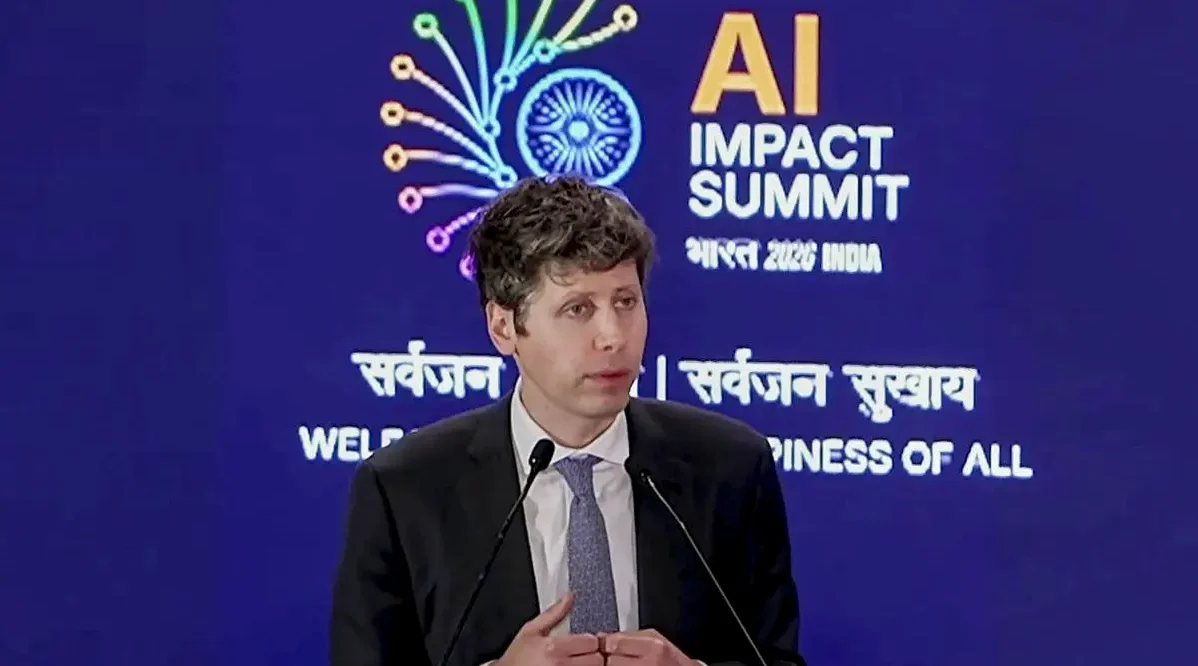
NEW DELHI — OpenAI CEO Sam Altman praised India’s strides in artificial intelligence during a keynote at the AI Impact Summit on Thursday. He spotlighted the country’s advances in sovereign AI, infrastructure and small language models, a sharp turnaround from his 2023 visit when he said India lacked the chops for global AI model building.
“India, the world’s largest democracy, is well-positioned to lead in AI—not just build it, but to shape it and decide what our future is going to look like,” Altman told the audience.
Altman pushed urgency. He predicted early superintelligence in just a couple of years on the current path. By late 2028, he said, data centers could hold more of the world’s intellectual power than human brains do. AI already outpaces top scientists in research, he added, and could outperform CEOs like himself in key roles.
Societal impacts loomed large in his talk. AI promises rapid economic growth. Yet it will upend jobs on a massive scale. “Technology always disrupts jobs,” Altman acknowledged. “We always find new and better things to do.” Daily work will transform, he said, with each generation building on the last.
To steer through this shift, Altman laid out three priorities. First, democratize AI access. Centralizing it in one company or nation risks catastrophe, he warned. Second, build societal resilience. Third, roll out AI iteratively. “Society needs to contend with and use each successive new level of AI capability, have time to integrate it, understand it and decide how to move forward,” he explained.
Regulation can’t wait, Altman stressed. He called for an international body modeled on the International Atomic Energy Agency to coordinate safeguards. “We can choose to either empower people or concentrate power,” he said.
India’s progress impressed him. Sovereign AI efforts let the country control its own tech destiny. Investments in data centers and power grids fuel the boom. Small language models, tailored for local languages and needs, give India an edge over massive Western systems.
Altman’s optimism contrasts his earlier skepticism. In 2023, during a trip to India, he questioned whether the nation could compete in frontier AI amid compute shortages and talent drains. Thursday’s speech signals a vote of confidence. Indian leaders, including Prime Minister Narendra Modi, have poured billions into AI hubs and chip manufacturing to catch up.
The superintelligence forecast grabbed attention. Altman described it as AI vastly smarter than humans across all domains. Data centers, packed with GPUs, will eclipse biological intelligence by 2028, he projected. OpenAI’s own models already assist in drug discovery and code writing at superhuman speeds.
Job losses worry workers worldwide. Altman downplayed long-term gloom. History shows tech creates more roles than it destroys—from factories to farms to offices. Still, the pace feels unprecedented. Governments scramble for retraining programs and universal basic income pilots.
His safeguards pitch echoes global debates. The EU’s AI Act sets risk tiers. The U.S. lags on federal rules. China races ahead with state controls. An IAEA-style agency could bridge divides, Altman suggested, verifying safety and sharing best practices.
India eyes the opportunity. With 1.4 billion people and a booming tech sector, it trains millions in AI skills yearly. Startups in Bengaluru and Hyderabad churn out apps for agriculture, healthcare and finance. Altman urged the country to seize its moment before superintelligence locks in winners.
The summit drew policymakers, CEOs and researchers. Altman’s words set the tone. As AI accelerates, nations like India face a choice: lead or follow.




Comments
No comments yet
Be the first to share your thoughts