

 BBC
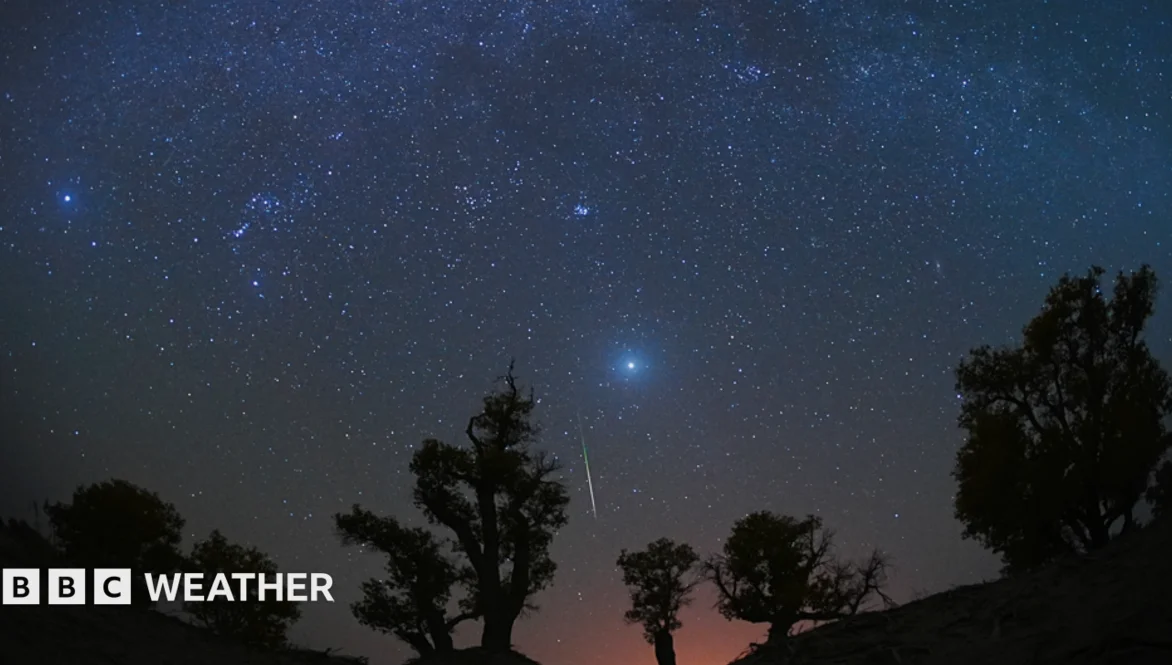
Clear skies permitting, skygazers could be able to spot as many as 10-20 meteors per hour. Where the weather is less cooperative, there will still be chances to catch a glimpse of the shower until 7 November.
Origin and Viewing Tips for the Orionids
The Orionids are an annual meteor shower caused by debris left by Halley’s comet in its journey around the Sun. Every year, Earth passes through the comet dust and the debris burns with the friction caused by the atmosphere, creating a bright streak of light through the sky.
The Orionids are fast and bright, entering our atmosphere with speeds of around 41 miles per second. They can often produce long glowing trails and fireballs. To spot them, find a dark spot with wide open skies, away from city light pollution and let your eyes adjust to the night sky for 20 minutes.
The meteors are visible to the naked eye so you won’t need any specialist equipment like binoculars or a telescope. The meteors will appear to originate from the constellation of Orion, near the red supergiant star Betelgeuse. This is known as the radiant. Between midnight and dawn the constellation will climb higher in the sky to the south and then the south-west.
Impact of the Moon and Weather Conditions
Unfortunately, the Moon will be in the waxing gibbous phase on the night of the 21 October, throwing extra light into the night sky and reducing visibility. However, conditions will improve once the Moon sets around 03:00 BST on Thursday morning.
Meteor showers are best seen in cloudless skies. Unfortunately for skywatchers, this week looks to be the wettest and windiest week so far this autumn with a strengthening jet stream propelling low pressure systems across the UK. While Wednesday is looking wet and windy for many parts of the UK, a brief ridge of high pressure could mean that there is a chance of clear spells for many parts of England, Wales and Northern Ireland for the second half of the night into Thursday morning.
There may also be some clear skies for a time for western Scotland. Eastern Scotland looks cloudy and wet with a lingering front and the far south coast of England could also see outbreaks of rain. Keep an eye on the latest forecast here or on the BBC Weather app.
Additional Observations and Forecasts
The annual Orionid meteor shower reaches its peak this week, offering the chance to see fragments of the most famous comet of all streaking across the night sky. The Orionids occur every October as Earth passes through a stream of dust left behind by Halley’s comet. As these tiny particles plunge into Earth’s atmosphere at about 66 kilometres per second, they heat the surrounding air and produce the fleeting streaks of light that we call meteors.
This year, the shower is expected to reach its peak during the night of 21–22 October. Under ideal conditions, observers may see between 10 and 20 Orionid meteors per hour. Unfortunately, conditions this year are not ideal because of the presence of a bright waxing gibbous Moon. This will drown out many of the fainter meteors.
Nevertheless, conditions improve during the early hours of the morning. The moon sets at about 03:00 BST, leaving a few hours of darker sky before dawn, just as Orion is climbing high into the sky. Find a safe location with as wide a view of the heavens as possible and simply watch with the naked eye. The chart shows the view looking south-east from London at midnight as 21 becomes 22 October. The Orionids appear to radiate from a point near Orion.






Comments
No comments yet
Be the first to share your thoughts