

 BBC
BBC 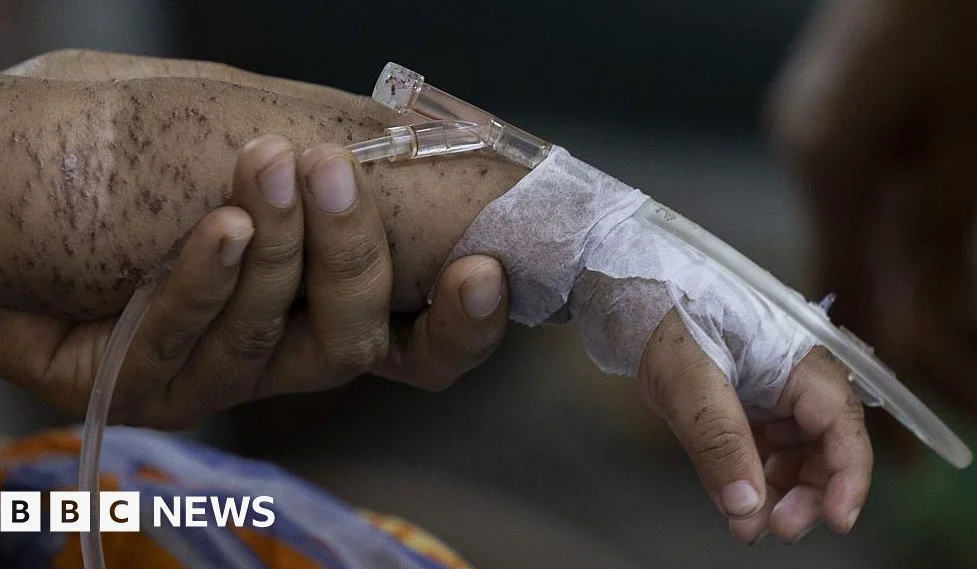
More than 500 children in Bangladesh have died from measles in just months, according to the country’s health ministry, while the outbreak has caused widespread concern among parents and health officials, with over 60,000 suspected cases reported in the same timeframe.
Missed Vaccinations and Hospital Challenges
Al Amin. A father from Dhaka. Recalls his daughter Akira. Who died from measles on her 27th day in the hospital, though Despite having all her vaccines except for measles, his family struggled to get the shot for his daughter. They were turned away twice because of a cold and later told the vaccine was unavailable.
On 8 March. Al Amin took Akira to the hospital, thinking she had a normal fever — But the symptoms soon worsened, with a rash, high fever, and mouth sores. After five hospital admissions, doctors finally diagnosed her with measles.
Measles is highly contagious and especially dangerous for children under five; In Dhaka and other densely populated areas, hospitals have become overwhelmed, with reports of children waiting for beds and care. UNICEF has noted that field visits to hospitals showed them to be overwhelmed, and staff are now helping to isolate and triage patients.
Political and Procurement Delays
UNICEF’s Bangladesh country head, Rana Flowers, said the outbreak was a “perfect storm” caused by several factors. Among them, delays in vaccine procurement under the interim government after Sheikh Hasina stepped down in 2024 played a major role. Flowers said UNICEF had 10 separate meetings with the interim government to flag risks associated with delays in ordering vaccines.
Md Sayedur Rahman, a former Special Assistant to the interim chief advisor for the health ministry, denied any changes to vaccine procurement during the interim government’s tenure. He said, “A regular and consistent collaborative relationship regarding vaccine matters was maintained with UNICEF.”
Dr. Mushtaq Husain, a former health researcher, explained that gaps in vaccination created during the pandemic were never fully closed. Health workers had previously visited homes to encourage parents to vaccinate their children, but this practice was discouraged during the pandemic to avoid spreading the virus. Some parents became fearful of taking their children to the hospital to get vaccines.
Emergency Efforts and Future Concerns
In April, Bangladesh launched an emergency vaccination campaign with the help of international aid agencies. UNICEF said the campaign has helped to plateau the number of new cases in some severely affected areas. However, building immunity from the vaccine takes time, and it will be weeks before the full effect is seen nationwide.
Bangladesh’s Minister of Health and Family Welfare, Sardar Sakhawat Hossain, said he expects the number of infections to decline soon. He noted it takes three to four weeks for antibodies to develop after vaccination. “We expect by next week, Inshallah, it will come down,” he said.
Concerns remain about the potential for the virus to spread during the Eid holiday, as families travel. Dr. Husain warned that thousands of children will move from town to village and vice versa, increasing the risk of transmission. “There will be mixing of children with a fever, with the virus,” he said.
Hossain dismissed calls for an emergency declaration, saying district-level hospitals are prepared and helping to supply ICUs in more remote areas. “Bangladesh is able to handle,” he said.
Al Amin, still grieving for his daughter, says he continues to count the days since her death. He has been prescribed sleeping pills and says he still has “so many questions inside me.”






Comments
No comments yet
Be the first to share your thoughts