

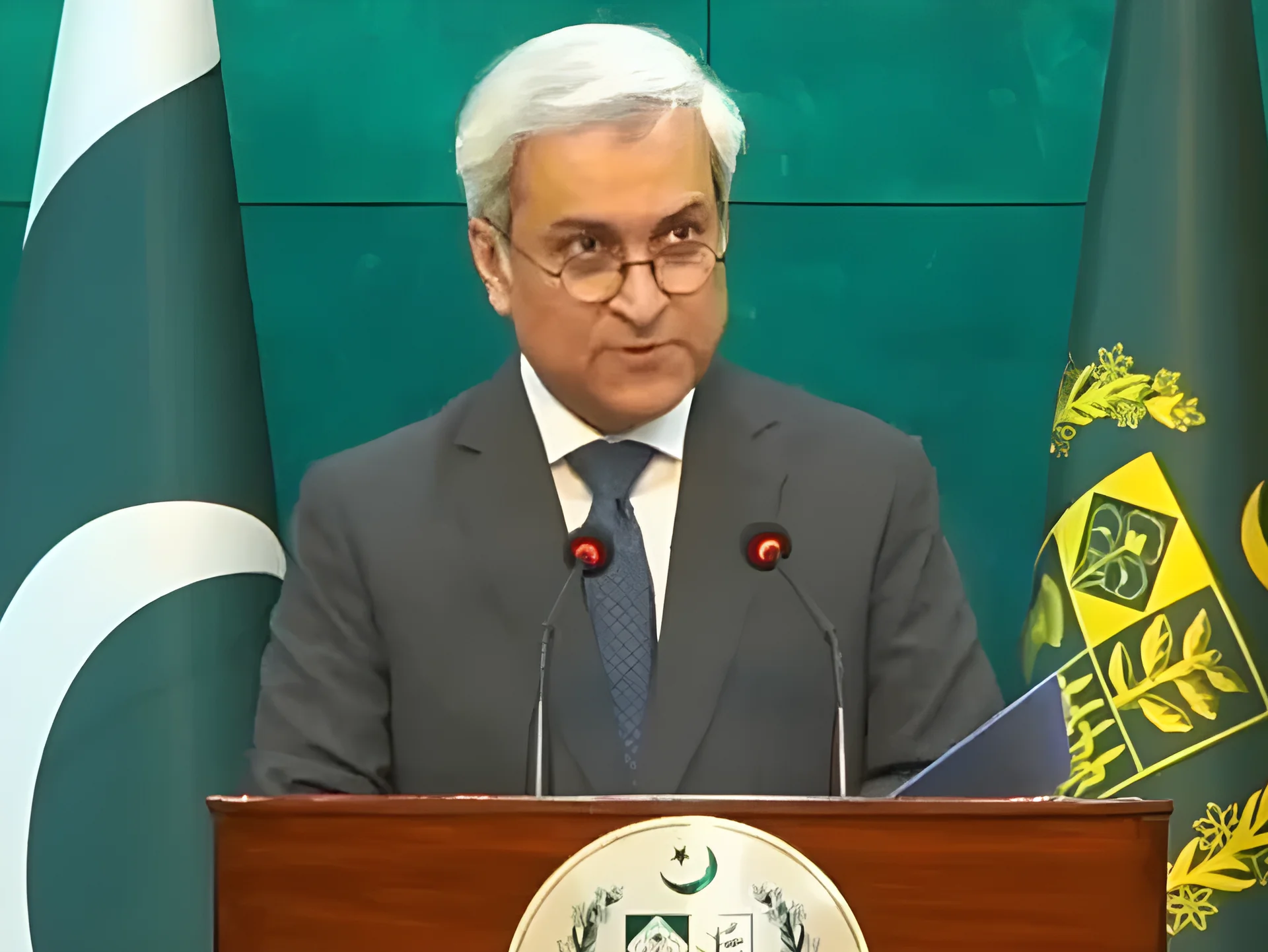
Pakistan has firmly dismissed recent U.S. allegations that its missile program poses a potential security threat, with the country’s Foreign Office spokesperson emphasizing that the program is ‘purely defensive’ in nature. The remarks came in response to comments made by the U.S. Director of National Intelligence, who raised concerns about Pakistan’s strategic capabilities.
Defense Doctrine and Regional Rivalry
Spokesperson Tahir Andrabi stated that Pakistan’s missile program is based on the doctrine of ‘credible minimum deterrence,’ a strategy designed to safeguard the country’s sovereignty and maintain stability in South Asia. This doctrine is in direct response to India’s growing missile capabilities, which have extended beyond regional security needs.
According to Andrabi, Pakistan’s missile program does not exceed intercontinental range, unlike India’s, which has developed systems capable of reaching 12,000 kilometers. He noted that India’s advancements have raised regional and global concerns, suggesting a broader strategic imbalance.
The U.S. official had reportedly expressed concerns about Pakistan’s missile development, suggesting that the program could contribute to an arms race in South Asia. However, Pakistan has consistently maintained that its military buildup is a necessary measure to counterbalance India’s growing military and nuclear capabilities.
Strategic Posturing and Diplomatic Tensions
Andrabi emphasized that Pakistan remains committed to engaging constructively with the United States, based on principles of mutual respect, non-discrimination, and a fact-based approach. This comes amid broader diplomatic tensions between the two countries, particularly over Pakistan’s nuclear program and its alleged ties to militant groups.
Despite these tensions, Pakistan has consistently sought to de-escalate concerns by highlighting its adherence to international norms and its focus on regional peace. The spokesperson reiterated that Pakistan’s strategic capabilities are not intended to provoke, but to deter aggression and ensure national security.
Recent reports suggest that the U.S. is closely monitoring Pakistan’s missile advancements, particularly in light of India’s growing nuclear arsenal and the potential for regional instability. However, Pakistan has maintained that its missile program is transparent and in line with international treaties.
Regional Stability and Future Implications
The ongoing dialogue between Pakistan and the U.S. is expected to continue, with both sides likely to engage in further discussions on nuclear non-proliferation and regional security. Analysts suggest that the U.S. is keen to ensure that Pakistan’s missile program does not escalate tensions with India or lead to an arms race in South Asia.
According to a recent report by the Carnegie Endowment for International Peace, South Asia is currently experiencing one of the most intense nuclear arms races in the world. Pakistan’s recent missile advancements are seen as a key factor in this dynamic, with India’s own strategic modernization efforts adding to the complexity.
Analysts warn that without careful diplomacy and dialogue, the situation could lead to increased militarization in the region. They suggest that both Pakistan and India need to adopt more transparent policies to prevent escalation and ensure regional stability.
Tahir Andrabi reiterated the need for a balanced and thoughtful perspective aligned with South Asia’s strategic realities. He called on the international community to recognize the region’s unique security challenges and support efforts to promote peace and stability through dialogue and cooperation.
As the U.S. continues to engage with Pakistan on regional security issues, the focus will remain on ensuring that both countries’ strategic capabilities are not perceived as threats to each other or to global peace. The next few months are expected to be critical in shaping the trajectory of U.S.-Pakistan relations and the broader security landscape in South Asia.






Comments
No comments yet
Be the first to share your thoughts