

 BBC
BBC 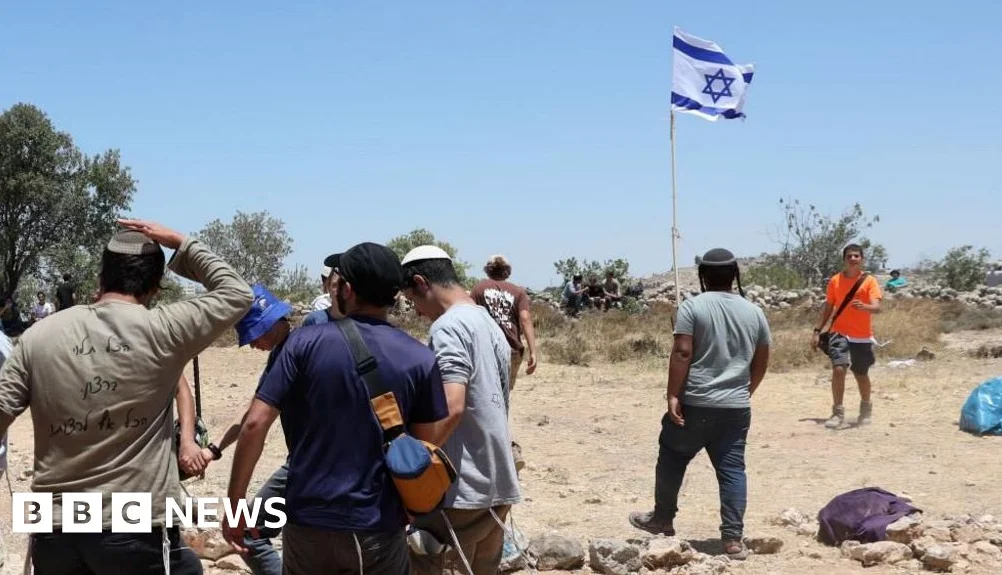
A Palestinian man was killed and others seriously injured in separate settler attacks in the occupied West Bank, according to the BBC. The incidents have raised concerns about the escalating violence in the region, which has intensified since the start of the US-Israeli war on Iran at the end of February.
Settler Outposts and Escalating Tensions
Locals reported that several new unauthorized settler outposts have been established in areas under the control of the Palestinian Authority. These outposts. Which are not approved by the Israeli government, have become a focal point of tension and violence.
Mohammad al-Malhi. A 42-year-old Palestinian, was the seventh person killed in the current wave of violence. His family said he was shot in the head by settlers who had erected an outpost on their land near Bethlehem. According to the family. Israeli soldiers arrived to dismantle the outpost but left after a short time, allowing the settlers to return and rebuild it; it was during this period that the shooting occurred.
The Israel Defense Forces (IDF) confirmed that there had been a clash between settlers and Palestinians, during which an Israeli civilian opened fire. They reported that one person was killed and three others were injured. Video footage circulating on social media showed another attack on Thursday that left a 75-year-old man bruised and covered in blood. Residents said the man was attacked in his home in Tayasir, near Tubas in the north, after settlers raided the village and shot at young men who confronted them.
Surge in Settler Violence and Legal Concerns
The surge in settler violence follows a trend observed during the Gaza war, which was triggered by Hamas-led attacks on Israel in October 2023 — this period has been marked by a rapid expansion of settlements, fast-tracked by the Israeli government.
Last year set a record for the most extensive expansion of settlements and planning approvals since the UN began its monitoring — all settlements are considered illegal under international law, and outposts are set up without Israeli government approval. Some of these outposts have been removed by Israeli forces, but others continue to be established in areas where Israeli law prohibits Israeli citizens from entering.
According to Israeli media reports. This week, the security cabinet retroactively legalised 30 outposts throughout the West Bank; this move has drawn criticism from international bodies and human rights organizations, who argue that such actions violate international law.
Historical Context and Humanitarian Impact
Israel has built about 160 settlements housing 700,000 Jews since it occupied the West Bank and East Jerusalem during the 1967 Middle East war. These areas are claimed by Palestinians, who also want Gaza for a future state. An estimated 3.3 million Palestinians live alongside these settlers.
The violence has significant implications for the region, affecting not only the safety of Palestinians but also the broader geopolitical landscape. The rise in settler activity has been accompanied by an increase in Israeli government support for settlement expansion, which has been a long-standing point of contention in international relations.
Residents in affected areas are increasingly concerned about their safety. The recent attacks have heightened fears among Palestinians, who feel vulnerable and unprotected. Local leaders have called for stronger measures to address the growing threat of settler violence.
As the situation continues to unfold, the international community is closely watching the developments. The Israeli government has not commented publicly on the recent incidents, but the retroactive legalisation of outposts has raised questions about the government’s stance on the issue.
Analysts warn that the continued expansion of settlements and the establishment of unauthorized outposts could further destabilize the region. The violence has already resulted in a significant death toll, with seven Palestinians killed so far this period. The number is expected to rise as the situation remains volatile.
The international community, including the United Nations, has repeatedly called for a halt to the expansion of settlements and the establishment of unauthorized outposts. However, the Israeli government has continued to support such activities, citing security concerns and the need for territorial control.
The ongoing violence has also had a psychological impact on the local population. Many Palestinians report feeling a sense of fear and helplessness, as they witness the increasing presence of settlers in their communities. The situation has become increasingly complex, with no clear resolution in sight.
As the death toll continues to rise, the international community is under pressure to take a firm stance on the issue. The situation in the West Bank remains a critical point of contention, with the potential for further escalation if no effective measures are taken to address the growing violence.






Comments
No comments yet
Be the first to share your thoughts