

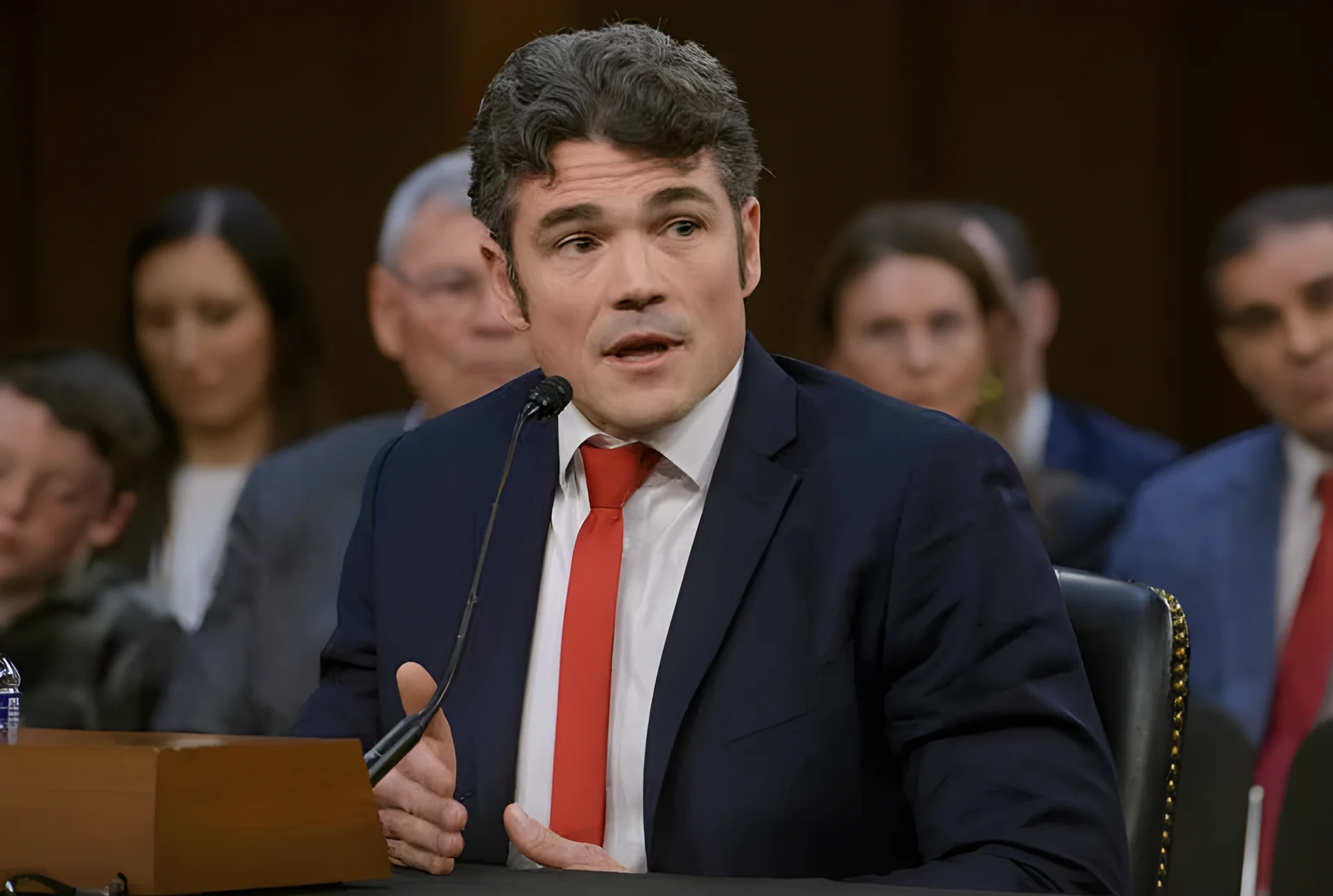
On a day when the skies over the Middle East were dark with the shadow of war, Joe Kent stepped down from his position as the director of the National Counterterrorism Center. His resignation letter, posted on social media, painted a stark picture of a man who had once been a loyal soldier in Trump’s cause, now disillusioned by the administration’s actions.
The Resignation That Shook the Ranks
Kent, a 45-year-old former special forces soldier with a history of right-wing activism, had been a key figure in Trump’s national security apparatus. His departure was not merely a personal decision—it was a statement. In his resignation letter, he claimed that Iran posed no imminent threat and that the war was driven by pressure from Israel and its American lobby.
His words directly contradicted President Trump’s public assertions, which had insisted that Iran was an immediate danger to the United States. This contradiction revealed a deep internal divide within the administration, one that had been simmering beneath the surface for months.
A Loyalist Turned Critic
Kent had once been a staunch supporter of Trump, backing him through the 2020 election, the January 6 riots, and his own failed political campaigns. He was a man of the right, a patriot in the mold of the MAGA movement. Yet, his resignation signaled a shift. It was not just about Iran—it was about the direction of the war and the role of Israel in shaping American foreign policy.
Trump, ever the defender of his own narrative, dismissed Kent as “weak on security” and accused him of being “not smart or savvy.” He suggested that those who did not believe Iran was a threat were not fit to serve in his administration. But the irony was not lost on many: a man who had once been a loyal soldier was now calling out the very war he had helped justify.
The War in Iran and the Role of Israel
Kent’s resignation brought into sharp focus the role of Israel in the administration’s decisions. He accused high-ranking Israeli officials and the American media of deploying a “misinformation campaign” to justify the war. His claims, though controversial, were not without precedent. There had been long-standing tensions between the Trump administration and some elements of the American Jewish community, particularly those who felt their influence was being wielded in ways that served foreign interests.
Director of National Intelligence Tulsi Gabbard, who oversaw Kent’s work, made it clear that the decision to go to war was ultimately up to Trump. She stated that he had reviewed all the information and concluded that Iran was an imminent threat. Yet, Gabbard’s own stance on the war was not explicitly stated, leaving room for interpretation.
The Patriot Prayer and the Fractured Right
Kent’s resignation is not just a political statement—it is a reflection of a broader movement within the right. The “Patriot Prayer” movement, which had long been associated with far-right extremism, had once counted Kent among its ranks. His departure from the administration may signal a shift in the movement, as some members begin to question the direction of the war and the role of Israel in shaping American foreign policy.
The Patriot Prayer movement, known for its radical rhetoric and ties to white supremacist groups, had often been at odds with mainstream conservative politics. Kent’s resignation may indicate that even within the ranks of the right, there are growing doubts about the legitimacy of the war and the influence of external forces.
The Cost of War and the Weight of Leadership
Kent’s resignation also highlights the personal cost of war. He had once praised Trump’s understanding of the Middle East, calling it a trap that had cost American lives and drained the nation’s wealth. His words suggest a man who had once believed in the president’s vision but had since come to see it as a dangerous gamble.
Trump’s response to Kent’s resignation was uncharacteristically harsh. He called the resignation “insulting and laughable,” and his press secretary, Karoline Leavitt, echoed his sentiment, stating that the decision to go to war was based on “strong and compelling evidence” that Iran was going to attack first.
A Divided Nation and a Fractured Administration
Kent’s departure is not an isolated event. It is part of a larger pattern of dissent within the administration, as even some of Trump’s most loyal supporters begin to question the war. The rift between the president and his national security advisors has grown wider, and the question remains: how long can a president hold together an administration that is increasingly divided on the very issues that define his leadership?
The war in Iran has become a litmus test for the administration’s unity. It is not just about foreign policy—it is about the very identity of the Republican Party and the values it claims to uphold. And as Kent’s resignation shows, even the most loyal patriots can be turned against a war they once supported.
What Comes Next?
As the war continues, the administration will face mounting pressure from both within and outside the party. The question of whether Iran posed an imminent threat will remain a point of contention, and the role of Israel in shaping American foreign policy will likely remain a topic of debate.
Kent’s resignation may signal the beginning of a broader reckoning. It is a reminder that even the most loyal supporters can be turned by the weight of their own conscience. And as the war in Iran unfolds, the true cost of leadership will become clearer than ever before.





Comments
No comments yet
Be the first to share your thoughts