

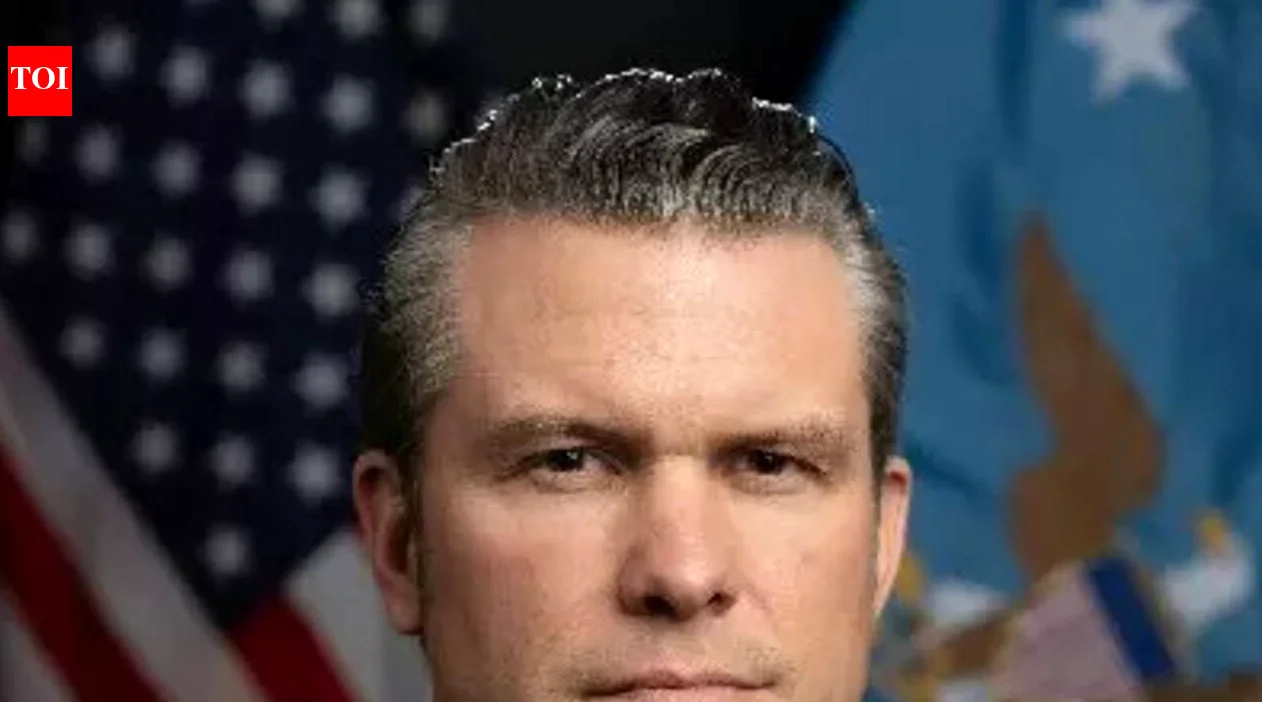
The Pentagon has initiated a major overhaul of its military education partnerships, removing several elite universities from its prestigious Senior Service College Fellowship program. This move, announced in a recent memo by Defense Secretary Pete Hegseth, signals a strategic realignment of where military officers receive advanced training, favoring institutions with perceived alignment to military values.
Elite Institutions Face Exclusion
The Senior Service College Fellowship, a key pathway for mid-career military officers to pursue advanced study, has historically included institutions such as Harvard University, Massachusetts Institute of Technology (MIT), and Georgetown University. However, according to a Pentagon memo released last week, more than a dozen universities will be excluded from the program starting this fall, including several Ivy League schools and leading research institutions.
The program, which enrolls fewer than 80 officers across the affected universities, holds significant symbolic weight as it has historically groomed military leaders for high-level strategic roles. Notable alumni include James McConville, former Army chief of staff, who completed his fellowship at Harvard, and Lt. Gen. William Graham Jr., who studied at MIT.
Academic and Military Concerns
The decision has raised concerns among academics and defense experts about the potential impact on the military’s access to advanced research and innovation. Several elite universities, including Harvard, have been barred from offering graduate-level professional military education programs, prompting some to allow active-duty service members to defer their admissions.
Harvard’s Kennedy School, for example, has offered service members the option to defer enrollment for up to four years and has expedited consideration for those seeking alternatives at institutions like the University of Chicago and Tufts University. This move comes despite the fact that only a small number of military students were enrolled at the affected elite universities.
According to an analysis by the Associated Press, approximately 350 military students used Tuition Assistance to study at institutions such as Harvard, Johns Hopkins, and George Washington University. In contrast, more than 50,000 service members were enrolled at the American Public University System, a for-profit online provider with a 22% graduation rate.
Shift Toward Conservative and Public Institutions
In place of the excluded universities, the Pentagon has proposed 15 alternative institutions for officers to pursue advanced study. These include Liberty University, a Christian institution in Virginia, which already enrolls more than 7,000 military students using Tuition Assistance. Other institutions on the list include Hillsdale College, a conservative Christian college, and major public universities such as the University of Michigan and the University of North Carolina.
Liberty University, which has faced high-profile controversies in recent years, including the 2020 departure of its former president, Jerry Falwell Jr., has not yet coordinated with the Department of Defense regarding the new fellowship partnership. However, the university expressed support for the initiative in a statement.
Hegseth defended the decision, stating that the changes would strengthen officer training by directing them toward institutions that align with military values. In his memo, he accused several elite universities of supporting “anti-American resentment” and claimed the new institutions would provide “a more rigorous and relevant education to better prepare them for the complexities of modern warfare.”
Despite the political rhetoric surrounding the crackdown on so-called “woke” institutions, the administration’s actions so far have remained relatively narrow in scope. The Pentagon has primarily targeted graduate-level fellowships, leaving the much larger Tuition Assistance program, which subsidizes education for about 200,000 active-duty and reserve service members each year, intact.
Experts argue that cutting ties with elite research universities could deprive the military of exposure to advanced technological research and innovative thinking. The move has already sparked a fierce debate over the intersection of ideology, academic freedom, and national security.
The partnership between the military and elite universities, once considered a cornerstone of the military’s intellectual ecosystem, is now entering uncertain terrain as the Pentagon’s ideological priorities reshape its educational landscape.






Comments
No comments yet
Be the first to share your thoughts