

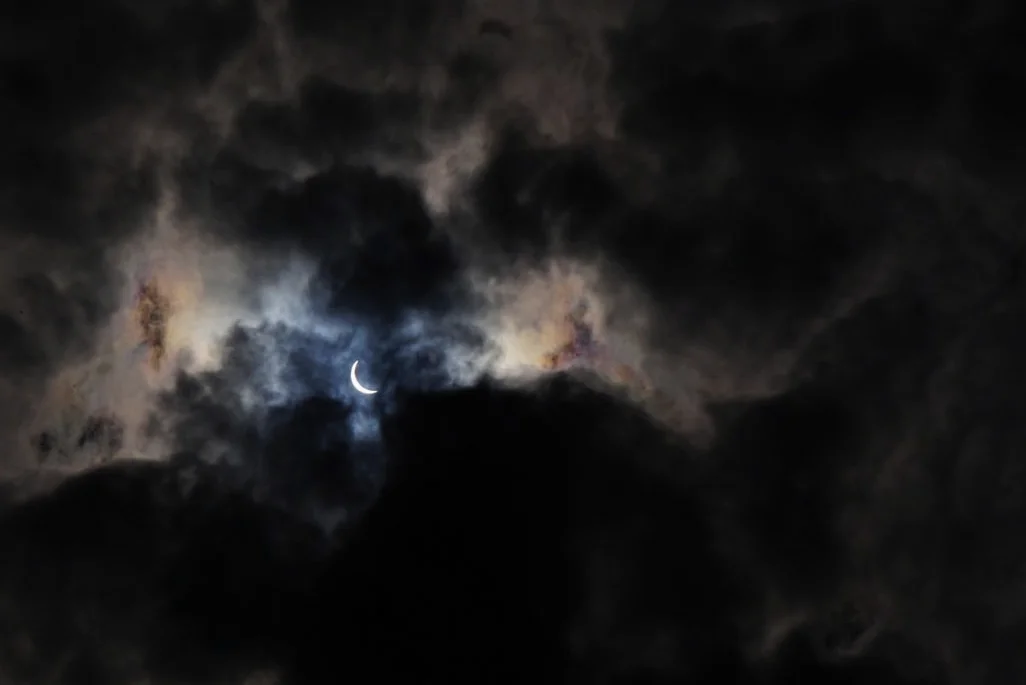
The Perseid meteor shower, cited by the Canadian Space Agency (CSA) as “the best meteor shower of the year,” is expected to peak on the nights of Aug. 12 to 13. According to Pierre Langlois, manager for the space astronomy and planetary science missions at the CSA, the event is a great spectacle for those in a region where it is visible, though patience is required to witness it.
Understanding the Perseid Meteor Shower
The Perseid meteor shower is caused by the Earth passing through debris left behind by Comet Swift-Tuttle as it orbits the Sun, according to a NASA spokesperson. These bits of debris enter Earth’s atmosphere at a speed of 59 kilometers per second, vaporizing at an altitude of 80 to 90 kilometers and creating streaks of light known as meteors or shooting stars. Langlois explained this is similar to driving into snowflakes, and the Perseids are predictable and occur annually from late July to mid-August in the Northern Hemisphere.
Partial Solar Eclipse to Occur
Aug. 12 will also see a partial solar eclipse, where the Moon passes between the Sun and Earth but the alignment is not perfect, resulting in a crescent-shaped Sun. According to NASA, the partial solar eclipse will be visible in the U.S. from Alaska to North Carolina, and observers are advised to use solar viewing glasses or other safe solar filters to prevent eye damage. In contrast, a total solar eclipse will be visible in northern Russia, Greenland, Iceland, and northern Spain, with a small part of Portugal also in the path of totality.
Additional Celestial Events
Aug. 12 will also see a new moon rising at 1:37 p.m, but Eastern Time, making it easier to view the planets in the night sky. Earlier in the week, from Aug. 11 to 12, a six-planet parade will begin in the pre-dawn hours; this will include Jupiter, Mercury, Mars, Uranus, Saturn, and Neptune. While Jupiter, Mercury, Mars, and Saturn will be visible to the naked eye, observers will need binoculars to see Uranus and a telescope to see Neptune.
In other meteor shower news, the Geminids are one of the most prolific showers of the year, known for bright, colorful meteors and impressive hourly rates. Despite a nearly full moon, the Geminids still managed to live up to their reputation in 2024. Meanwhile, the Southern Delta Aquariids and the Alpha Capricornids are also set to reach maximum activity on the same night as the full Buck Moon, but bright moonlight will likely wash out many of the fainter meteors.
For those interested in capturing the beauty of these celestial events, photography tips and gear recommendations are available, including the best cameras and lenses for astrophotography.






Comments
No comments yet
Be the first to share your thoughts