

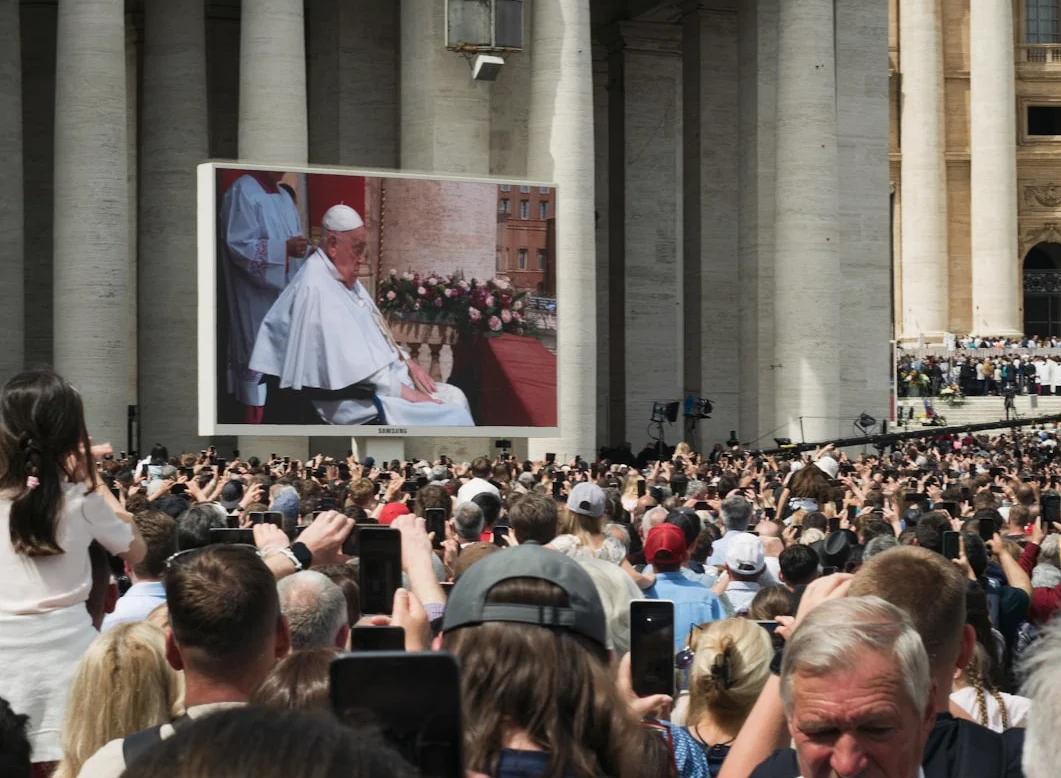
Pope Leo XIV delivered a powerful message during his Palm Sunday Mass, rejecting the notion that God justifies war. The address, held at St. Peter’s Square in Vatican City, came amid growing global tensions and was broadcast to millions worldwide. The Pope emphasized the importance of peace and reconciliation, urging leaders to seek diplomatic solutions over conflict.
Religious and Moral Stance on War
In his homily, Pope Leo XIV directly confronted the idea that divine will could be interpreted to support military action. He stated, ‘God does not bless war; He calls us to peace, to reconciliation, and to the healing of divisions among humanity.’ According to the National Public Radio (NPR), the Pope’s message was a clear rejection of any attempt to use religion to justify violence.
While the Pope did not name any specific countries or conflicts, his remarks were widely interpreted as a response to recent geopolitical tensions, including the ongoing situation in the Middle East and the escalating rhetoric from various world powers. The Vatican has long maintained a neutral stance on military matters, but this message from the Pope marked a rare public condemnation of war.
According to the German newspaper Tagesspiegel, the Pope’s comments were particularly significant given the current climate of uncertainty and conflict. ‘In a time when the world seems to be moving further from peace, the Pope’s message is a clarion call for unity and understanding,’ reported Tagesspiegel.
Local Reactions and Community Impact
In Bethlehem, where the Palm Sunday Mass is traditionally celebrated with great reverence, local Christians welcomed the Pope’s message. According to the Global Sisters Report, the community has long viewed the Palm Sunday Mass as a symbol of hope and resilience. ‘The Pope’s words reminded us of the deep spiritual connection we share as a community, and his message resonated with our shared values of peace and unity,’ said a local priest.
In Austria, where the Palm Sunday Mass was also attended by thousands, the event took on a more symbolic role. According to the German newspaper Heute, the Pope’s address was viewed as a unifying moment for a country still grappling with the aftermath of recent political and social changes. ‘The Pope’s emphasis on peace is especially important for us as we handle the challenges of our time,’ said a local commentator.
According to news.nate.com, the report on the Pope’s speech was widely circulated, with many readers interpreting it as a call for global peace in the context of the ongoing regional tensions and global conflicts. ‘The Pope’s words reminded us of the importance of dialogue and understanding in a world that seems increasingly divided,’ said a reader in Islamabad. In Pakistan, where the Palm Sunday Mass is not traditionally celebrated, the message received a different kind of attention.
Global Implications and Forward-Looking Concerns
The Pope’s message has sparked discussions in various countries, with some analysts suggesting that it could influence diplomatic efforts. In the United States, where the Vatican maintains a strong relationship with the government, the message was seen as a potential soft power tool in international relations. ‘The Pope’s stance on war could serve as a moral compass for leaders seeking to de-escalate tensions,’ said a political analyst from Washington.
In Israel, the message was viewed with both appreciation and caution. According to the Tagesspiegel, some Israeli leaders welcomed the Pope’s call for peace, while others were more skeptical. ‘While the Pope’s words are well-intentioned, the reality of security and survival in our region is complex,’ said a senior Israeli official.
In Pakistan, the message was also seen as a reminder of the country’s own struggles with conflict and division. According to news.nate.com, the report on the Palm Sunday Mass was widely shared on social media, with many users expressing hope for a more peaceful future. ‘The Pope’s message is a reminder that peace is not only a religious ideal but a necessary reality for all of us,’ said a user from Lahore.
The Pope’s address also highlighted the importance of the Palm Sunday Mass as a global event. With millions of people around the world participating in the celebration, the event has become more than just a religious observance—it is now a moment of global reflection and unity. The Vatican has confirmed that the Pope will continue to emphasize peace and reconciliation in his upcoming addresses, signaling that this message is not a one-time statement but a continuation of a broader spiritual and moral mission.
What’s Next and Why It Matters
As the world continues to grapple with rising tensions and conflicts, the Pope’s message on Palm Sunday could serve as a reminder of the importance of dialogue and understanding. According to the Global Sisters Report, the message has already sparked discussions in various religious and political circles, with many calling for more diplomatic efforts to prevent further escalation of hostilities.
The Vatican is expected to continue its outreach efforts in the coming weeks, with the Pope scheduled to address several international gatherings. His message may also influence the policies of various countries, particularly those with close ties to the Vatican. In addition, the event has already inspired local communities around the world to reflect on their own values and priorities, emphasizing the need for peace and reconciliation in both personal and global contexts.
The Palm Sunday Mass, traditionally a time of reflection and renewal, has taken on new significance in light of the Pope’s message. With the world facing rare challenges, the call for peace has never been more urgent. As the Pope continues to emphasize this message, it is clear that the event will remain a central moment in global religious and political discourse.






Comments
No comments yet
Be the first to share your thoughts