

 The Guardian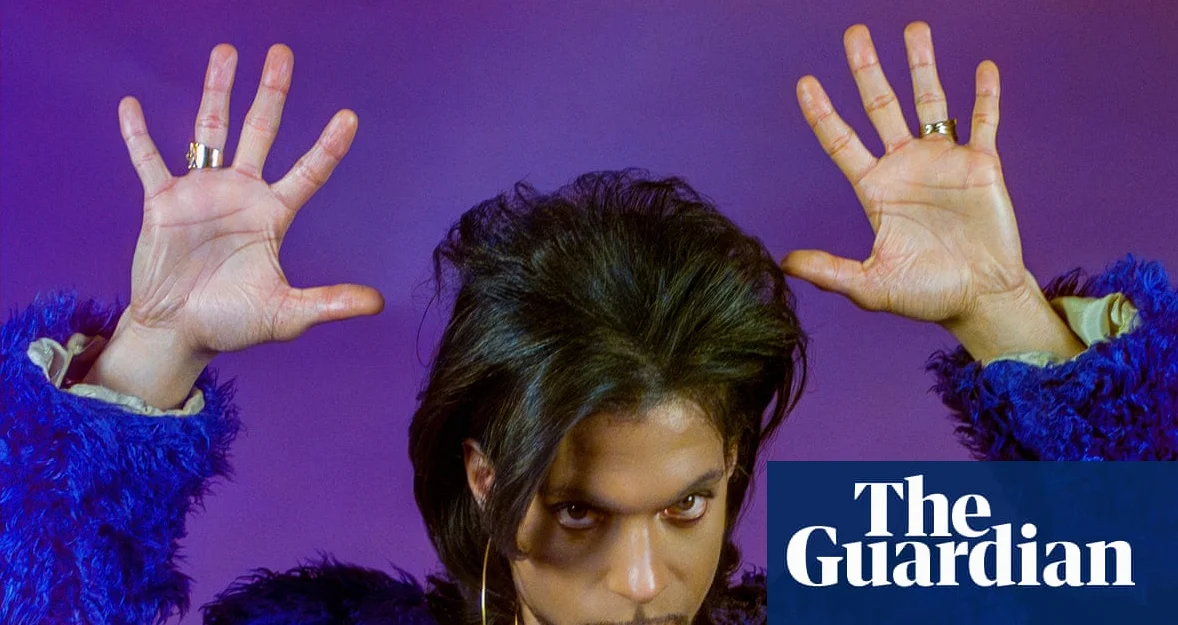
Prince laughed like a kid as Steve Parke painted ‘Free’ on his stomach during a 1990s shoot, revealing the artist’s unique and personal experience working with the iconic musician. The moment, captured in a photograph, has become one of the most memorable images from Prince’s career and highlights the unorthodox creative process that defined his work.
The Unconventional Collaboration
Steve Parke, who worked as an in-house art director and photographer at Prince’s Paisley Park studio from 1988 to 1996, shared an intimate account of his time with the legendary artist. Parke described how his relationship with Prince was unlike any other, marked by a lack of traditional celebrity barriers. He was 25 when he first met Prince, and he approached the encounter with professionalism but also a sense of normalcy.
“I was 25 and tried to be my normal self, but professional, which suited the way we worked,” Parke said. “He’d say: ‘I’ve got an idea, grab your camera.’ Sometimes he’d ask me to delete a photo — it might have blurred, or the light hadn’t been good — but he was very lucky to be so photogenic.”
Parke’s role was not just about capturing Prince’s image but also contributing to the creative vision. He took on various tasks, including painting stages and designing visuals, and eventually became a key figure in Prince’s artistic output. His journey began with photographing local bands and eventually led to working with some of the biggest names in music, including U2 and Boy George, through his high school newspaper.
The ‘Free’ Photograph: A Defiant Statement
The photograph of Prince with the word ‘Free’ painted on his stomach was taken for the Notorious magazine’s end-of-year cover. The art director initially wanted the word ‘1999’ to be featured, but Prince had a different idea. “He wanted to do something new,” Parke explained. “It was during the period he was talking about his freedom from record labels, and he suggested the word ‘Free.'”
The shoot was set up at Paisley Park before 8 a.m., an unusually early time for a photoshoot. The art director was taken aback by the simple setup — a purple backdrop and one movie light. “He saw the purple backdrop and one movie light and went: ‘Is this how you wanna shoot?’ I told him it was how we worked,” Parke said.
The art director suggested using a shower curtain for diffusion, which Parke agreed to. When it came to the actual painting, Prince made the decision. “He told the guy mixing the gold paint: ‘Steve will do it,'” Parke said. “I was like: ‘What?’ The next thing I knew I was writing ‘Free’ on Prince’s stomach with my fingers. It was cold, so he started laughing like a kid; I was thinking ‘I hope the paint doesn’t run because I’ve got to clean my fingers off and start shooting.'”
Creative Process and Legacy
Prince’s arms were outstretched to draw more attention to the word ‘Free,’ and Parke’s unique vantage point allowed him to capture the moment effectively. “I was slightly taller so always had a great angle to shoot him from,” he said. “He’d drop his chin a bit and look up with those eyes.”
The model in the photograph, Desray Junca, had previously appeared in Prince’s video for “The Greatest Romance Ever Sold.” She served as a foil for the shoot, providing Prince with options. The gold on her fingers created the illusion that she was the one painting, rather than Parke.
Prince’s creative freedom was a central theme in his work, and the photograph encapsulates that spirit. “He used to ask: ‘Why do people think I’ve had a nose job?’ I told him that was because when he was younger people would shoot him straight to the nose whereas the way I did it made him look more angular, so people thought he’d had work done,” Parke said.
The photograph has since become a symbol of Prince’s desire for artistic and personal liberation. It reflects a period when he was actively challenging the constraints of the music industry and asserting his independence. Parke’s account offers a rare glimpse into the behind-the-scenes process that brought Prince’s vision to life.
Prince’s legacy continues to influence artists and fans alike. The photograph of him with ‘Free’ painted on his stomach remains a powerful image that encapsulates his creative spirit and desire for freedom. As new generations discover his work, the story of how this iconic image came to be provides a deeper understanding of the man behind the music.






Comments
No comments yet
Be the first to share your thoughts