

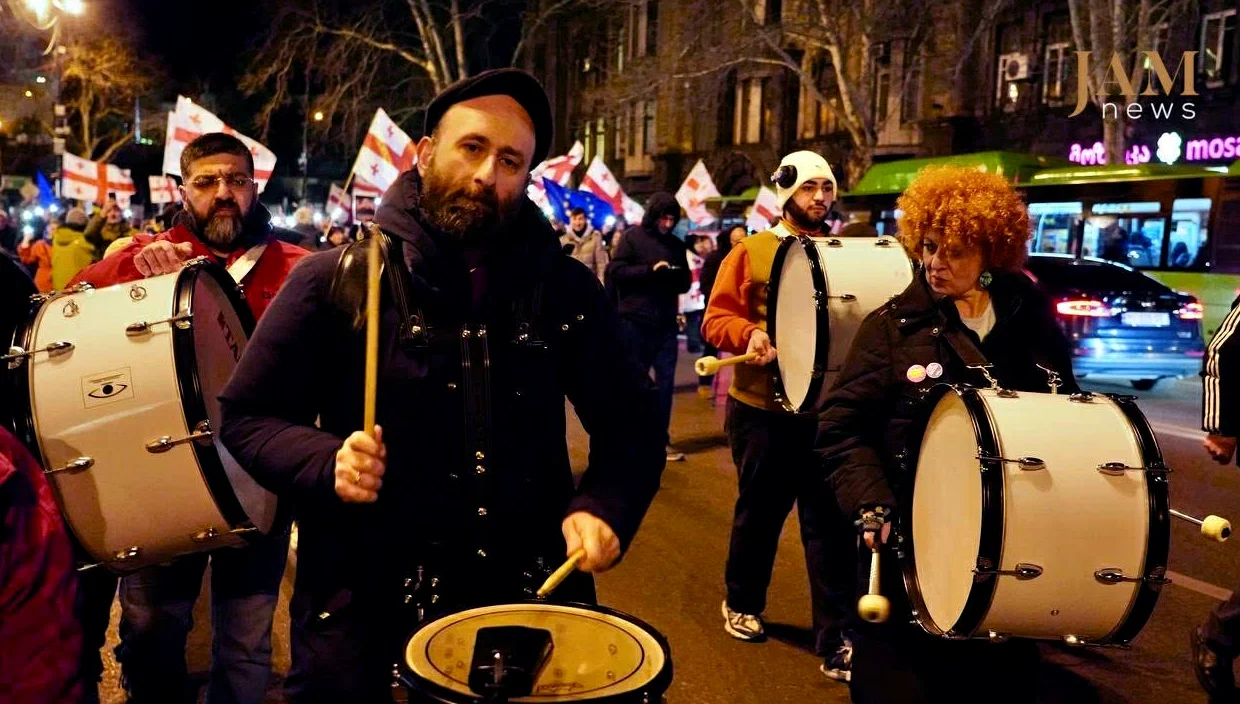
Thousands of demonstrators marched along Rustaveli Avenue in Tbilisi on Saturday, joining thousands more who had already gathered outside the parliament building. The protest, part of a sustained movement that has lasted over a year, saw participants calling for Georgia to recommit to European integration and for an end to what they describe as an increasingly authoritarian government.
Protests and Repression
The demonstrations, which began in November 2024, have become a regular feature of life in Georgia. According to the European Parliament, the protests have seen an estimated 20,000 participants on average each evening, with some gatherings reaching into the tens of thousands. The movement has drawn support from civil society, opposition politicians, and international observers who have raised concerns over the erosion of democratic norms.
Over the past year, dozens of protesters have been detained, with many facing criminal charges. Some have been sentenced to prison terms, and as of early 2025, Georgia is reported to have up to 150 prisoners of conscience, including women. This figure represents a significant increase from previous years and marks the first time in the country’s history since gaining independence that such a large number of political detainees have been held.
Political Prisoners and Legal Crackdowns
Among those detained is Mzia Amaglobeli, a journalist and founder of the popular media outlets Batumelebi and Netgazeti. In 2025, she was sentenced to two years in prison for slapping a police officer during a protest. Her case has drawn international attention, with human rights organizations condemning the sentence as disproportionate and politically motivated.
Protesters are calling for the release of all political prisoners and the annulment of laws passed by the ruling Georgian Dream party over the past two years. These laws, they argue, have undermined civil liberties, restricted press freedom, and weakened the independence of judicial institutions.
According to the protesters, the 2024 parliamentary elections were not conducted fairly and should be annulled. They claim that the ruling party has manipulated the electoral process, leading to an illegitimate government that has since cracked down on dissent through mass arrests, surveillance, and restrictions on media outlets.
International Response and Future Implications
The European Union has repeatedly called for dialogue between the Georgian government and opposition groups. In a recent statement, the EU expressed concern over the erosion of democratic institutions and urged the government to release all political prisoners and respect the rule of law.
Meanwhile, the United States has also raised concerns, with the U.S. State Department warning that continued repression could strain Georgia’s relationship with the West. The country has long been seen as a strategic partner in the region, but its alignment with Western values is under increasing scrutiny.
Analysts suggest that the situation could reach a critical point in the coming months. With the next parliamentary elections scheduled for 2026, the government may face mounting pressure to either engage in meaningful reform or risk further isolation. However, the ruling party has shown little willingness to compromise, with officials insisting that the current government is legitimate and that the protests are being fueled by external actors.
As the protests continue, the number of political detainees is expected to rise, and the international community is likely to intensify its calls for accountability. The outcome of this standoff could have long-term implications for Georgia’s political future and its relationship with the West.

Comments
No comments yet
Be the first to share your thoughts