

 BBC
BBC 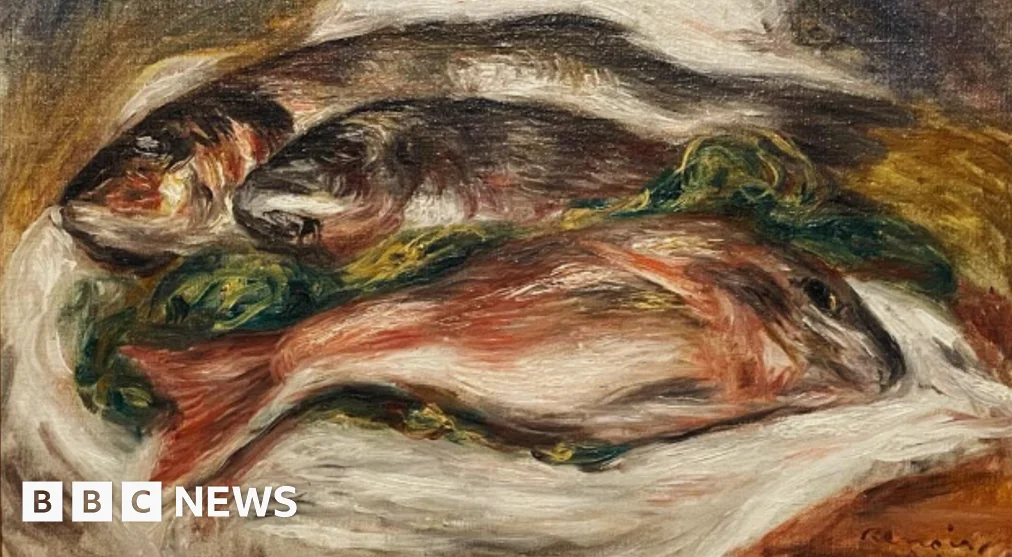
Three priceless paintings—Les Poissons by Pierre-Auguste Renoir, Still Life with Cherries by Paul Cézanne, and Odalisque on the Terrace by Henri Matisse—were stolen in a swift heist at the Magnani Rocca Foundation near Parma, Italy. The theft occurred on 22 March. When four masked men entered the villa and made off with the artworks in just three minutes, according to Italian media reports.
The Heist and the Escape
The thieves forced their way into the Villa dei Capolavori, a historic building in the Parma countryside, and entered the French Room on the first floor, where the paintings were displayed. They bypassed security and took the artworks before being interrupted by the museum’s alarm system, and the alarm forced them to flee, and they escaped by climbing over a fence, according to regional public broadcaster TGR.
The foundation described the criminals as ‘structured and organised,’ suggesting they had planned the robbery in advance — the alarm system prevented them from taking additional pieces from the private collection, according to the institution. The heist was only made public on Sunday, despite the theft having occurred nearly a week earlier.
The Stolen Artworks and Their Value
Renoir’s Les Poissons. The stolen paintings are estimated to be worth €9 million in total, with Les Poissons alone valued at €6 million — this makes the theft one of the most significant in Italy in recent years. An oil-on-canvas painting. Was created around 1917 and is one of the most famous works from the Impressionist movement.
Cézanne’s Still Life with Cherries. Completed around 1890, is a rare example of the post-Impressionist artist’s work in watercolour — Cézanne used watercolour only in the final years of his life, according to the foundation. The painting is one of several cherry-based still-lifes he produced, but its use of watercolour adds to its rarity and value.
Matisse’s Odalisque on the Terrace, painted in 1922, depicts two figures—one reclining in the sun and the other holding a violin. The work is notable for its vibrant colors and the artist’s signature style during the 1920s.
Investigation and Previous Incidents
Italian authorities are investigating the theft through the Carabinieri and the Cultural Heritage Protection Unit of Bologna. The heist follows a high-profile robbery at the Louvre in Paris last October, where priceless jewels were stolen in daylight. The Louvre incident, which involved a group of masked thieves, highlighted the vulnerability of cultural institutions to organized crime.
The Magnani Rocca Foundation was established in 1984 after the death of Luigi Magnani, a composer and art collector, who amassed a private collection in his family home. The foundation now houses a significant collection of European art, including works by major artists such as Renoir, Cézanne, and Matisse.
The theft raises concerns about the security of private collections and the increasing frequency of art-related crimes. Officials said the alarm system played a critical role in limiting the damage, but the swift execution of the heist suggests the criminals were well-informed about the museum’s layout and security measures.
The Italian government has not yet commented on the incident, but the theft is expected to be a major focus of law enforcement in the coming weeks. The artworks are likely to be targeted by international art crime networks, and their recovery will depend on the effectiveness of Italy’s investigative agencies.
Experts warn that the theft could lead to a surge in demand for stolen art on the black market. The estimated value of €9 million makes the paintings highly valuable, and their rarity adds to their desirability. The foundation is working with authorities to track any leads and hopes for the safe return of the artworks.
Authorities are expected to release more details about the investigation in the coming days. The case highlights the need for improved security measures at cultural institutions, especially those housing private collections.






Comments
No comments yet
Be the first to share your thoughts