

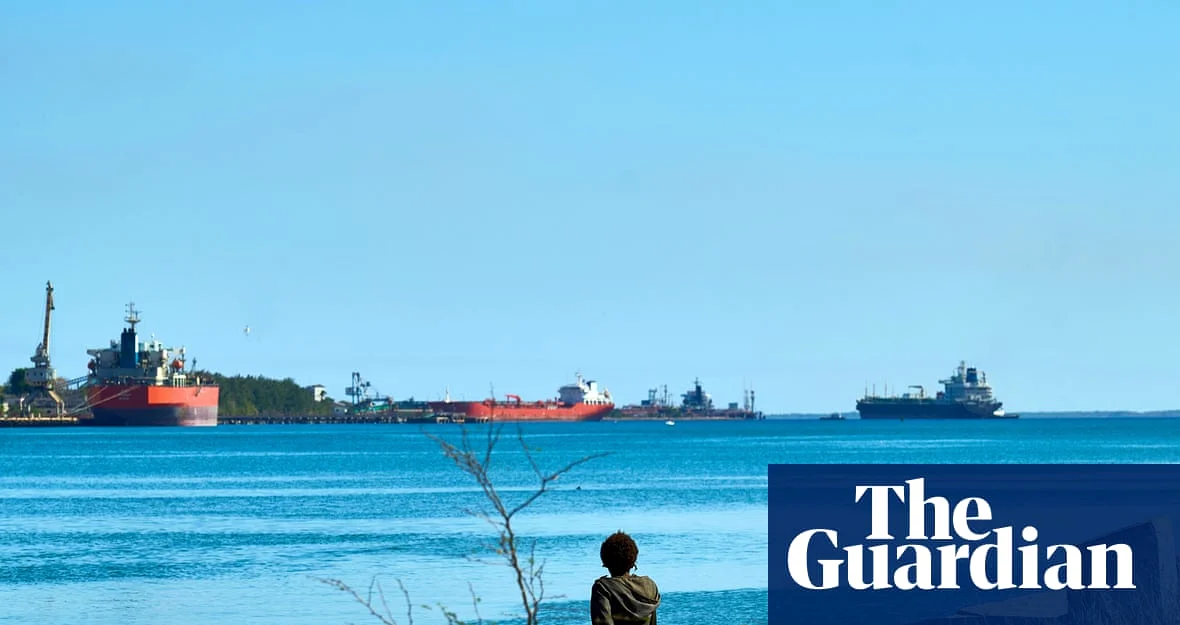
The United States is reportedly allowing a Russian oil tanker to dock in Cuba, signaling a shift in policy amid ongoing tensions and sanctions; this development comes after months of what some have described as a blockade, which limited the flow of critical fuel to the island nation. According to The Guardian. This move is being closely watched by international observers and could have significant implications for U.S.-Cuba relations.
Background and Context
The Russian oil tanker. Neptun, is expected to arrive in Cuba after reportedly receiving special permission from U.S. authorities — this is a notable departure from previous policies, which had restricted the entry of foreign vessels into Cuban ports. The decision has sparked debate among analysts, with some suggesting it may be a strategic move to ease tensions or gain use in negotiations.
According to EL PAÍS, the Russian oil shipment is part of a broader effort to support Cuba’s energy supply, which has been under strain due to a combination of economic sanctions and internal challenges. Cuban officials have welcomed the move, stating that the fuel will be used to support critical infrastructure and energy needs on the island. ‘This is a significant step toward normalizing trade relations,’ said a Cuban energy official, as reported by EL PAÍS.
The Guardian noted that the U.S. government has not officially confirmed the details of the permit, but multiple sources suggest that the decision was made at a high level. The move is seen as a potential signal of a softening stance on sanctions, although it does not indicate a full reversal of U.S. policy toward Cuba.
International Reactions
The news of the Russian oil tanker’s approval has elicited a range of responses from international actors. In Europe, some governments have expressed concern about the potential normalization of trade with Cuba, while others have welcomed the move as a step toward reducing economic isolation on the island. ‘This is a welcome development for Cuba, but it must be balanced with continued pressure on the Cuban government to address human rights issues,’ said a European Union spokesperson, according to EL PAÍS.
In Russia, the move has been viewed as a strategic victory, reinforcing the country’s role as a key supplier to Cuba. Russian officials have emphasized their commitment to supporting Cuba economically and politically. ‘We are proud to be able to provide critical resources to our Cuban partners,’ said a Russian Foreign Ministry spokesperson, as reported by The Guardian.
Cuba has been under U.S. economic sanctions since the 1960s, and while the Trump administration had taken steps to ease some restrictions, the Biden administration has maintained a firm stance on sanctions. The recent decision to allow the Russian oil tanker to reach Cuba may indicate a detailed approach to U.S. foreign policy in the region.
Local Impact and Reactions
In Cuba, the news has been met with relief and cautious optimism. Local businesses and energy officials have expressed gratitude for the potential boost in fuel supplies. ‘This is exactly what we need to keep our economy moving forward,’ said a Havana-based energy worker, according to EL PAÍS.
However, some Cuban analysts have raised concerns about the long-term implications of increased Russian influence on the island. ‘We need to be careful not to become overly dependent on a single supplier,’ warned a Cuban economist, as reported by The Guardian.
The move also highlights the complex interplay between U.S. foreign policy and regional dynamics. While the U.S. has maintained a firm stance on sanctions, it has also been seeking to engage with Cuba on issues such as migration and security. The Russian oil shipment may be a part of a broader strategy to manage relations in the region without fully reversing sanctions.
Why It Matters
This development is significant for several reasons. First, it represents a potential shift in U.S. policy toward Cuba, which has long been a point of contention in international relations. Second, it shows the growing role of Russia in Latin America, particularly in countries facing economic challenges. Third, it highlights the ongoing efforts by the Cuban government to diversify its sources of economic support and reduce its dependence on the U.S.
The implications of this move are likely to be felt in the broader context of U.S. foreign policy, as well as in the economic and political dynamics of the Caribbean region. Analysts suggest that this could be a test of whether the U.S. is willing to make incremental changes to its approach toward Cuba, even as it maintains its overall sanctions policy.
The next steps for the U.S. and Cuba will depend on the broader geopolitical landscape, as well as the internal dynamics of both countries. If this move is seen as successful, it could pave the way for further normalization of trade relations, although this is unlikely to happen without significant political and economic concessions from both sides.
In the short term, the arrival of the Russian oil tanker is expected to provide a much-needed boost to Cuba’s energy sector. However, the long-term impact of this decision remains to be seen, and it will be closely monitored by both U.S. and Cuban officials, as well as by international observers.
As the situation unfolds, it will be important to watch for further developments in U.S.-Cuba relations, as well as the role that Russia and other international actors may play in shaping the future of the region.





Comments
No comments yet
Be the first to share your thoughts