

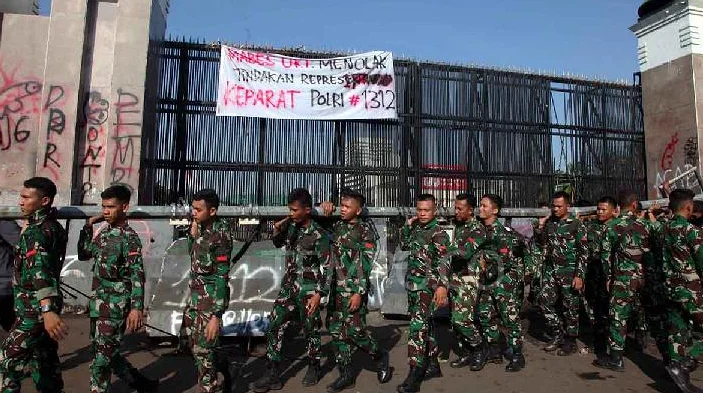
JAKARTA — Indonesian military members showed signs of involvement in deadly riots that erupted during a demonstration last August, according to a new report from a fact-finding commission.
Muhammad Isnur, director of the Indonesian Legal Aid Foundation, released the findings Wednesday at the Indonesia Corruption Watch office here. He detailed four levels of potential TNI engagement in the unrest on Aug. 26, 2025, when clashes between protesters and security forces turned violent with arson and looting.
Speaking to reporters, Isnur pointed first to alleged incitement. Commission investigators spotted members of the military’s Strategic Intelligence Agency, or BAIS, and other uniformed personnel urging on demonstrators, the report states. Witness accounts and video footage captured these interactions in the riot’s opening moments.
“Digital evidence shows direct contact between TNI personnel and protesters,” Isnur said. Still, he called for a full judicial probe, or pro justicia investigation, to pin down motives, orders and chain-of-command details.
On the second front, the commission flagged possible facilitation or aid to the violence. Intelligence reports warned of public order risks, yet BAIS and TNI troops took no strong steps to halt the escalation, according to Isnur. Whether this stemmed from intent or broken communication lines remains unclear without deeper court scrutiny, he added.
Negligence formed the third layer. TNI forces stayed away from high-risk spots despite pleas for backup, Isnur said. That absence let violence, fires and thefts rage unchecked, the report concludes.
Finally, breakdowns in command accountability drew scrutiny. While TNI headquarters and regional units tightly controlled deployments and non-combat operations at key sites, lapses elsewhere fueled chaos, investigators found.
Isnur drew a firm line, though. The commission stopped short of blaming the TNI as an institution. No solid proof emerged of official orders or planned operations to spark the riots, he emphasized.
“We lack strong, direct evidence linking institutional TNI actions to personnel-level involvement,” Isnur told the crowd.
The August demonstration targeted government policies, drawing thousands to central Jakarta. Riots left several dead, scores injured and widespread property damage. Security forces, including police and military, struggled to contain the crowds as unrest spread.
TNI spokesperson Brig. Gen. Aulia Dwi Nasrullah has not replied to requests for comment from reporters as of Thursday.
Commission members gathered testimonies from over 50 witnesses, pored through hours of footage and reviewed intelligence briefs over months of work. Their 100-page report urges prosecutors to pursue the leads.
Indonesia’s armed forces have long faced questions over roles in domestic security. Past incidents, like 2019 protests, sparked similar probes into troop conduct. Rights groups praise the commission’s independence but press for swift action.
YLBHI, which led the effort, often spotlights state abuses. ICW, the hosting group, tracks corruption and governance failures. Both organizations hailed the launch as a step toward accountability.
Legal experts say any TNI prosecutions would test military courts versus civilian jurisdiction rules. Defense analysts note BAIS’s shadowy operations rarely face public light.
Protesters and officials alike await official responses. Jakarta police wrapped their riot inquiry in late 2025, blaming ‘provocateurs’ without naming military links.

Comments
No comments yet
Be the first to share your thoughts