

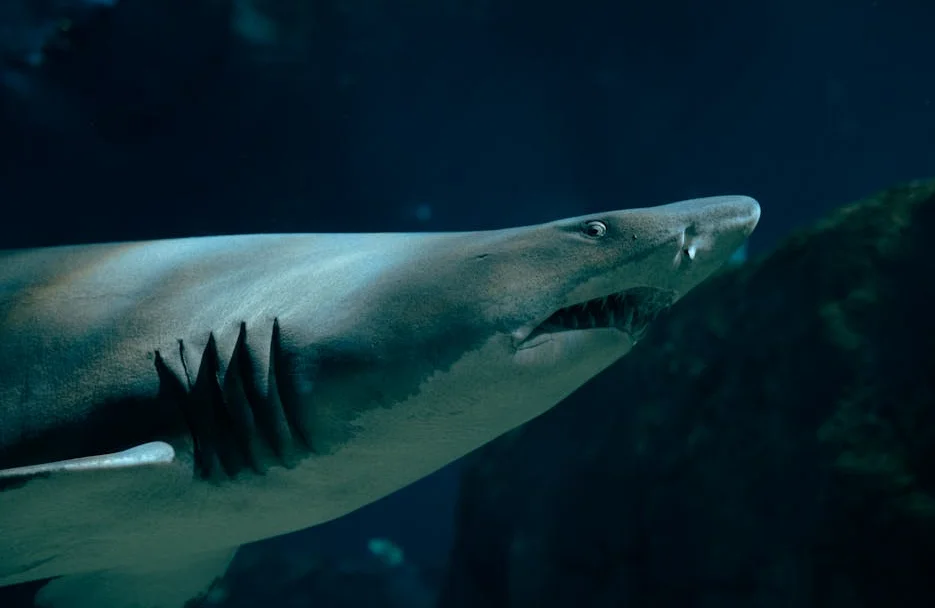
GAINESVILLE, Florida — Shark bites that killed humans jumped sharply last year. The International Shark Attack File tallied nine fatalities from unprovoked attacks worldwide in 2025. That marked more than double the four deaths recorded in 2024.
Overall unprovoked bites rose to 65, a 38.3% increase from the prior year. Five of those deaths occurred in Australian waters. Australia also saw 21 bites, well above its recent five-year average of 13. Four ended in death there.
The U.S. led with 25 unprovoked bites, 38% of the global total. Florida alone reported 11, mostly in Volusia County, the so-called shark bite capital. The state’s figure dipped below its five-year average of 18. One U.S. death came in Monterey Bay, California, where a 55-year-old triathlete fell to a great white shark during an open-ocean swim with her club.
Australia’s beach safety measures kept the toll lower than it might have been elsewhere, according to Professor Gavin Naylor, director of the Florida Program for Shark Research at the Florida Museum of Natural History. “If these bites occurred anywhere other than Australia, they would probably have resulted in even more fatalities,” Naylor said. “Their beach safety is second to none. Within minutes of a bite, they’ve got helicopters airborne ready to respond.”
The report highlighted 2025’s first confirmed fatal dusky shark attack. A free diver hunting crayfish died off South Africa. “Their large size and tendency to swim in shallow coastal waters means it is possible that some unidentified bites can likely be attributed to this species,” Naylor said.
Global fatalities exceeded the 10-year average of six by 50%, though total bites fell slightly below the decade’s average of 72. The file, started in 1958 with records back to the 1500s, tracks only unprovoked incidents. Those exclude cases where people spearfish, bait sharks or otherwise provoke them.
Other hotspots included the Bahamas with five bites and New Zealand with three. Single attacks struck Canada—its first since 2021, when a great white bit a paddle boarder’s board but spared the rider—plus Mozambique, where a surfacing diver died; Vanuatu; Maldives; Marshall Islands; Spain’s Canary Islands; and Puerto Rico.
U.S. bites have trended down over five years, yet the country tops the list. Australia follows with 32% of incidents and 56% of deaths. Naylor tied a rebound in Northwest Atlantic great whites to recent attacks there. The species, listed as endangered in Canada, has climbed back from 1960s lows.
International Shark Attack File manager Joe Miguez noted most bites involve unidentified sharks. “In the moment of the attack, witnesses are often unable to identify the shark, and several species of closely related sharks are hard to distinguish from one another without a thorough analysis,” he said.
Shark populations worldwide lag far below historical highs due to overfishing, the report states. About 30% of 1,200 shark species face endangerment despite surviving mass extinctions over 330 million years. Naylor stressed that bites stem from shark biology, weather, and beach crowds. Regional spikes vary year to year. Odds of a shark bite stay vanishingly small, he added—far below drowning or lightning strikes.
“Shark bites are the consequence of the biology of the animals, the climatic conditions and the number of people in the water,” Naylor said. The file’s data, rigorously vetted annually, tracks trends to gauge shark behavior and human risk, even if some cases go unreported.






Comments
No comments yet
Be the first to share your thoughts