

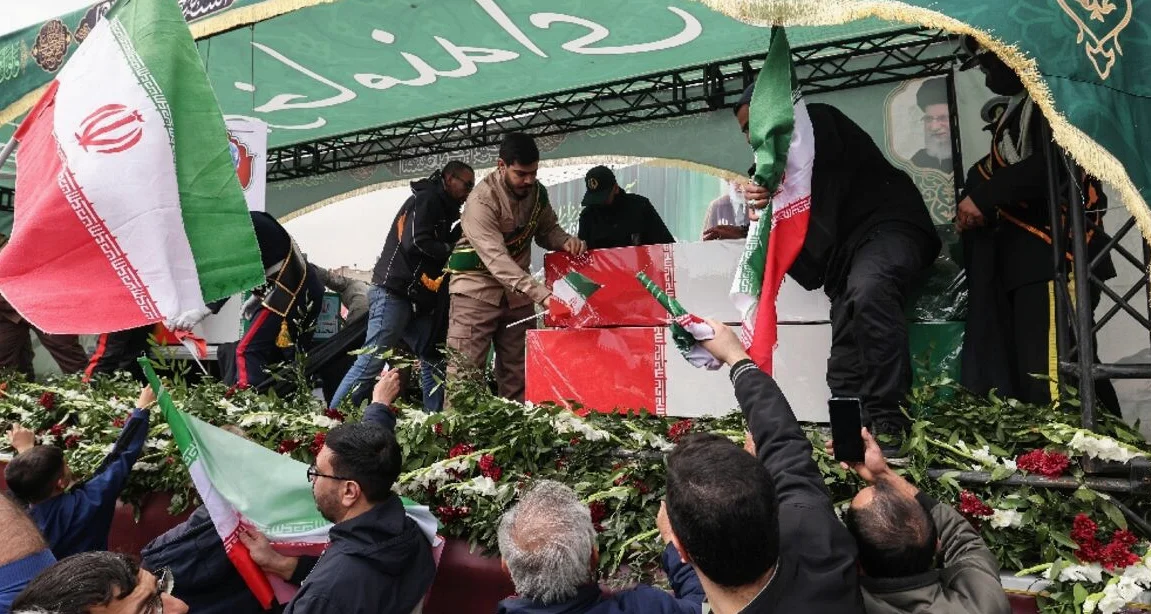
The Islamic Major Guard Corps (IRGC) is increasingly consolidating political and military power in Iran under the leadership of Mojtaba Khamenei, following the death of his father, Supreme Leader Ayatollah Ali Khamenei. Analysts suggest that the Guards, a powerful paramilitary force, have grown in influence since the start of the war with Israel and the United States, and their role in shaping Iran’s future under Mojtaba’s leadership is becoming more pronounced.
Historical Context and Institutional Growth
The IRGC was established in 1979 by Ayatollah Ruhollah Khomeini as a force to protect the Islamic Revolution from internal and external threats. Over the decades, it has evolved into a sprawling organization with influence across military, economic, and political spheres. According to Farzan Sabet, a managing researcher at the Geneva Graduate Institute, the Guards have become the key actor in security and, to a lesser extent, the economy, and are now likely the dominant political force in Iran.
The Guards’ influence has grown significantly under the leadership of Ayatollah Ali Khamenei, who died in an Israeli strike at the beginning of the war. Mojtaba, his son and successor, is seen as being closely aligned with the Guards, and analysts believe his rapid rise to power is an indication of their growing influence.
According to Sabet, Mojtaba’s election by the Assembly of Experts may have been influenced by an intimidation campaign by the IRGC’s Intelligence Organization against hesitant members of the body. This suggests that the Guards are not only a military force but also a political actor with the ability to shape Iran’s leadership.
Economic and Military Power
The IRGC has expanded its economic empire, particularly in the energy sector, to circumvent international sanctions. This has allowed the organization to maintain its financial independence and further entrench its power. Despite the deaths of two of its top commanders—Hossein Salami in June 2025 and Mohammad Pakpour in the current war—the Guards remain active in military operations against Israel.
The organization’s branches include the Basij volunteer paramilitary force and the Quds Force, which conducts operations abroad. The Guards also enforce a de-facto blockade of the Strait of Hormuz and warn Iranians against cooperating with foreign powers, indicating their strategic and military reach.
Deputy commander Ahmad Vahidi is seen as the next leader of the Guards, although his appointment has not been officially confirmed. Vahidi’s name has drawn attention due to his alleged involvement in the 1994 bombing of a Jewish association in Argentina, where he was named a suspect.
Political Entanglement and Infrastructure Damage
Despite the Guards’ dominance, their infrastructure and commanders have become prime targets in the war. Israeli and American strikes have damaged missile facilities, military infrastructure, and assets linked to the Guards, according to Sanam Vakil, director of the Middle East and North Africa Programme at Chatham House.
Another key figure in the Guards’ structure is Mohammad Bagher Ghalibaf, a former commander who now serves as the speaker of the Iranian parliament. Analysts suggest he plays a crucial role in the war effort and has broad support within the IRGC, bridging military, security, and political functions.
According to Arash Azizi, a postdoctoral associate at Yale University, the IRGC is not a centralized body, but its networks have entrenched themselves in the control of economic and military power in Iran. Any attempt to wrest power from them would require co-opting at least some of their factions.
The Guards’ growing influence is seen as a response to the instability caused by the war and the death of Ayatollah Ali Khamenei. Their role in shaping Mojtaba’s leadership and the direction of Iran’s foreign and domestic policies is likely to remain significant in the coming months.
As the conflict continues, the IRGC’s ability to maintain its military operations and economic dominance will be critical in determining the future of Iran’s leadership and its relations with the international community. The Guards’ consolidation of power under Mojtaba Khamenei may have lasting implications for the country’s political landscape.






Comments
No comments yet
Be the first to share your thoughts