

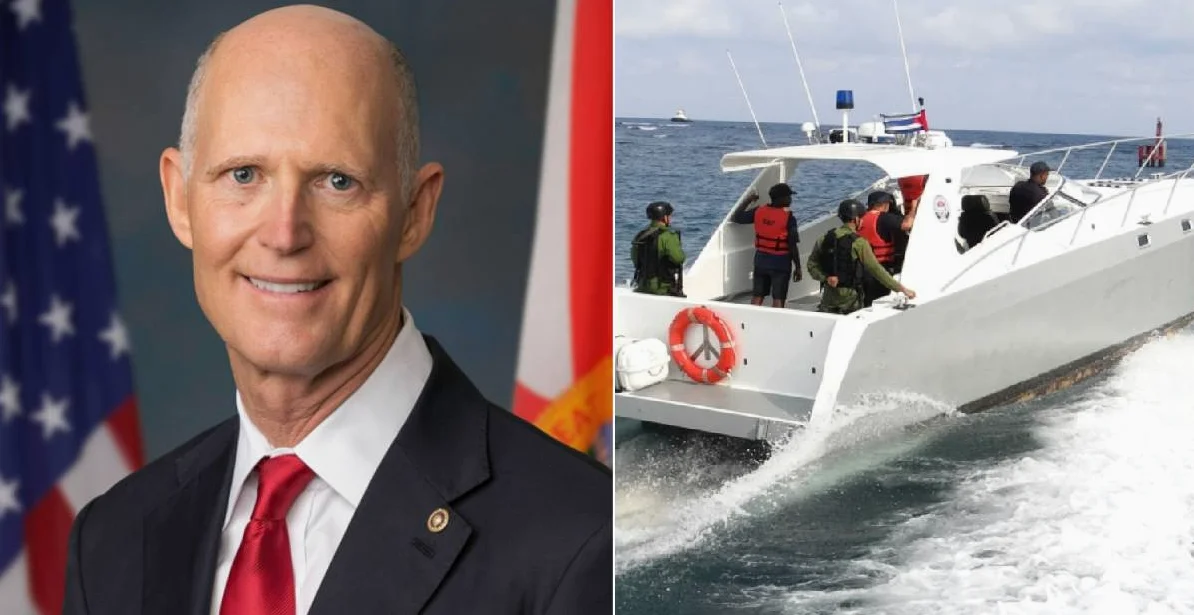
Republican Senator Rick Scott has joined a growing chorus of U.S. officials demanding accountability from the Cuban government following a deadly armed confrontation in Cuban territorial waters. The incident, which occurred on February 25, 2026, resulted in four fatalities and seven injuries, according to preliminary reports. Scott took to the social media platform X to call for a full investigation into the event, stating that the Cuban communist regime must be held accountable.
Incident Details and Cuban Response
According to a statement from Cuba’s Ministry of the Interior (MININT), the confrontation took place when authorities detected a speedboat registered in Florida (FL7726SH) one nautical mile northeast of the El Pino channel in Cayo Falcones, in the Corralillo municipality of Villa Clara province. Cuban Border Guard Troops approached the vessel for identification, and the report claims that the boat opened fire on Cuban forces.
The official account states that the commander of the speedboat was injured during the crossfire. Four individuals aboard the vessel were killed, and six others were wounded. The wounded were evacuated and received medical care, according to MININT. However, the identities of the deceased have not yet been disclosed, and no further details about the circumstances leading the vessel into Cuban waters have been released.
Cuban authorities have stated that investigations are ongoing and reaffirmed their commitment to protecting territorial waters and national sovereignty. The incident has raised questions about the legality of the vessel’s presence in Cuban waters and whether U.S. citizens or legal residents were among those involved.
U.S. Calls for Investigation
Congressman Carlos Giménez, a Florida representative, has also called for an immediate investigation to determine if any U.S. citizens or legal residents were among the victims. His call for clarity follows growing concerns from U.S. political leaders about the potential implications of the incident on U.S.-Cuba relations.
Florida Attorney General James Uthmeier announced on X that the state has launched an investigation into the incident. He stated that he has directed the State Attorney’s Office to collaborate with federal and local law enforcement partners to probe the matter. Uthmeier emphasized that the Cuban government must be held accountable for the event.
The incident could further strain already delicate diplomatic relations between the United States and Cuba. The two nations have a complex history marked by periods of tension and rapprochement, with recent years seeing some efforts to normalize ties. However, the current situation has the potential to disrupt those efforts, particularly if the U.S. government determines that Cuban authorities acted improperly or failed to uphold international norms.
Broader Implications and What’s Next
The incident has already sparked calls from various U.S. political figures to clarify the sequence of events and ensure transparency. With no official information on the identities of the deceased or the circumstances surrounding the vessel’s presence in Cuban waters, the situation remains shrouded in uncertainty.
Cuban officials have not yet released any additional details, but their statement reaffirmed their stance on protecting national sovereignty. The U.S. State Department is likely to weigh in on the matter in the coming days, and further diplomatic discussions may be necessary to prevent the situation from escalating.
As the investigations progress, the outcomes could influence future U.S. policy toward Cuba, including potential sanctions or diplomatic measures. The U.S. government may also seek to coordinate with international partners to ensure that the incident is handled in accordance with international law and norms.
For now, the focus remains on uncovering the full facts of the incident and determining whether any legal or diplomatic actions are necessary. The situation highlights the ongoing challenges in managing cross-border tensions and the need for clear communication between nations with historically complex relationships.



Comments
No comments yet
Be the first to share your thoughts