

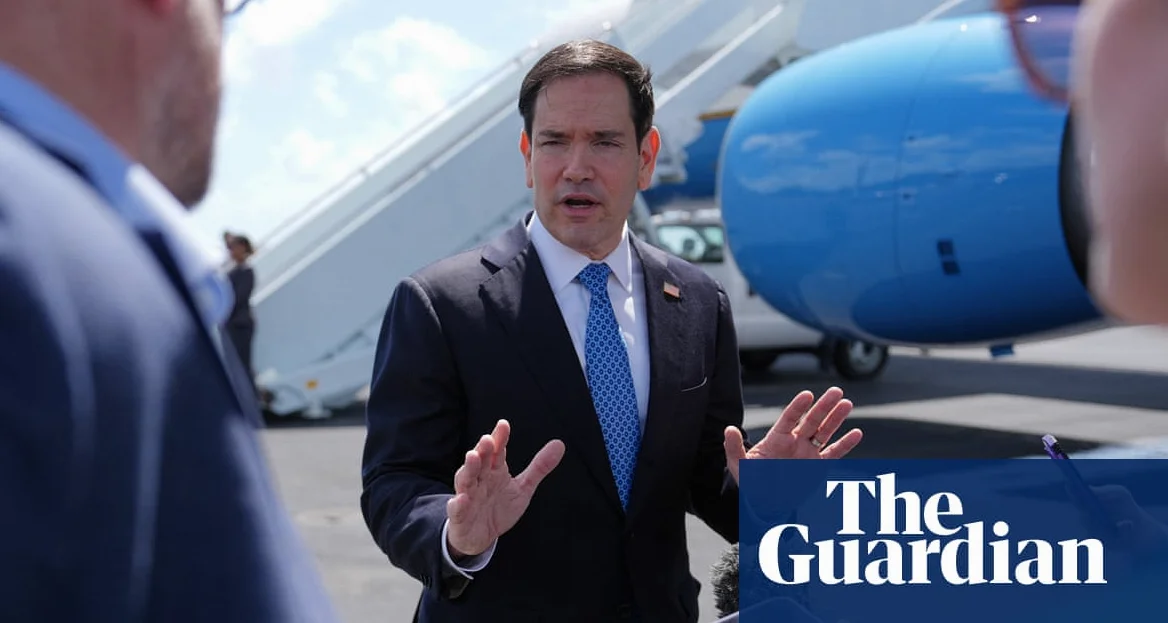
President Donald Trump and America’s top diplomat, Secretary of State Marco Rubio, have again raised the possibility of U.S. military intervention in Cuba, a day after the administration announced criminal charges against the island’s former leader, Raúl Castro, according to NPR and Impacto Media.
Trump’s Threat of Military Action
During an environmental event in the Oval Office, Trump told reporters that previous U.S. presidents had considered intervening in Cuba for decades but that he believes he will be the one to carry it out. “Other presidents have looked at this for 50, 60 years, doing something,” Trump said. “And, it looks like I’ll be the one that does it. So, I would be happy to do it.”
This statement comes amid a broader shift in U.S. policy toward Cuba under the Trump administration, which has taken a harder stance against the island nation, citing its ties to U.S. adversaries as a national security concern.
Rubio’s Cautious Approach to Diplomacy
Rubio, the son of Cuban immigrants and a long-time critic of Cuba’s socialist leadership, stated that while the Trump administration prefers a peaceful resolution through negotiation, the chances of reaching an agreement with the current Cuban government are low. “Trump’s preference is always a negotiated agreement that’s peaceful. That’s always our preference. That remains our preference with Cuba,” Rubio said in Miami before traveling to a NATO meeting in Sweden and then to India.
Despite this preference, he added, “I’m just being honest with you, you know, the likelihood of that happening, given who we’re dealing with right now, is not high.”
Rubio’s comments reflect a cautious diplomatic stance, as the administration continues to explore avenues for improving relations with Cuba. Top Trump aides,including Rubio, CIA chief John Ratcliffe, and other senior national security officials—have met with Cuban officials in recent months to discuss potential improvements in bilateral ties.
Criminal Charges Against Raúl Castro
The renewed threats of military action take on greater significance following the administration’s announcement of criminal charges against Raúl Castro, who served as Cuba’s leader until 2018. The charges, related to alleged violations of U.S. sanctions, signal a new level of confrontation in the U.S.-Cuba relationship, according to Impacto Media.
While the U.S. has not yet taken any direct enforcement actions against Raúl Castro, the move is seen as an escalation in the Trump administration’s broader strategy to pressure the Cuban government over its policies and alliances. This strategy includes imposing economic restrictions and limiting diplomatic engagement with the island.
The Trump administration’s approach has drawn criticism from some U.S. lawmakers and advocacy groups who argue that such policies harm U.S. interests and Cuban civilians more than they pressure the Cuban government. However, supporters of the administration’s stance argue that it is necessary to counter what they describe as ongoing threats to U.S. national security.




Comments
No comments yet
Be the first to share your thoughts