

 BBC
BBC 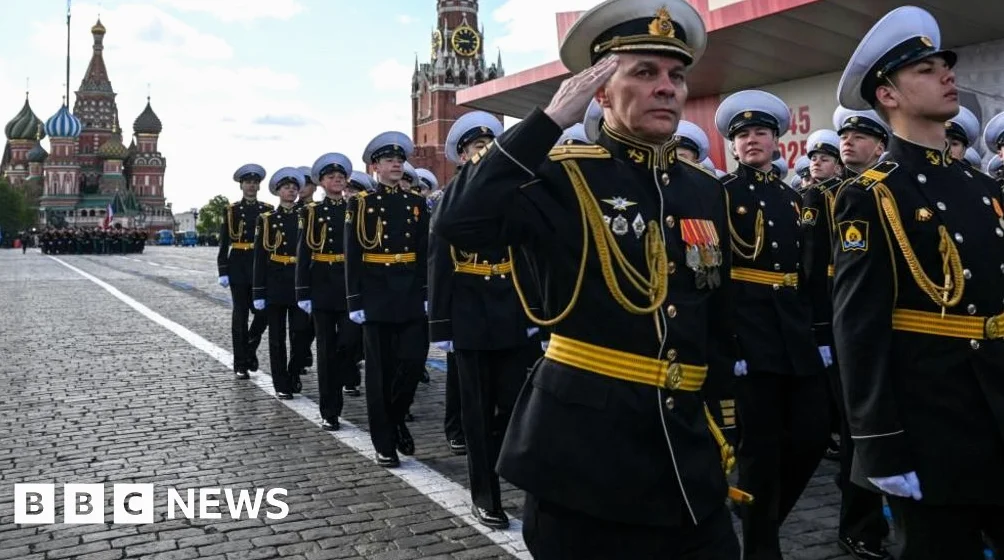
Russia’s Victory Day parade, commemorating the Soviet victory over Nazi Germany in World War Two, will not feature military vehicles or cadets this year, the Russian military said. The decision comes as Ukraine intensifies strikes inside Russia.
Reduced Parade Format
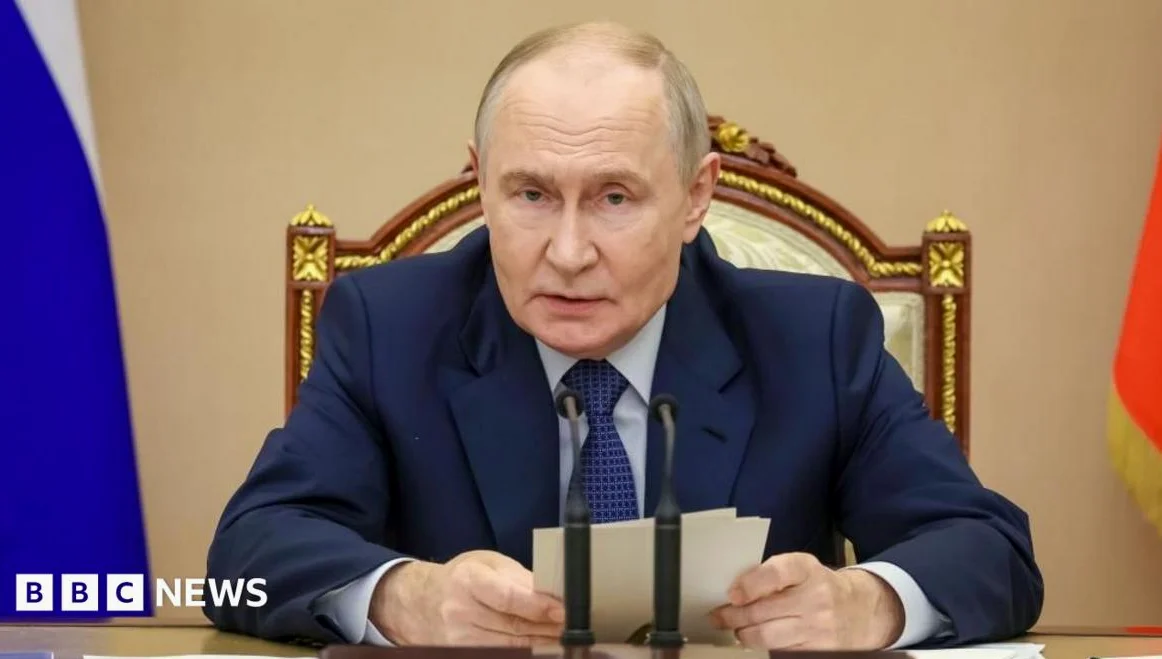
President Vladimir Putin’s spokesman Dmitry Peskov stated that ‘all measures are being taken to minimise the danger’ from the ‘terrorist threat’ posed by Ukraine. The parade will still take place on Moscow’s Red Square, but with changes to the traditional format.
Peskov criticized the ‘Kyiv government,’ claiming it is ‘losing ground on the battlefield every day’ and ‘launching into full-scale terrorist activity.’ He stressed that the event would still be held as planned.
Historical Context of the Parade
Putin revived the Soviet tradition of displaying heavy military hardware in Red Square in 2008 to highlight Russia’s ‘growing defence capability.’ Last year’s 80th anniversary of the Nazi defeat in 1945 included more than 20 world leaders and showcased tanks, drones, and other modern military equipment.
For 2024, the Russian defence ministry said the parade will include representatives from all branches of the armed forces and a ‘colourful fly-past.’ However, cadets from Suvorov military schools, Nakhimov naval schools, and the cadet corps will not participate, the ministry said.
The ministry also announced that footage of Russian military personnel ‘carrying out tasks in the special military operation zone’—Russia’s term for its invasion of Ukraine,will be broadcast on national TV.
Security Concerns and Public Reaction
This will be the first year since the invasion of Ukraine that armoured columns will not march on Red Square. Some pro-Kremlin military bloggers had earlier warned of the threat of Ukrainian long-range aerial attacks.
‘Imagine, ‘Parade, stand at attention,’ and then a missile threat is announced. It would be a significant blow in terms of media coverage, even if nothing hits,’ said blogger Ilya Tumanov, quoted by Russian media.
Analysts noted the absence of usual rehearsals that involve large-scale road closures in central Moscow. A telecoms source told BBC Russian that ‘more powerful’ restrictions on mobile communications would be imposed on 5, 7, and 9 May. Mobile internet services were severely disrupted in central Moscow in March, according to authorities citing security reasons.
Many Russian and foreign analysts agree that the Great Patriotic War,Russia’s term for its part in World War Two—remains the main historical narrative binding the country together under President Putin.
Ukraine has not publicly commented on Peskov’s accusations, but a senior Ukrainian official ruled out any attack on the Moscow parade. ‘Nobody is attacking civilians and civilian infrastructure,’ said Mykhailo Podoliak, an adviser to Ukrainian President Volodymyr Zelensky’s office. He noted that many civilians would be present at the event.
Ukraine has recently increased strikes on key Russian energy facilities. Kyiv claims these are legitimate targets that support Moscow’s war effort. Recent strikes included an attack on an oil pumping station near the city of Perm in the Urals, some 1,500km from the Ukrainian border. The local governor referred to the facility as an industrial site.
Earlier strikes at the Tuapse refinery caused a significant oil spill in the sea, with residents reporting ‘black’ rain falling on the city and leaving an oily residue.





Comments
No comments yet
Be the first to share your thoughts