

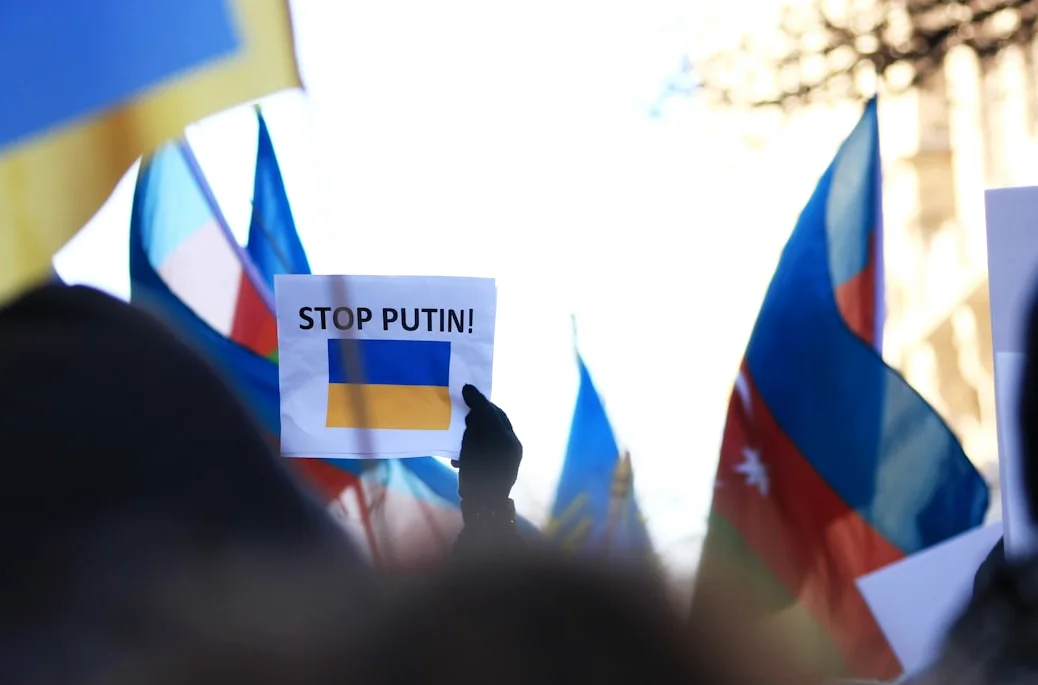
Russian President Vladimir Putin recently signed into law new legislation that targets Russian citizens living abroad who oppose his government, according to Al Jazeera; the law restricts consular services,such as passport renewals—for those who have been sentenced in absentia in political cases. This includes those convicted under the so-called ‘foreign agent law’ or for ‘discrediting’ the Russian army; Over 1,600 individuals and organizations have already been labeled ‘foreign agents,’ and the number is rising.
Legislation and Consequences
The new law could affect thousands of Russian citizens. Those who are unable to renew their Russian passports or access other essential consular services may find themselves without legal residency in their host countries, according to Al Jazeera. This move comes as European governments increasingly complicate the process for Russian citizens who have criticized the invasion of Ukraine and are seeking asylum or residency extensions.
One individual who experienced this firsthand is a Russian citizen who fled the country in March 2022 after being arrested for protesting the war; In May of that year, Russia began legal proceedings against them and their family. After nearly a year of legal battles, they were stripped of their citizenship, becoming stateless while living in Germany; Family members were given three days to leave the country and are banned from entering Russia for the next 50 years. Fortunately, the individual is of Armenian descent and was able to obtain Armenian citizenship after a year-long process.
Pressure from Host Countries
Anti-war Russians abroad are also facing pressure from their host countries, though Late last month, Serbia refused to extend the long-term residency of Vladimir Volokhonsky, a St. Petersburg district councilman and outspoken critic of the invasion of Ukraine, according to RFE/RL, but Volokhonsky has lived in Serbia for over a year and co-founded the Russian Democratic Society, which regularly organizes protests against Putin’s policies.
Volokhonsky said he does not believe he will be extradited to Russia, where anti-war dissent is increasingly punished with long prison terms, as However, he noted that border officials recently tried to prevent him from reentering Serbia after a trip abroad. Though his lawyer secured his readmission and is appealing the residency denial, Volokhonsky expressed concern that such tactics might be the result of covert pressure from Russian security services targeting dissidents.
Broader Concerns
Volokhonsky added that it remains unclear how widely the practice of denying residency extensions and blocking entry into countries will be applied to lesser-known activists. His experience is part of a broader pattern in which both Russia and European governments are making it harder for anti-war Russians to live outside their home country.
Russian dissidents are thus being penalized by both sides for their stance against the war. In some cases, they lose access to consular services and are denied residency, while in others, they face legal and political pressures that make it difficult to remain in their host countries. These developments highlight the growing challenges for Russian citizens who oppose the government’s policies and seek to live in exile.



Comments
No comments yet
Be the first to share your thoughts