

 BBC
BBC 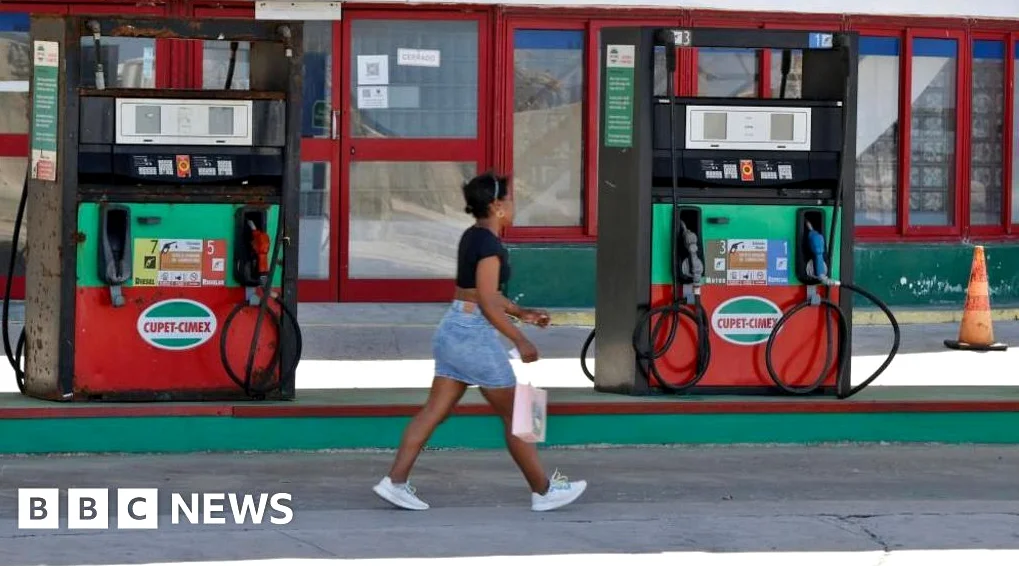
A Russian oil tanker has reached the waters off Cuba, marking the first such shipment to the island since January, according to Russian news agency Interfax. The vessel. The Anatoly Kolodkin. Is carrying 100. 000 tonnes of crude oil under the guise of a ‘humanitarian shipment,’ according to the report. This development comes hours after U.S. President Donald Trump appeared to signal a possible relaxation of the de facto oil blockade imposed by his administration on Cuba.
Impact on Cuba’s Fuel Crisis
Cuba has been grappling with a worsening fuel crisis, with nationwide blackouts and shortages in essential services. According to the World Health Organization, severe fuel shortages have left Cuban hospitals struggling to maintain emergency and intensive care services. The situation has deteriorated since January 3, when U.S. forces seized Venezuelan leader Nicolás Maduro, a key ally of the Cuban government, who had been supplying the island with oil at preferential rates.
The Russian tanker is expected to offload its cargo at the Matanzas terminal in the coming hours, offering Cuba a temporary reprieve from the deepening crisis. The shipment is described as a ‘short-term lifeline’ for the island, which has been facing its worst economic and energy crisis since the end of the Cold War. This crisis has been worsened by a combination of a fall in tourism after the coronavirus pandemic and government economic mismanagement.
Trump’s Stance on the Blockade
Trump’s remarks. Made while aboard Air Force One. Suggested he had ‘no problem’ with Russia delivering oil to Cuba. ‘We have a tanker out there. We don’t mind having somebody get a boatload because they need (…) they have to survive,’ he said. However, it was unclear whether this represented a reversal of the fuel blockade policy or a temporary softening.
The U.S. Treasury had previously added Cuba to a list of countries barred from receiving oil deliveries from Russia. Russian Energy Minister Sergey Tsivilev said Cuba ‘had found itself in a difficult situation as a result of sanctions pressure,’ and that the humanitarian supplies were a response to the crisis.
Trump also had previously threatened to impose tariffs on any nation sending oil to Cuba. This shift in tone appears to be at odds with earlier statements from the Trump administration, which had been enforcing a de facto oil blockade on the island. The policy had been part of broader sanctions aimed at pressuring the Cuban government to make political and economic concessions.
Political and Economic Stalemate
Cuba’s Communist government. Led by President Miguel Díaz Canel. Has been in talks with the Trump administration to find a way out of the crisis. However, both sides have set out a number of political and economic red lines that make it difficult to see where they could find common ground.
President Trump recently said he could ‘take’ Cuba, a veiled threat that has been interpreted as a warning to the island’s leadership. In response. Cuba’s government has stated it refuses to accept any enforced changes to the personnel or political direction of its government. This mutual intransigence has made negotiations challenging, despite the urgent need for a resolution to the fuel crisis.
Cuba has been facing a deepening economic and energy crisis, with the situation further worsened by the de facto fuel blockade. The country’s reliance on imported oil, particularly from Venezuela, has been disrupted by the seizure of Maduro and the imposition of U.S. sanctions. The Russian oil shipment, while a temporary relief, does not address the long-term structural issues that have led to the current crisis.
The arrival of the Russian tanker is a significant development in the ongoing standoff between the U.S. and Cuba. While it may provide short-term relief, it does not resolve the underlying tensions that have led to the crisis. The situation remains fluid, with both sides continuing to negotiate while maintaining their respective positions.
Cuba’s leadership has been under pressure to find a solution to the fuel shortage, which has affected not only the energy sector but also healthcare, transportation, and daily life for ordinary citizens. The humanitarian shipment from Russia is expected to provide some relief, but it is unclear how long it will last or whether it will lead to a broader relaxation of the blockade.
The U.S. administration has not officially confirmed whether Trump’s remarks signal a reversal of policy or a temporary adjustment. However, the timing of the Russian shipment and Trump’s comments suggests that the situation is evolving. The next steps will depend on whether the U.S. continues to enforce the de facto oil blockade or if there is a shift in policy that would allow for more open trade and supply routes to Cuba.





Comments
No comments yet
Be the first to share your thoughts