

 Al Jazeera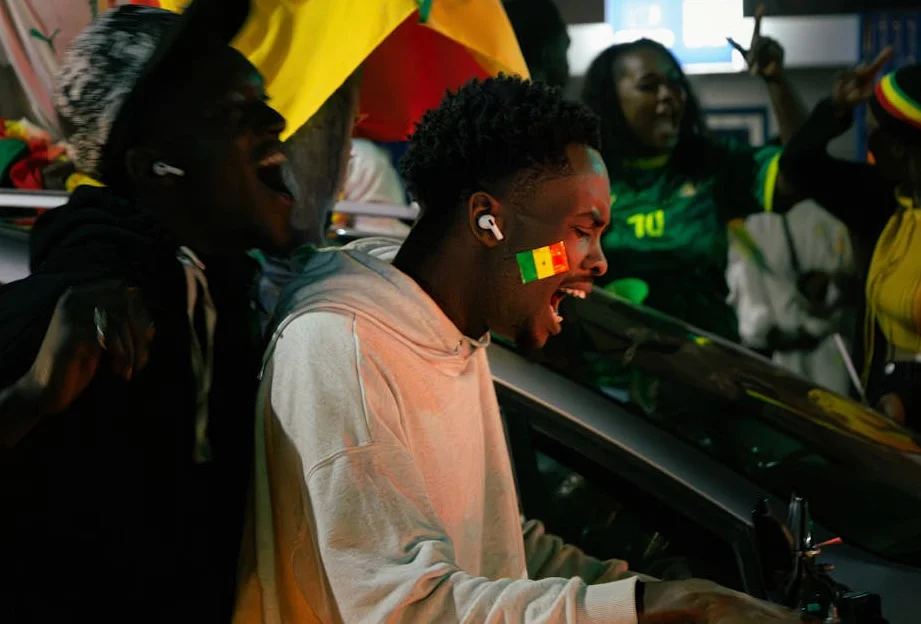
Senegal coach Pape Thiaw has shown no shortage of ambition for the upcoming World Cup in North America. ‘If, even for a second, I doubted that I could win the World Cup with Senegal, then I would step aside,’ he said after a match in March. The statement was notable for two reasons. First, it marked an African team openly declaring it could win the World Cup. Second, it was not met with ridicule, highlighting the respect Senegal’s national team has earned in the footballing world.
Babacar Diarra, a French-Senegalese freelance journalist, noted that ‘Those were not just empty words. The players and the coach believe they can win the World Cup.’ On the African continent, Senegal’s quality is well-established. They are the continent’s most consistent national team, with a decade-long record of either winning the Africa Cup of Nations (AFCON) or losing to the eventual champions.
Senegal’s recent World Cup performances have been mixed. In 2018, the West Africans were the first team in competition history to be eliminated by tie-breaking fair-play rules after accumulating too many bookings. At the 2022 World Cup, Senegal crashed out to England in the last 16, playing without injured star Sadio Mane. Diarra emphasized that ‘For this golden generation of players – Sadio Mane, Kalidou Koulibaly, Idrissa Gana Gueye and Edouard Mendy, this is the opportune moment. It’s now or never.’
The Role of Smart Recruitment and Local Academies
Senegal’s success stems from smart diaspora recruitment and local academies. For a country of just 20 million people, Senegal produces talented young footballers at a scale unmatched on the continent. Larger nations such as Nigeria, Ethiopia, Egypt, and the Democratic Republic of the Congo do not come close. Over the last couple of decades, state-of-the-art academies have opened in Senegal, equipped with pristine training pitches, dormitories, schools, and physical therapy facilities.
Of the 28 players Senegal selected for the 2025 Africa Cup of Nations, 13 came from Senegalese academies such as Generation Foot, Diambars, Dakar Sacre Coeur, or Casa Sports. However, these academies have also been overshadowed by controversy. Diambars had a partnership with Olympique de Marseille, as did Dakar Sacre Coeur with Olympique Lyonnais. The most striking relationship is the longstanding one between Generation Foot and FC Metz, which has spanned 23 years.
Controversies in Talent Development
Metz have invested over 10 million euros ($11.6m) in the Generation Foot academy, holding the right of first refusal on its best talent. Players such as Sadio Mane, Emmanuel Adebayor, Ismaila Sarr, and Pape Matar Sarr came through this arrangement. Yet, the financial disparity is stark. The 13 AFCON players from academy backgrounds generated just 100,000 euros ($116,000) in transfer fees across 13 moves for their respective academies. European clubs that acquired these players sold them for a combined 81.2 million euros ($94m), while the same players have generated a total of 411 million euros ($477m) in transfer fees across their careers.
Mamadou Ndiaye, a loyal supporter of the national team, explained that ‘On one hand, youngsters benefit from good education and access to top infrastructure. Yet we should not forget that the investors funding the academies are businessmen – it is not the federation or the government. They know there’s talent here, they put their money in, capture the ‘raw material,’ refine it, and sell it to Europe.’ Beyond economic imbalances, some academies have also struggled to claim solidarity compensation they are legally owed due to administrative failures at the federation level.
Challenges in Domestic Football
When Nicolas Jackson moved from Villarreal to Chelsea in the summer of 2023 for 37 million euros ($43m), he was expected to bring in 185,000 euros ($215,000) for his former club and academy, Casa Sports. An error in the player’s registration at the federation level nearly deprived Casa Sports of revenues that were rightfully owed to the club. Cherif Sadio, who was director of the Casa Sports academy at the time, told Al Jazeera English that ‘Casa Sports eventually managed to correct the administrative issue in order to recover what it was legally entitled to. These situations were fortunately resolved afterwards, but they should never happen in the first place.’
Sadio now works as director of development, strategy, and partnerships at Diambars FC, and he maintains that the gap between the elite of Senegalese men’s football and the rest of the domestic game remains deeply troubling. ‘It is the most striking paradox of Senegalese football, and it deserves to be stated clearly. We produce world-class players, we develop talents who generate hundreds of millions of euros in transfer fees, we win continental titles – and at the same time our local clubs struggle to survive, our stadiums are dilapidated, our leagues lack visibility, and our administrators struggle to master the legal and financial mechanisms of modern football.’
In addition to producing talent through its academies, Senegal can recruit from deep talent pools in the Western European diaspora. The federation has recently persuaded French-born 18-year-old Paris Saint-Germain (PSG) forward Ibrahim Mbaye and 20-year-old Chelsea defender Mamadou Sarr to represent the Teranga Lions, despite both having featured for France at the U20 level. Convincing players of the calibre of Mbaye and Sarr to commit to Senegal is a sign that the federation’s approach to diaspora recruitment has matured considerably.
Sadio explained that ‘The federation’s policy rests on three distinct pillars. Firstly, they target diaspora players between the ages of 16 and 19, before they become tied to another country. The second point has to do with identity. Although they’re born in countries like France or England, these players often grow up in Senegalese households where culture, language, and values are passed down, and the federation uses that to its advantage. Third, Senegal’s recent success has strengthened the appeal of the project, aligning ambition with identity so that choosing Senegal is both a personal and a sporting advantage.’


Comments
No comments yet
Be the first to share your thoughts