

 The Guardian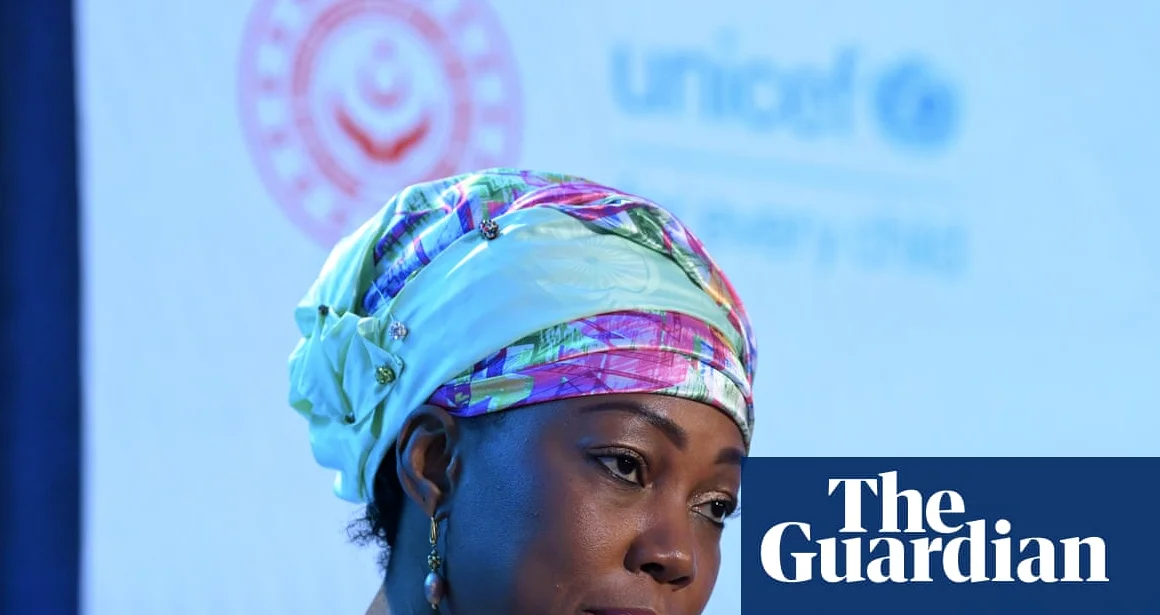
The first lady of Sierra Leone has denied supporting female genital mutilation amid growing criticism over her perceived approval of the practice. However, in a statement to The Guardian, Fatima Maada Bio said she would not publicly condemn the ritual until she saw concrete evidence of its harm.
Letter from Advocates to Oaflad
A coalition of health professionals, survivors, human rights activists, and politicians has written to the Organisation of African First Ladies for Development (Oaflad) to express concerns about Maada Bio’s statements. The letter, dated 10 June, demands clarification about the first lady’s public remarks, who is currently Oaflad’s president.
Over 20 signatories, including former Sierra Leone gender minister Amy Smythe and UN expert Isha Dyfan, wrote that “perceptions of support for FGM, whether direct or indirect, risk undermining years of advocacy and creating misalignment with national, regional and international commitments.”
Controversial Background of First Lady
Maada Bio, 45, previously a film producer and actor, fled Sierra Leone as a teenager to escape a child marriage. She met her husband, President Julius Maada Bio, in the UK. She has also drawn attention for continuing to rent a council flat in Southwark, London, for her children, who are British citizens. Southwark council recently confirmed the flat had been repossessed.
Despite her advocacy against child marriage and her campaign “Hands off our girls,” Maada Bio has refused to condemn FGM since her husband became president in 2018.
FGM, the partial or total removal of external female genitalia, can lead to serious long-term health consequences, including infertility. The practice is recognized as a violation of human rights, and the UN passed a resolution in 2012 for a global ban.
Sierra Leone has one of the world’s highest rates of FGM. National surveys show that the percentage of women who undergo the practice dropped from 90% in 2013 to 83% in 2019. Of these, 71% were cut before the age of 15.
Concerns Over Public Statements
Ranya Kargbo, a senior UN professional and FGM survivor who signed the letter, expressed concern over a recent public appearance by Maada Bio, where she was filmed appearing supportive of FGM practitioners.
“When you are in a leadership position, your words matter,” said Kargbo. “When [Bio] told the soweis [the cutters] not to be afraid of anything and said she stands with them, those were powerful words from the highest office in Sierra Leone.
“It means, ‘I have all the resources and support, do what you want.’ It is an absolute slap in the face for all of us.”
Maada Bio has said her comments were taken out of context and were “intended to encourage dialogue and reassure women who felt marginalised.” In a statement to The Guardian, she added: “I am not in favour of any form of circumcision that is forced upon an individual.”
She further said she is “not using her voice to campaign either in favour of or against circumcision” and that as a circumcised woman, she expected to see reliable data showing the extent of harm caused by FGM in Sierra Leone.
Last week, Maada Bio shared an article from September 2025 on her Facebook page, which has more than 600,000 followers. The piece, published in the BMJ Journal of Medical Ethics, argued that “a ubiquitous ‘standard tale’ obscures the diversity of practices, meanings and experiences among those affected” by cutting.
She named several anti-FGM campaigners, including Nimco Ali and Anita Koroma, and wrote that they “do nothing for our country.” In another post, she called them “scammers.”
Maada Bio told The Guardian her comments were not “directed at survivors of circumcision or those genuinely working to improve the lives of women and girls.” She clarified that her criticism was aimed at individuals she believed misrepresented her position and created a narrative that does not reflect her actual views.
Last year, the Economic Community of West African States (Ecowas) court of justice ruled that FGM is “one of the worst forms of violence against women” and “meets the threshold for torture.” The court ordered Sierra Leone to criminalise the practice and take measures to protect victims.
The ruling came weeks after President Bio assumed the chair of Ecowas. He has not publicly acknowledged the ruling, and in October 2025, he signed the Child Rights Act 2025 into law, which did not include any provisions against FGM.
Comments
No comments yet
Be the first to share your thoughts