

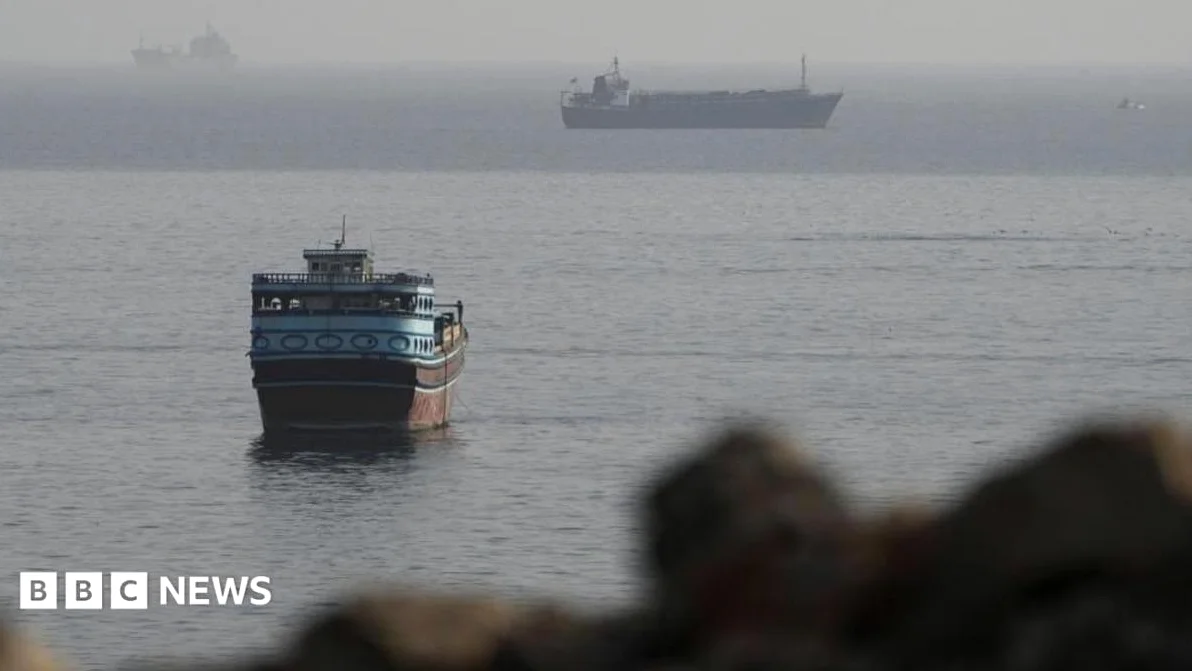
President Donald Trump accused Iran’s leadership of being ‘extremely duplicitous’ after Tehran denied new negotiations would begin, according to NBC News. Iran said it was not currently holding talks with the U.S. but was in discussions with Oman over a temporary safe route through the Strait of Hormuz. ‘We currently do not have negotiations with America,’ and Iran had no plans to host foreign delegations or send negotiators abroad in the coming days, Foreign Ministry spokesperson Esmaeil Baghaei told reporters.
Trump’s Claims of Progress and Canceled Strikes
Trump later took to Truth Social, where he wrote: ‘Iranian Leadership is unbelievably duplicitous! They ask for a meeting, some would say ‘beg,’ talks begin, with more scheduled in the immediate future, and they say, openly and proudly, that they’re not having any discussions, that nothing is being talked about, and they’re only dealing with ‘Oman.’ Iran did not immediately respond to his comments.
Trump had said Sunday that he agreed to call off the attacks amid what he said were the ‘perimeters of a deal’ that would include resuming shipping through the key global trade route. Speaking on Air Force One, Trump said the canceled strikes were going to be ‘the biggest attack since World War II.’ The president said that the U.S. was ‘holding’ what would have been a ‘massive attack,’ but that it could still take place ‘anytime we want.’
Iran’s Strategic Position and Regional Influence
According to Junge Wissenschaft im Öffentlichen Recht, the ‘Memorandum of Understanding’ between the U.S. and Iran, meant to guide the peace negotiations over the war on Iran, secures almost none of the U.S.-aims it was fought for. The article noted that the case for this war was built on necessity and humanitarian purposes, with the U.S. claiming in its Art. 51 Letter to the UN Security Council that it had acted on 28 February 2026 ‘to address the continuing threat posed by the Iranian administration.’
The military operation was specifically undertaken ‘to protect United States Armed Forces in the region, to ensure the free flow of maritime commerce through the Strait of Hormuz and to protect our regional allies and partners from Iran and its proxies.’ These are words that ring hollow in light of how the war against Iran actually unfolded and what it has produced under the ‘Memorandum of Understanding,’ the article said. If anything, the result is worse than the situation it replaced, leaving Iran probably financially better equipped and more powerful in the region.
Oil Prices Drop Amid Geopolitical Easing
Amid claims by Yemen’s pro-Iranian Houthi rebels that they attacked crude oil supply and transport facilities connecting eastern Saudi Arabia to Yanbu on the Red Sea coast, international oil prices tumbled around 8% due to the suspension of U.S. airstrikes against Iran, according to 네이트. Donald Trump halts strikes on Iran at mediator’s request, but says ‘We will resume military action if negotiations fail.’
Crude oil futures settled at $79.26, down $3.35 or -4.06% on the day, according to TradingView. Prices traded in a wide range, reaching a session high of $82.43 before selling accelerated into the close. The decline took WTI to a low of $77.78, where buyers emerged after the price tested the upper end of a key swing area between $77.11 and $77.93.
The decline in crude oil today was driven primarily by a sharp unwinding of the geopolitical risk premium rather than a sudden change in supply or demand fundamentals. Key drivers include: Middle East tensions eased. The market continued to price out the risk premium after the U.S. paused additional military strikes on Iran, raising hopes that the conflict will not escalate further. Diplomatic optimism increased. President Trump said the U.S. was having ‘good’ or ‘deep’ talks with Iran, fueling expectations that negotiations could reduce the risk of further supply disruptions. Although Iran denied direct talks, traders focused on the reduced likelihood of an immediate military escalation. Reduced concern over the Strait of Hormuz. Oman has reportedly been working with regional countries on proposals to improve shipping through the Strait of Hormuz. Even though traffic remains below normal, the perception that the critical shipping lane is less likely to be disrupted weighed on oil prices. Profit-taking after the war-driven rally. WTI had surged above $93 on fears of prolonged conflict.



Comments
No comments yet
Be the first to share your thoughts