

 BBC
BBC 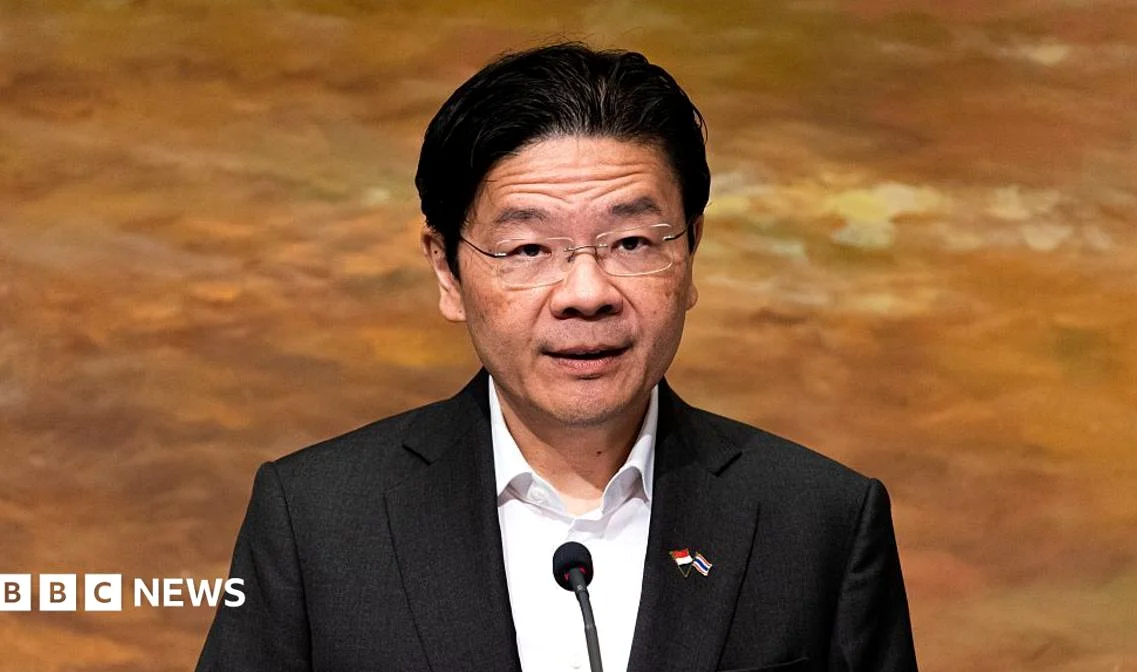
Singapore’s government announced a raise in the annual salaries of its ministers and other office holders, including its prime minister, who is already the highest paid political leader in the world. Lawrence Wong will see an increase of 1.4 million Singapore dollars ($1.1m; £818,000) in his annual pay package.
Salary Increase and Charitable Donation
Wong has stated he will donate this pay increase to charity over the next five years, while he emphasized that raising the pay of ministers was necessary to attract better talent. The government has previously argued that high salaries for ministers help deter corruption.
However, the move has attracted criticism in Singapore, where there is significant concern about job security and the rising cost of living, though Even before the new pay raise, Wong is still by far the highest paid world leader.
Comparative Salaries of World Leaders
Currently, Wong receives an annual salary of S$2.2m, and this will increase by more than 60% to S$3.6m ($2.8m); Following him is Hong Kong chief executive John Lee, who earns about $719,000, followed by Switzerland’s president Guy Parmelin with $606,000.
US president Donald Trump earns $400,000 a year, while British PM Andy Burnham takes in $230,000; On Tuesday, Wong acknowledged that Singapore ministers’ salaries have attracted scrutiny given that they are much more than what most citizens earn. The median monthly income in the country is S$5,775.
Wong argued that he has faced difficulty convincing business leaders and top civil servants to run for political office. While the government cannot match what some of these people earn, “we do not make the financial hurdle unnecessarily high” for them to give up their careers and join politics, he said.
“Overall, I believe this will give me and future prime ministers a better chance of persuading capable Singaporeans to step forward, and of building the strongest possible team for Singapore,” he said. Currently, the base pay package of ministers is about S$1.1m, while With the new pay scheme, that will increase to around S$1.2m.
Performance-Based Pay and Criticism
Wong expects most ministers to receive even more than that – around S$1.35m – by the end of the current term of government, as pay will increase based on performance. Part of their pay package is determined by whether the country reaches certain targets for unemployment rate, income growth, and GDP growth.
The topic of high salaries for Singapore’s ministers has long been a lightning rod of criticism for the ruling People’s Action Party (PAP), which has led the country since independence. In a landmark general election in 2011, the PAP saw its lowest vote share in decades, partly due to voters’ unhappiness over ministers’ pay and immigration policies.
The following year, the government slashed ministers’ salaries; Wong’s predecessor, Lee Hsien Loong, had also pledged to donate his salary increase to charity for several years back in 2007. The government has for years pointed to its lack of corruption – Singapore consistently ranks near the top of Transparency International’s annual Corruption Perceptions Index – as proof that the ministerial pay system works, arguing that it reduces the temptation for ministers to accept bribes.
But in a country where the average income is far below such sums, the issue continues to rankle and the latest announcement is no exception. On Tuesday, many online posted comments critical of the pay raise, saying it was “tone deaf” given current concerns about retrenchments, jobs for fresh graduates, and inflation.
Retrenchments in Singapore hit their highest level in more than five years in the last quarter, according to government figures, though However, there were a few who agreed with the move, saying it was necessary to have “the best of the best” running the country.


Comments
No comments yet
Be the first to share your thoughts