

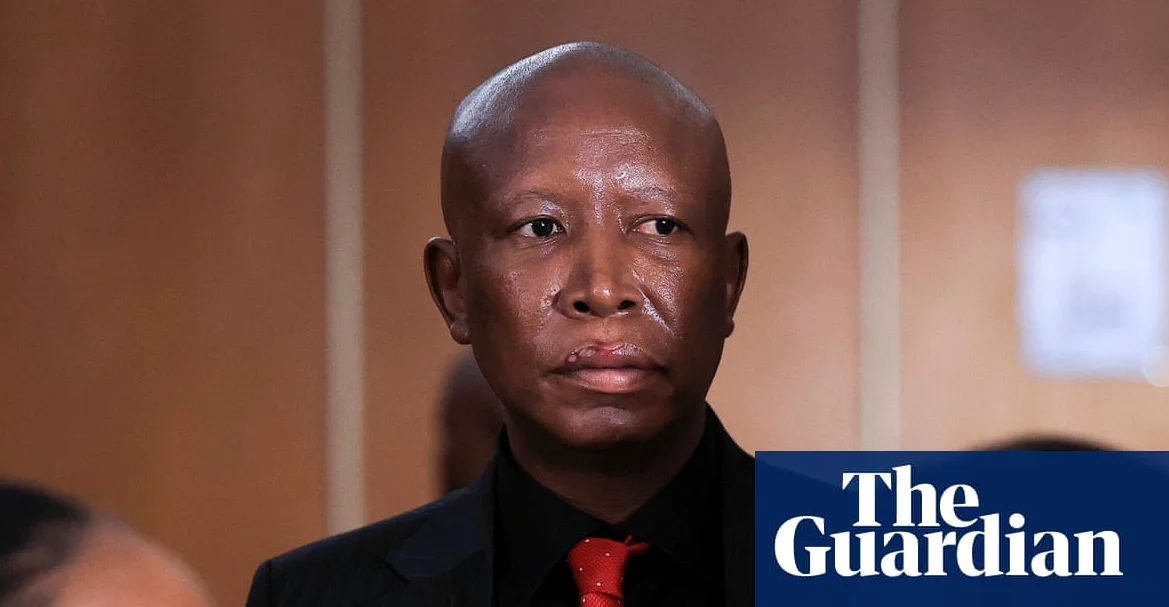
South African politician Julius Malema has been given a five-year jail term for a gun-related offence, according to a ruling by magistrate Twanet Olivier. The court heard that the incident was not impulsive or driven by anger, but rather a result of the ‘event of the evening,’ as Olivier described it. Malema’s lawyers had argued the shots were intended to be celebratory and that no one was harmed, but the magistrate emphasized the seriousness of the crime.
The Legal and Political Implications
The magistrate noted that the magnitude of the offence was significant, particularly given the risk posed to civilians, such as children playing in public spaces who could be caught in crossfire. She stated that the accountability on a public office bearer is much greater than that of an ordinary citizen. Any prison sentence longer than 12 months would bar Malema from being a member of parliament, although this would only take effect after all appeals had been exhausted.
Malema, the former leader of the African National Congress’s youth league, was found not guilty of the charges but was sentenced to five years for unlawful possession of a firearm and two years for unlawful possession of ammunition. He was also fined for three other offences, including discharging a firearm in a built-up area, with the possibility of prison time if the fines were not paid. The sentences would run concurrently.
The Reaction and Appeal Process
Malema was granted leave to appeal against his sentence, but not his conviction — his lawyers indicated they would petition a higher court for leave to appeal against the conviction as well. Shortly after the ruling. Malema’s legal team applied for leave to appeal, a request that was later granted.
Outside the court in KuGompo City. Formerly East London, hundreds of Malema’s supporters, known for wearing red clothing, gathered to witness the sentencing — the Economic Freedom Fighters (EFF), the party Malema leads, has accused the state of attempting to silence its leader through this legal action. The party has warned of potential protests if Malema is jailed.
Magistrate Olivier emphasized that the case was not about a political party but an individual. The maximum possible sentence for the charges was 15 years, but the five-year term handed down could be a major setback for the EFF, which has strong support among young South Africans who are frustrated by the persistent racial inequality since the end of white minority rule in 1994.
The Political and Social Context
Malema, a prominent figure in South African politics, has long been known for his fiery speeches and controversial stances. The court hearing was described as politically charged, with Malema himself attacking the magistrate personally, accusing her of being racist and of not reading the written arguments submitted by both sides. He claimed the court had been influenced by emotions and politics rather than by the facts.
State prosecutors had originally sought a 15-year sentence, but the magistrate’s decision of five years has sparked debate about the balance between justice and political influence. Malema’s sentencing could have far-reaching consequences for the EFF, which has been a vocal critic of the ruling party and has gained traction among young voters.
The case has highlighted the complex interplay between law and politics in South Africa, with Malema’s legal battle potentially shaping the future of the country’s political landscape. As the appeals process begins, the outcome will be closely watched by both supporters and critics of the EFF and its leader.






Comments
No comments yet
Be the first to share your thoughts