

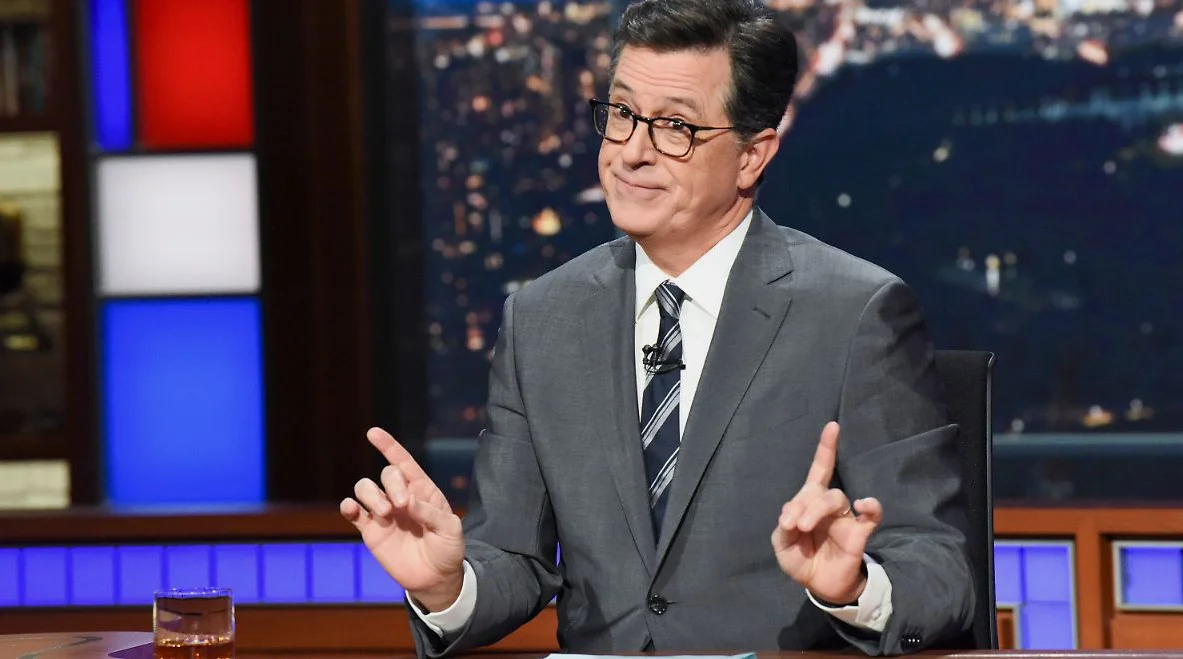
Stephen Colbert’s long-running CBS program, The Late Show with Stephen Colbert, aired its final episode on May 21, 2026, with a mix of celebration and controversy. The cancellation. Announced the previous July. Was officially attributed to financial challenges in the late-night television industry. But many, including guests and colleagues, saw the move as a response to Colbert’s sharp, ongoing critiques of former President Donald Trump and the broader political climate.
Final Episodes and Political Fire
Colbert’s penultimate episode featured a fiery performance by Bruce Springsteen, who criticized CBS’s parent company, Paramount, and its CEO David Ellison, as well as Ellison’s father Larry, a Trump ally. Springsteen, performing his anti-ICE anthem “Streets of Minneapolis,” called the decision “small-minded” and accused the company of not understanding the country’s values. Lyrics referenced “King Trump’s private army” and “Trump’s federal thugs,” highlighting the political undertone of the performance.
Colbert’s final episode also included a swan song performance of “Hello, Goodbye” with Paul McCartney, joined by Elvis Costello, Louis Cato, and Jon Batiste. The finale, taped at the iconic Ed Sullivan Theater in New York, ended with a visual effect of the entire venue being swallowed by a giant green wormhole. Colbert and McCartney together turned off the theater’s lights, marking the end of an era for the 33-year CBS Late Show franchise.
Industry Shifts and Political Pressures
Colbert, in a recent interview with The Hollywood Reporter, acknowledged that the cancellation came amid a broader decline in traditional network TV models but noted that “many believe there was another reason.” The timing of the decision coincided with Paramount’s $8.4 billion merger with Skydance, which required approval from the U.S. government. And, CBS had recently settled a $16 million lawsuit with Donald Trump—Colbert called it a “bribe in every sense of the word.”
Trump himself celebrated the cancellation on his social media platform, Truth Social, writing, “I love that they fired Colbert. His talent is even less than his ratings. Heard the next one is Jimmy Kimmel. Has even less talent than Colbert.” The president’s public glee over the move further fueled speculation that the cancellation was politically motivated rather than purely financial.
Legacy and Late-Night Future
Colbert’s career in late-night TV spanned nearly three decades, beginning with The Daily Show alongside Jon Stewart, followed by his own Colbert Report, and finally the Late Show. His unique brand of satirical critique, particularly of political figures and media, has left a lasting impact on the genre. Late-night colleagues including Jimmy Kimmel, John Oliver, Jimmy Fallon, and Seth Meyers appeared in the final episodes to express their support, with Kimmel saying, “Late night is not going to be the same without you.”
Colbert’s departure marks a significant moment in the evolution of late-night television. While CBS has not announced a replacement, the network is reportedly shifting its focus to digital and streaming platforms. Colbert, for his part, has hinted at future projects but has not disclosed details. In the meantime, he will focus on family—immediately following his final show, he was scheduled to join his family for a wedding in Washington, D.C.






Comments
No comments yet
Be the first to share your thoughts