

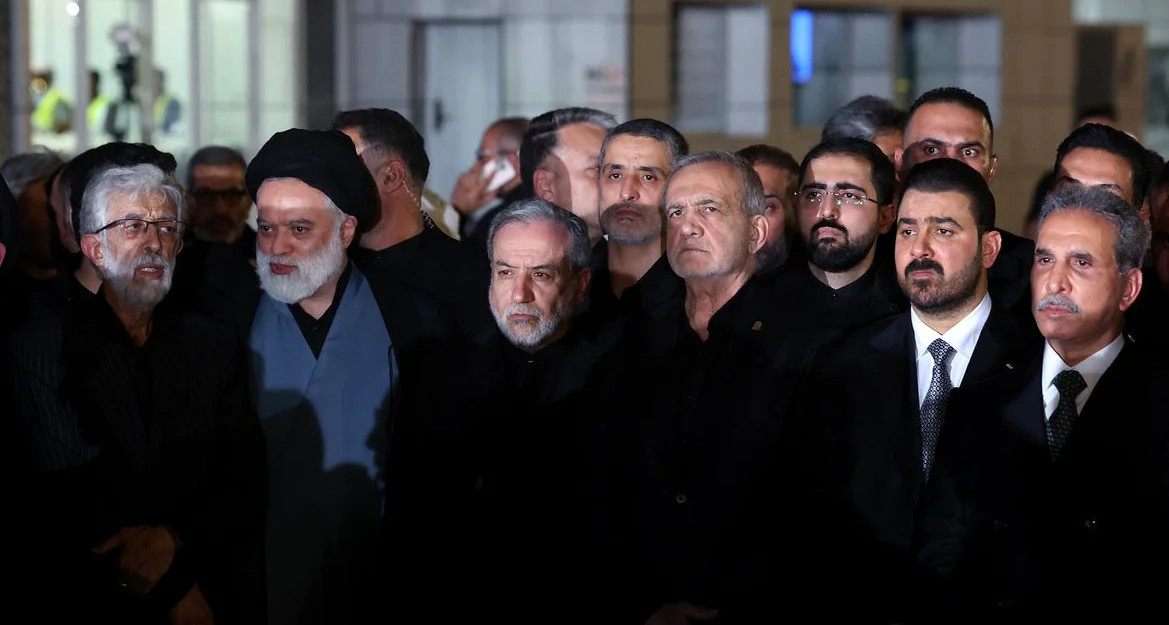
The U.S.-Iran ceasefire collapsed in early July, with both sides exchanging strikes and Iran threatening control of the Strait of Hormuz, a critical global oil transit point. Despite a June truce. Tensions remain high. With the U.S. maintaining that the deal is over, while negotiations continue behind the scenes, and the Strait of Hormuz, through which about a quarter of the world’s oil by sea flows, remains a focal point of the conflict.
Escalation in the Gulf
According to the maritime intelligence firm Windward, the recent fighting represents “the most significant escalation of the conflict since its opening phase” in late February and early March. Iran attacked three tankers working through the U.S.-protected route through the strait this week, a move analysts say pushes Washington and Tehran to the brink of renewed war. U.S. Energy Secretary Chris Wright stated on June 24 that Iran “will not have the ability to close the Strait of Hormuz going forward.”
U.S. military escorts have enabled between 5 million and 8 million barrels per day to exit the strait, up from pre-war levels of around 20 million bpd. Under the June interim deal. Iran had agreed to allow safe passage for commercial ships through the strait and to forgo tolls for 60 days in exchange for the U.S. lifting its naval blockade and temporarily easing oil sanctions. However, the truce broke down within weeks, and both sides have continued to accuse each other of violations.
Diplomatic Efforts and Intelligence Sharing
Regional mediators including Qatar. Pakistan, and other Middle Eastern countries are working to de-escalate tensions between the U.S. and Iran and revive negotiations on a nuclear deal. According to Axios. Qatari, Pakistani, Turkish, Egyptian, and Saudi officials have held multiple calls with U.S. and Iranian counterparts since Wednesday in an effort to calm tensions after renewed military actions. One regional source told Axios that “extensive diplomatic efforts” are underway to secure de-escalation and schedule another round of nuclear talks.
Separately, the Wall Street Journal reported that Israel recently shared intelligence with the U.S. indicating Iran was considering a new plot to assassinate President Donald Trump. The intelligence, if confirmed, would represent an escalation in the conflict. Iran has long vowed retaliation against Trump over the 2020 U.S. strike that killed Islamic Major Guard Corps Gen. Qassem Soleimani.
Alternative Routes and Economic Impact
Shipping giant Maersk announced on Thursday that it would resume Middle East-US East Coast (MECL) services via the Suez Canal, years after threats by Iran-backed Houthi forces in Yemen forced the company to abandon the transit route. U.S.-flagged container ships Maersk Denver and Maersk Chicago will be the first of the shipping giant’s vessels to transit the Suez Canal as part of the restored service.
The company has been under pressure to restore the Suez route to boost maritime traffic as the U.S.-Iran war has severely restricted ship journeys in and out of the nearby Persian Gulf. The Suez route links the Red Sea and the Mediterranean, cutting voyage times to some ports, including along the U.S. East Coast, by up to two weeks compared to the southerly route through the Bab el-Mandeb strait.
Meanwhile, Gulf states including the United Arab Emirates, Kuwait, and Iraq are urgently seeking alternatives to the Strait of Hormuz, including new pipelines and overland routes. Saudi Arabia is also considering increasing its global oil storage capacity. These efforts are driven by the ongoing losses in the billions and the urgent need to bypass the strait amid the blockade.
Iran, however, is reasserting its control over the strait, with the country’s leadership claiming it has the right to manage the waterway. The Dutch think tank HCSS has described the situation as “the largest and most complex energy shock in history.”
Despite the ceasefire collapse, technical talks between the U.S. and Iran continue. A U.S. official told Fox News on Thursday that despite Iran’s violations of the memorandum of understanding, “the United States is still committed to finding a resolution.”
Iranian Vice President JD Vance said Teheran had agreed to invite inspectors back into the country to monitor its nuclear program, though the Iranian government has denied any such agreement. The U.S. has emphasized that the key use in the strait is being taken away from Iran, which the country has long sought to control.






Comments
No comments yet
Be the first to share your thoughts