

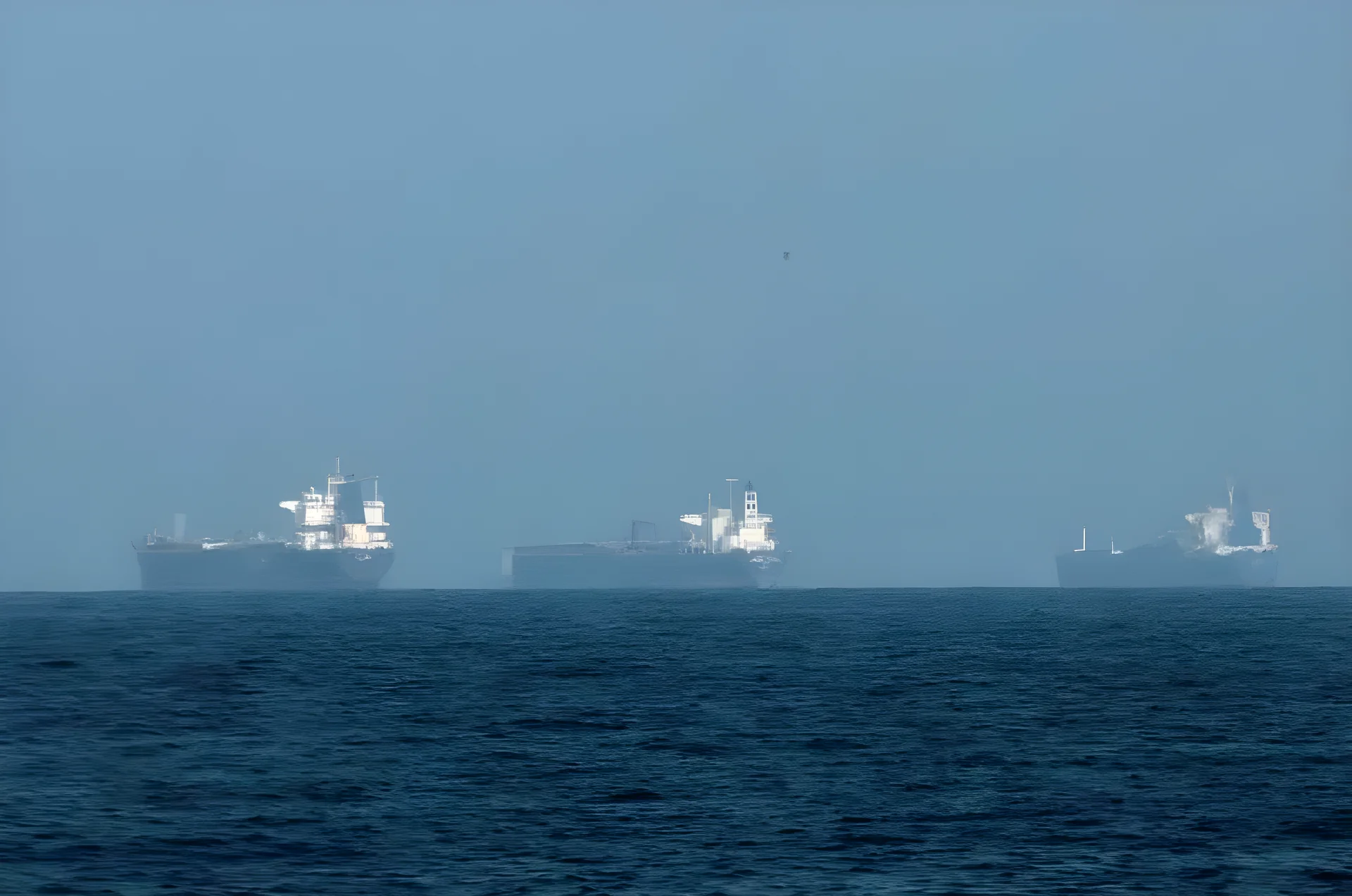
In February 2026, a single strike set off a chain reaction that led to widespread military retaliation by Iran against U.S. installations across the Middle East. The conflict, which began in the United Arab Emirates, quickly spread to Qatar, Bahrain, Saudi Arabia, Iraq, and Kuwait, creating a regional shockwave. With global energy markets already sensitive due to the war in Ukraine and a lowered threshold for military action, the simultaneous nature of the crisis has overwhelmed the capacity of global supply systems to adjust.
Impact on Global Energy Markets
The Strait of Hormuz, through which about 20 million barrels of crude oil and one-fifth of global LNG trade pass daily, is at the heart of the crisis. QatarEnergy alone exports 77 million tonnes of LNG annually, with projections reaching 142 million tonnes by 2030. A disruption in Hormuz could push Brent crude prices to between 120 and 130 dollars per barrel, and sustained blockage could drive prices up to 150 to 200 dollars, according to J. P. Morgan.
Bloomberg’s historical elasticity model suggests a 4% price increase for every 1% supply loss. This means that even a minor disruption could lead to significant price hikes. Asian LNG, which is priced using formulas tied to Brent crude, would see immediate price adjustments. At 73 dollars per barrel, Brent yields about 9.26 dollars per MMBtu, but at 120 dollars, LNG prices could rise to nearly 15 dollars per MMBtu.
Risks of Insurance and Shipping
Insurance costs have already surged, with war risk premiums for vessels transiting Hormuz rising from 0.25% to 0.50% of hull value. For a 100 million dollar LNG carrier, this could mean an additional 250,000 to 375,000 dollars per voyage. Even if the strait remains open, the lack of insurance coverage could create a de facto closure, as no vessel sails without coverage, and banks and ports require it.
According to a report, insurers have activated 7-day cancellation clauses for vessels transiting Hormuz, which further complicates the situation. This insurance withdrawal could severely impact global shipping, even if the strait is physically open.
Strategic Calculations and Political Fallout
The initial strategy behind the strike was to trigger a short, contained confrontation. However, the Iranian regime has shown resilience, with its security apparatus remaining functional. This shift has moved the focus from the military to the political arena, particularly in Washington, where sustained confrontation, rising energy prices, and congressional scrutiny could test the coherence of U.S. strategy.
The U.S. enters the crisis with an energy system in a state of flux. Crude production has fallen to 13.66 million barrels per day in December 2025, its lowest since June, while domestic demand has reached 20.85 million barrels per day, the highest since August. In contrast, natural gas production has surged to a record 135.9 billion cubic feet per day, highlighting a divergence between oil and gas fundamentals.
The Energy Information Administration expects U.S. crude production to decline to 13.5 million barrels per day in 2026. A Brent price above 100 dollars could eventually revive drilling activity, but only after a 6-9 month lag. The U.S. remains the world’s largest LNG exporter, but its ability to ramp up quickly is limited by pipeline bottlenecks and dependence on stable feedgas flows.
Geoeconomic Implications
Russia benefits from the crisis, as its energy exports are largely insulated from the Strait of Hormuz. Russian crude and LNG do not transit the strait, and pipeline gas to China remains unaffected by maritime chokepoints. In an environment where maritime risk premiums surge, Russia’s land-based export corridors become more attractive, strengthening its bargaining power in Asia.
China, on the other hand, faces immediate strategic concerns. Nearly 30% of its LNG imports come from Qatar, whose exports have been disrupted. A sustained blockage in Hormuz would strain Beijing’s relationship with Tehran if attacks on shipping continue. More than 70% of China’s oil imports depend on the Strait of Hormuz and the Strait of Malacca, and its LNG exposure is rising at a time when alternative suppliers are limited and maritime routes are increasingly fragile.
The crisis has reinforced U.S. dominance in global energy, as U.S. LNG becomes the only supply source that is both scalable and politically reliable for Asia and Europe. As the situation unfolds, the ability of the U.S. to maintain its energy exports will be crucial in shaping the global response to the crisis.




Comments
No comments yet
Be the first to share your thoughts