

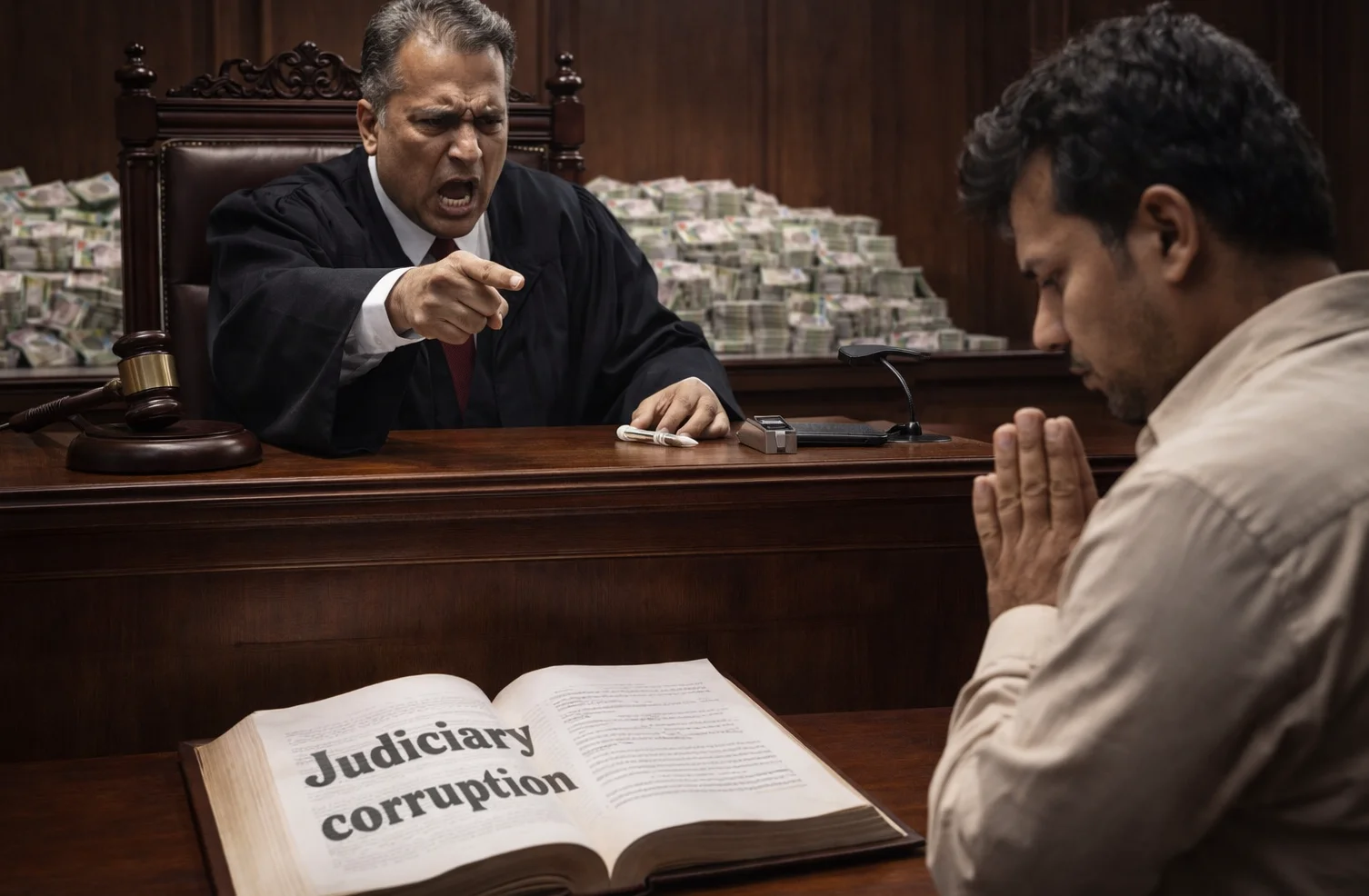
India’s Supreme Court has taken an unprecedented step by banning a Class 8 NCERT Social Science textbook for citing official data on corruption within the judiciary. The court, on February 26, 2025, issued show-cause notices to the Secretary of School Education and the NCERT Director, warning that the textbook could be considered a deliberate act of scandalizing the judiciary under the Contempt of Courts Act, 1971. The book, which listed 8,639 complaints against judges between 2016 and 2025, was ordered to be seized and removed from public access, with any future distribution deemed a breach of court orders.
Controversial Use of Contempt Powers
The Supreme Court, led by Chief Justice Surya Kant, invoked the Contempt of Courts Act to address the textbook’s content, which included data from the National Judicial Data Grid. The act allows the court to take action against actions deemed to scandalize or undermine its authority. The court’s decision has sparked debate over the misuse of legal powers and the implications for judicial independence.
The textbook cited figures from the Lok Sabha, where Law Minister Arjun Ram Meghwal had stated that 8,639 complaints were received against sitting judges from 2016 to 2025, with 1,170 complaints registered in 2024 alone. The Supreme Court’s response was to ban the book, despite the data being sourced from official government sources.
Judicial Backlog and Public Awareness
India’s judicial system is facing a severe backlog, with approximately 47 million cases pending in district and subordinate courts, according to the National Judicial Data Grid. High courts have around 6.24 million pending cases, while the Supreme Court has 81,000. The textbook aimed to inform students about these issues, highlighting the need for reform. However, the court’s decision has raised concerns about the suppression of critical information in education.
The DAKSH Centre for Public Interest Law has noted that at the current rate of case disposal, some high courts may take between 30 to 50 years to clear their backlogs, even without new cases. This has serious implications for citizens who may face long waits for justice, with some cases potentially taking a lifetime to resolve.
Legal and Institutional Implications
The Supreme Court’s use of the Contempt of Courts Act has drawn comparisons to the UK’s 2013 abolition of similar provisions. The UK Supreme Court had determined that a mature judiciary could withstand criticism without resorting to criminal law. In contrast, India’s Supreme Court used the same mechanism to suppress a textbook, raising questions about the balance between judicial authority and public accountability.
The Law Commission of India, in its 274th Report (April 2018), had been asked to examine the retention of the ‘scandalising the court’ provision. The Commission, led by a former Supreme Court judge, decided to retain it, arguing that India’s situation was different from the UK’s. This decision has been criticized by legal scholars and rights groups, who argue that it grants the judiciary unchecked power to self-policing.
The court’s suo motu power, which allows it to take up cases on its own initiative, has historically been used to address issues like custodial deaths and environmental disasters. However, its use in this instance has been seen as an overreach, with critics arguing that it has been used to silence a textbook rather than address systemic issues.
The Solicitor General assured the court that individuals who defended the textbook’s content would not be associated with NCERT or any government ministry in the future. This move has further fueled concerns about the suppression of dissent and the potential chilling effect on academic freedom.
The controversy has sparked a broader debate on the role of the judiciary in a democracy, the balance between judicial independence and public accountability, and the implications for the right to information. As the case moves forward, legal experts and civil society groups are closely watching the developments and the potential impact on India’s judicial system and education reforms.





Comments
No comments yet
Be the first to share your thoughts