

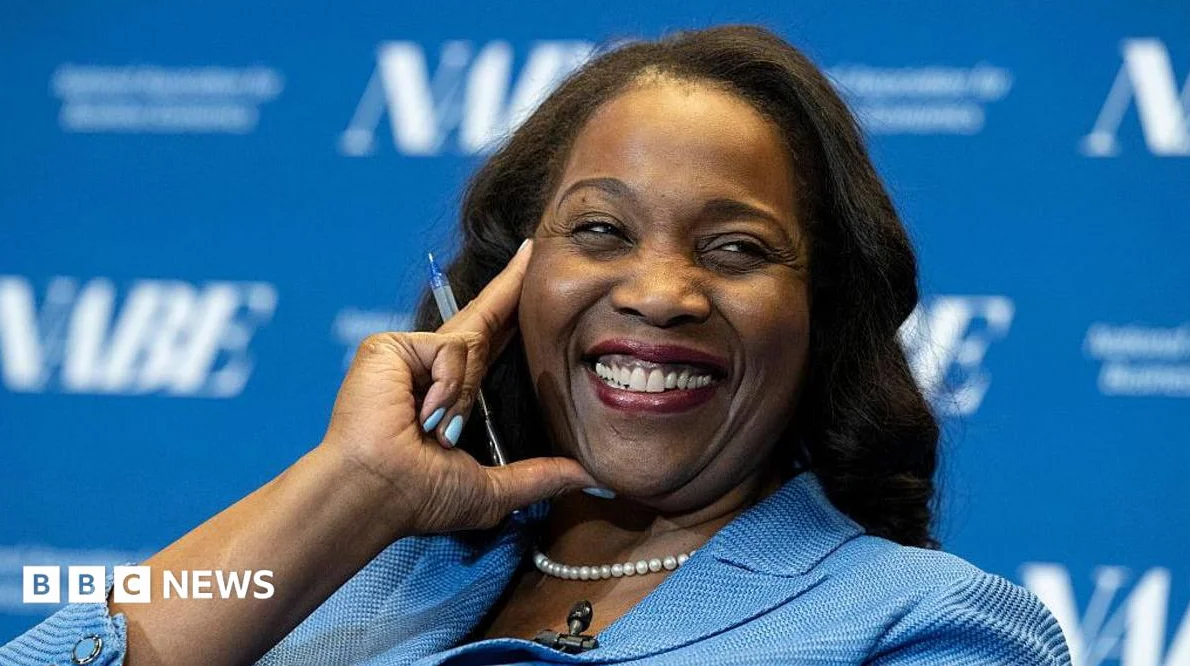
The U.S. Supreme Court ruled that former President Donald Trump’s attempt to fire Federal Reserve governor Lisa Cook was unconstitutional; the justices said Trump failed to provide Cook with the procedural protections required by statute, according to The Guardian. Cook, a Joe Biden appointee, is serving a 14-year term on the Fed’s board that was scheduled to expire in 2038, while she is the first Black woman to serve on the Federal Reserve board.
Background of the Dispute
Last August, Trump abruptly fired Cook on social media. The president claimed he had evidence that Cook committed mortgage fraud, an illegal practice where a homebuyer lists a second property as a primary resident to obtain a better mortgage rate. Cook denied the allegations and sued the Trump administration, saying it fired her without cause, According to Fox News, she had been accused of falsifying information related to three mortgages obtained before joining the Fed.
Cook, who graduated from Spelman College, has been described by economist Barry Eichengreen as “half economist and half historian.” She is fluent in several languages, including French, Russian, Spanish, and Wolof, a widely spoken language in Senegal.
Legal Proceedings and Precedent
Cook filed a lawsuit in a federal court in Washington, D.C., to block her removal from the powerful central bank. On September 9. A district court judge barred Trump from firing her while the case was pending, a decision later affirmed by a federal appeals court. The Supreme Court’s protection of the Fed decision is a departure from how the court has handled Trump in his second term, allowing the president broad power to carry out his agenda without congressional approval.
On Monday. The court also ruled that Trump had the authority to fire Rebecca Slaughter, a Democratic commissioner on the Federal Trade Commission, who was removed from her position before her term ended. The court has also allowed Trump to remove a Democratic-appointed member of the National Labor Relations Board (NLRB), leaving the powerful union board without a quorum needed to decide on labor disputes.
Career and Background
Before joining the Federal Reserve board, Cook was a tenured academic, teaching at Harvard University and the University of Michigan — she is an alumnus of Oxford and earned her doctorate from the University of California, Berkeley. Cook was also the chief economist in the Council of Economic Advisers under President Barack Obama from 2011 to 2012, Before that, she worked as a senior advisor on finance and development in the Office of International Affairs at the Treasury Department.
Cook joined the Fed in May 2022 and was reappointed in September 2023 for a term that will last until January 2038, and her removal by Trump was an unusual move given the long terms and protections afforded to Fed board members.





Comments
No comments yet
Be the first to share your thoughts