

 BBC
BBC 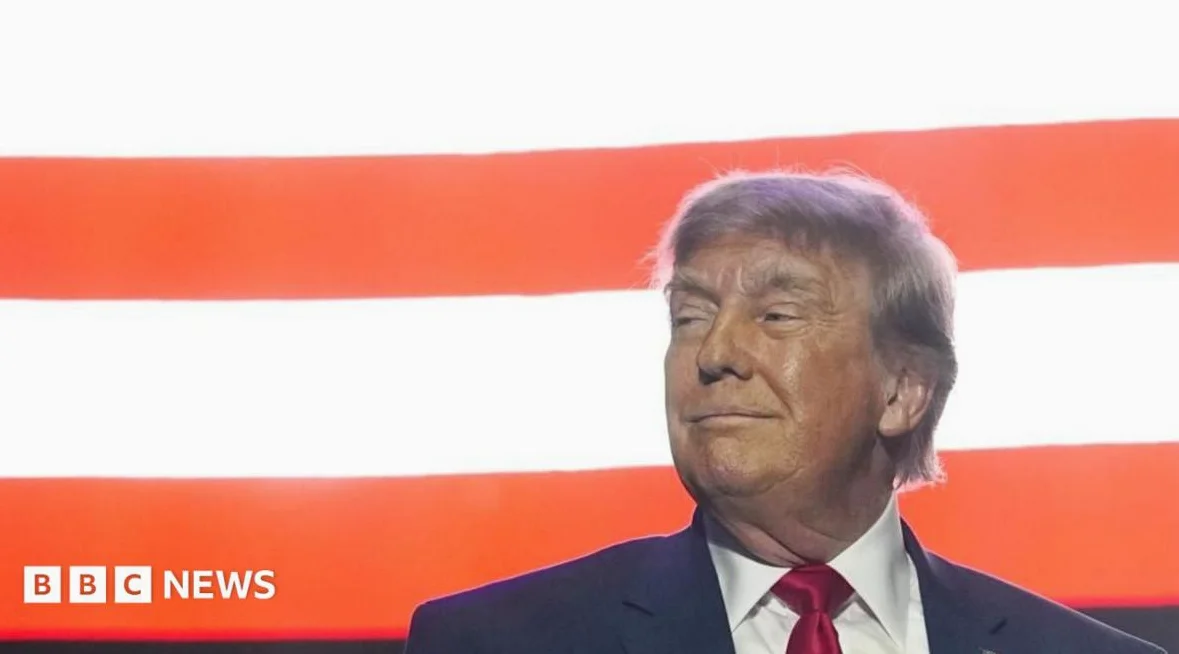
President Donald Trump’s response to the Supreme Court ruling against him on birthright citizenship was relatively mild. He described Tuesday’s decision as ‘too bad for our country’ and endorsed legislation to reinstate his proposed limits on the legal principle that anyone born in the US is a citizen. However, the likelihood of Congress acting on this is low, as Democrats would likely block it in the Senate, and even if passed, its constitutionality remains uncertain.
Trump’s Mixed Court Record
This ruling. While a setback for Trump. Concluded a Supreme Court term that largely continued a recent trend. The court’s conservative majority. Solidified during Trump’s first term. Has handed the president a series of major victories, systematically expanding executive power and shielding him—and future presidents,from prosecution for official actions.
Despite these wins. A few conservative justices joined the court’s three liberal justices to set limits on Trump’s immigration, trade, and law enforcement policies; these issues have long defined Trump’s political identity. On Tuesday, the court rejected his attempt to end birthright citizenship for the children of undocumented migrants and temporary visitors, a decision made by five of the nine justices.
Key Rulings and Reactions
In February, the court struck down Trump’s attempt to impose sweeping new tariffs on US trading partners by a six-to-three margin. Trump reacted angrily to that ruling, holding an impromptu press conference where he criticized three conservative justices as ‘lapdogs.’
In December, a different group of conservative justices,including Chief Justice John Roberts and Trump appointees Brett Kavanaugh and Amy Coney Barrett,joined with the liberals to block Trump from deploying National Guard soldiers to Chicago to enforce immigration law and combat crime. In each of these cases, Trump and his team tested the limits of presidential authority using novel legal theories.
Trump’s attempt to end birthright citizenship contradicted over 125 years of Supreme Court precedent. His use of executive orders to impose and retract tariffs clashed with recent rulings requiring major policies to be explicitly approved by Congress. His attempt to deploy the National Guard over objections from local officials was halted by the court, which upheld a lower court’s ruling.
Incremental Gains and Future Implications
Beyond these landmark rulings, the court has also granted Trump more incremental,but significant—expansions of presidential power. Kate Shaw, a professor of law at the University of Pennsylvania, noted that the court has become ‘a very strong, very conservative court with the broadest conception of presidential power that we have ever seen.’
On Monday, the court’s six conservatives ruled that Trump could dismiss members of independent federal agencies based on policy disagreements. While an exception was made for the Federal Reserve, the decision increases presidential control over federal agencies overseeing labor, elections, communications, environment, and financial regulation.
Although Trump did not win the high-profile birthright citizenship case, the court’s conservative majority has consistently boosted his power over immigration enforcement. Last week, it upheld the revocation of temporary protected status for Haitian and Syrian immigrants and made it harder for refugees to claim asylum, requiring them to be physically present in the US.
The court also issued rulings that will benefit Trump’s fellow Republicans in upcoming elections. While it did not block the counting of mail-in ballots postmarked by election day but received later, it loosened campaign finance restrictions, potentially giving the Republican Party,which has over $125 million in funds,a significant edge in midterms.
In April, the court struck down a key provision of the 1965 Voting Rights Act, ruling that racially motivated redistricting was unconstitutional. This has allowed Republican-led southern states to redraw congressional districts in ways that favor their party’s candidates.
Despite frustrations with the court and the three justices he appointed, Trump has gained authority that no previous president has wielded. With rumors of a potential retirement among senior conservative justices, Trump may still shape the judiciary further.





Comments
No comments yet
Be the first to share your thoughts