

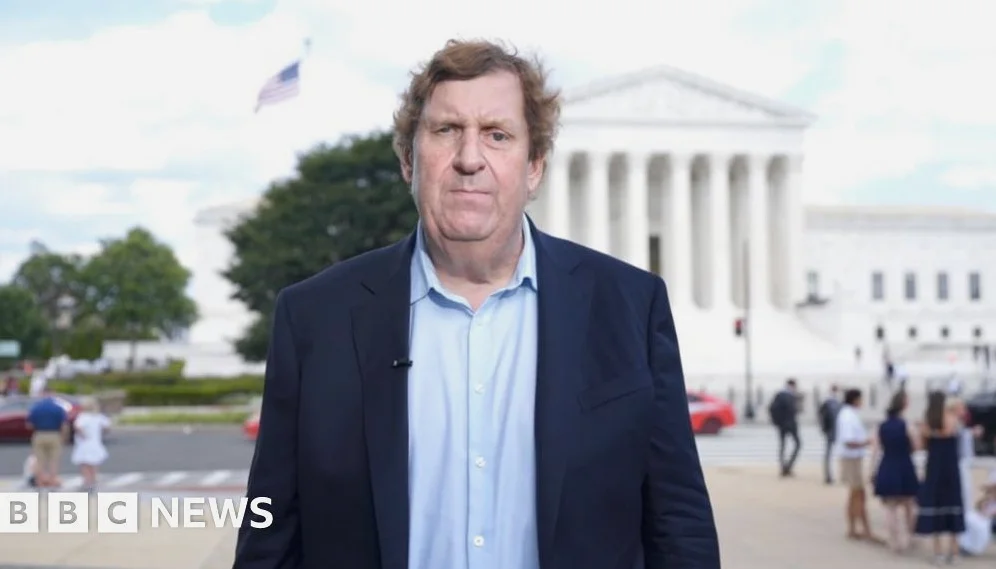
The U.S. Supreme Court on Tuesday blocked President Donald Trump’s contentious attempt to limit citizenship at birth for those born on U.S. soil, delivering a major blow to his agenda. The court ruled 6-3 that the executive order Trump issued on January 20, 2025—the first day of his second term,was unlawful. Chief Justice John Roberts delivered the majority opinion, joined by liberal justices Sonia Sotomayor, Elena Kagan, and Ketanji Brown Jackson, as well as conservative justice Amy Coney Barrett. Conservative justice Brett Kavanaugh concurred with the judgment but dissented in part.
14th Amendment Upheld, No Constitutional Overreach
The ruling centered on the 14th Amendment, which has long been interpreted to grant birthright citizenship to almost anyone born in the United States. Roberts wrote that there was “scant evidence” supporting the Trump administration’s reimagining of the amendment, which sought to exclude children of undocumented immigrants. The 14th Amendment was enacted after the Civil War to ensure that everyone, including former slaves, would have the right to freely participate in the political community. “We keep that promise today,” Roberts said.
Three conservative justices,Clarence Thomas, Samuel Alito, and Neil Gorsuch,filed dissenting opinions, arguing that the 14th Amendment would allow Trump’s executive order. Thomas’s dissent was the longest in the court’s history, spanning nearly 90 pages. Trump criticized the ruling as “too bad for our Country” and urged Congress to take up the matter legislatively, suggesting another avenue to keep the issue alive.
Trump’s Agenda Faces Third Major Court Setback
This is the third significant Supreme Court loss for Trump in recent months. Earlier, the court invalidated his sweeping tariffs and barred him from immediately firing Lisa Cook from the Federal Reserve. Despite a 6-3 conservative majority on the court, including three justices appointed by Trump, the court has not ruled in his favor in this case or the recent high-profile rulings.
Trump’s executive order aimed to override the U.S. Constitution, which it could not do. His administration has argued instead that the order interprets the Constitution correctly. The order immediately drew lawsuits from Democratic state attorneys general and the American Civil Liberties Union (ACLU), which argued in front of the court during April’s oral arguments in Trump v Barbara, a class-action challenge brought by parents of children who would be affected by the change.
Congress Now the Focal Point
Trump called for Congress to act immediately on the issue, saying that “no long and unwieldy constitutional amendment is necessary.” He pledged “complete and total support” for any legislative effort to end what he called “expensive and unfair” birthright citizenship. However, Congress remains deeply divided, and any attempt to rewrite or revoke birthright citizenship would require bipartisan support, which has been elusive.
Dismantling birthright citizenship is a key facet of Trump’s agenda, which he has pursued since the start of his second term. The Supreme Court’s decision now shifts the battlefield to Capitol Hill, where any legislative action will face significant hurdles given the current political climate.




Comments
No comments yet
Be the first to share your thoughts