

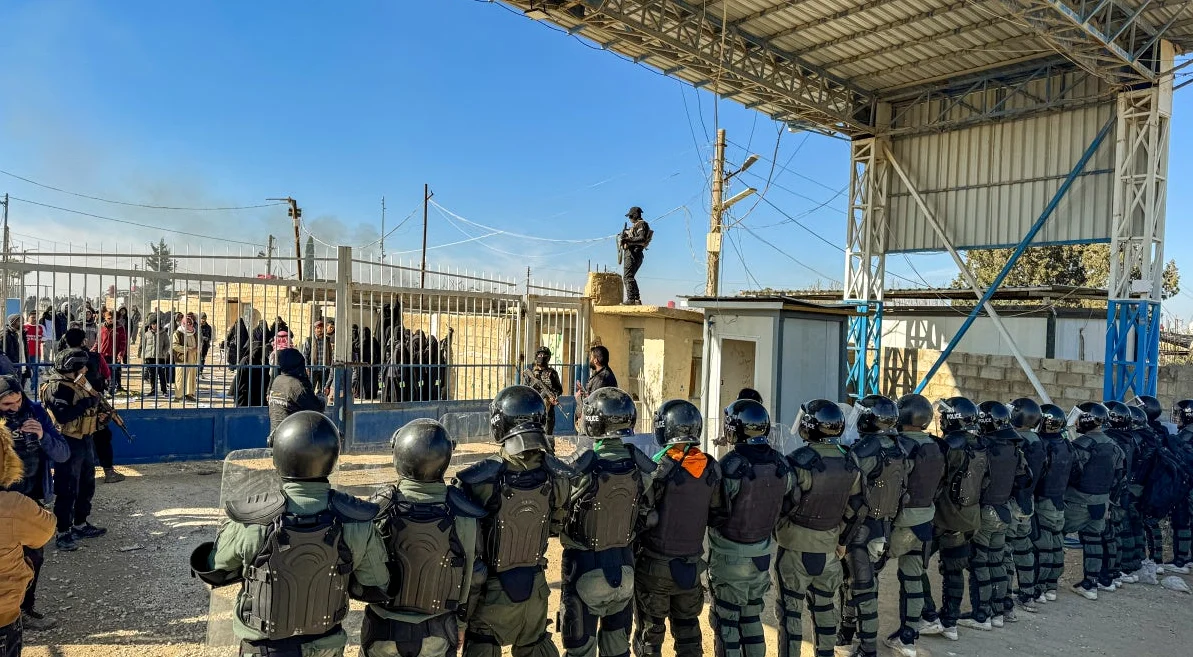
The sudden closure of two camps in northeast Syria housing 8,500 people, including women and children linked to ISIS, has left thousands in limbo with no clear path forward, according to Human Rights Watch. On January 30, 2026, the Syrian government announced that the al-Hol and Roj camps would be imminently closed. Most residents reportedly left in a largely unplanned and chaotic manner, with authorities stating on February 22 that they had fully evacuated and shut down the al-Hol camp.
Conditions in the Camps
The camps have long housed thousands of women and children, most of whom have never been charged with a crime and were detained for years in life-threatening conditions because their countries failed to repatriate them. Human Rights Watch has documented reports of beatings, threats, and the separation of children from their mothers, with some accounts describing guards conducting near-nightly raids.
According to Adam Coogle, deputy Middle East director at Human Rights Watch, the closure of the camps has exposed women and children to serious risks, including trafficking, exploitation, and recruitment by armed groups. ‘For years, many governments claimed that difficulties negotiating with a non-state actor in charge of the camps was why they couldn’t repatriate their citizens, but now that excuse won’t hold,’ he said. ‘Seven years is a long time to kick the can down the road. These countries need to bring their citizens home.’
Until mid-January, the camps housed approximately 28,000 people. About 12,500 are foreigners from more than 60 countries; 4,000 of them are Iraqi. Roj camp remains under the control of the Kurdish-led Syrian Democratic Forces (SDF) and is also expected to close. Human Rights Watch spoke with four foreign women in the camps and five employees of organizations working in the camps between November 2025 and February 2026.
Raided and Traumatized
In Roj camp, those interviewed said that guards have conducted near-nightly raids, beating and threatening detainees, and separating boys from their mothers. Three women in Roj camp, which houses 2,300 foreign women and children, said they have been experiencing near nightly raids by the Asayish, Kurdish internal security forces, which involve beatings, destruction of property, verbal harassment, and threats, theft, and extortion.
On February 9, one woman said, armed men kidnapped her neighbor’s two sons and refused to return them unless their mother paid US$2,000. ‘When they returned the boys, the oldest one was beaten and bloody,’ she said. A Trinidadian woman described a raid on January 31, where security forces ‘shooting in the air’ then banging on tents and ordering women to come out. She said the women were gathered in a playground in freezing temperatures while guards insulted them.
She said that boys age 11 and over were separated from their mothers and beaten and quoted a guard saying, ‘this is the last day you are going to see these boys, we are going to take them away and kill them.’ She said guards forced the boys to put their heads down and arms behind their backs ‘like prisoners,’ while searching women in groups. ‘They started ripping off people’s jackets. They started slapping me and hitting my head, pulling off my hijab.’ She said the raid lasted four and a half hours.
Repatriation Efforts and Statelessness
Human Rights Watch has found that many of the children who were returned to their countries are reintegrating successfully. However, some countries have long ignored the call to repatriate their citizens, while others are trying to ensure that their citizens are never able to return. The United Kingdom and Denmark have revoked the citizenship of many or some of their nationals, leaving several stateless. Australia has recently confirmed that it will not support the repatriation of 34 Australian women and children with alleged links to ISIS, with the government saying it will provide ‘absolutely no support.’
Australian authorities have also issued a temporary exclusion order against at least one citizen in the camps, leaving the person effectively stateless. ‘This will by default happen to 100 percent of the women who will be prosecuted upon return,’ said Beatrice Eriksson, cofounder of Repatriate the Children. ‘These women have been 24/7 with their children since they were born, and in many cases, they are the only caregiver. Many say they don’t want to add that trauma of separation to their children when they have already gone through so much, but what is the alternative? Stay in Syria and settle there?’
Meanwhile, Iraq ramped up repatriation efforts following the fall of the Syrian Assad government in December 2024. At its peak in 2019, al-Hol housed around 31,000 Iraqis. On February 9, Iraq’s National Security Adviser, Qasim al-Araji, said Iraq had repatriated all but 300 to 350 families from al-Hol. Iraqis are transferred to a camp in Ninewa Governorate, for security screening and rehabilitation.
Separately, on January 21, United States armed forces began transferring 5,700 male detainees, including Syrians, Iraqis, and third country nationals, from northeast Syria to Iraq for trial. Iraq’s Supreme Judicial Council said they include 157 boys under 18. A few hundred other boys and young men are held in so-called rehabilitation centers, most after being forcibly separated from their mothers in the camps.
All governments should urgently ensure the repatriation of their nationals. Pending repatriation and possible camp closures, all parties to the conflict should cooperate to ensure the well-being of camp residents and take urgent steps to improve the dire conditions. Anyone unlawfully detained should be immediately released or detained according to law including ensuring full due process rights for anyone charged with crimes.
‘After years of terrible conditions in the camps, women and children are fleeing in fear, with nothing, and could risk further ill-treatment,’ Coogle said. ‘Unless there is evidence they have committed a crime, all residents regardless of nationality need to be given support to return, reintegrate, rehabilitate, and rebuild their lives.’






Comments
No comments yet
Be the first to share your thoughts