

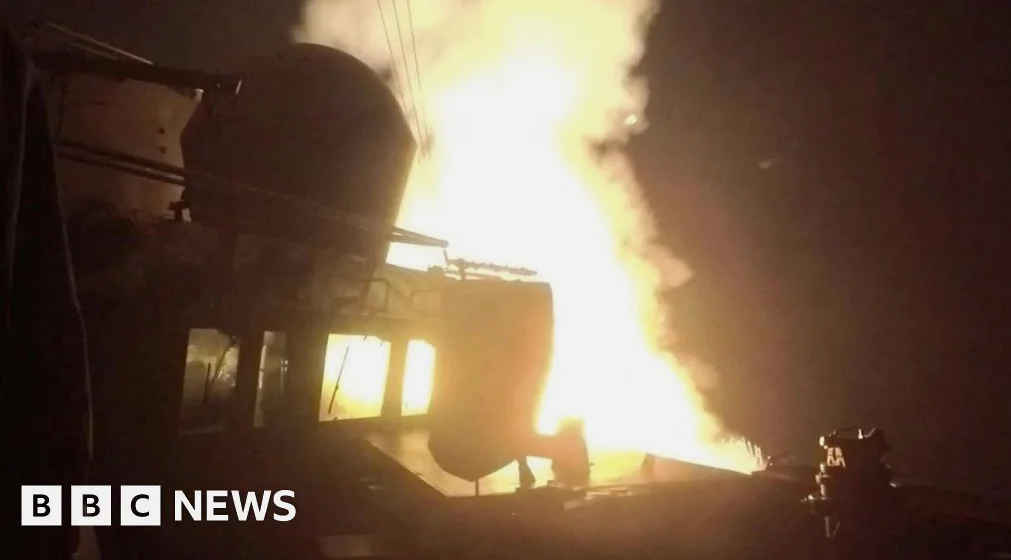
Tensions between the U.S. and Iran have escalated after the U.S. launched airstrikes on Iranian military and surveillance sites, and In response, Iran’s Islamic Major Guards Corps (IRGC) navy attacked two oil tankers in the Strait of Hormuz, a critical global energy chokepoint. The U.S. Central Command (Centcom) described the strikes as “self-defense” against “continued Iranian aggression.”
U.S. and Israel Launch Coordinated Operation
According to reports. The operation,dubbed “Operation Epic Fury” by the U.S.,began before 10 a.m. local time on Feb. 28 with coordinated strikes by U.S. and Israeli forces. The first wave targeted Iranian military leadership and key infrastructure, including missile and nuclear facilities, but Air-raid sirens were reportedly activated only after the initial wave had already struck. The operation was authorized by U.S. President Donald Trump the previous afternoon, following intelligence assessments that suggested Iran was accelerating its nuclear development and launching renewed proxy attacks on Israel.
Tehran Warns of Retaliation, Threatens Ships in Strait
In response to the U.S. strikes, Iran’s top military command issued a warning that all vessels—including oil tankers and commercial ships,transiting through the Strait of Hormuz would be targeted. The IRGC navy confirmed it had struck two oil tankers it claimed were making an “illegal passage.” The Strait of Hormuz is one of the world’s most vital shipping lanes, through which about 20% of the world’s oil is transported. Hours before the latest U.S. attack, Trump had warned on Truth Social: “We hit them hard yesterday and we’re going to hit them hard again today.”
Iranian President Masoud Pezeshkian responded to Trump’s comments by stating that Iran “will stand firm against any pressure or threat.” The Iranian foreign ministry also accused the U.S. of “damaging the diplomatic process through the contradictory message it sends.”
Concerns of Regional Escalation and Oil Market Impact
Analysts warn that the conflict could widen, with the potential for U.S. and Israeli forces to target Iranian nuclear facilities more directly. The U.S. has not publicly released detailed evidence supporting its claims of Iranian nuclear advancements. Military analysts have noted that only the U.S. has the capability to deliver bunker-busting bombs capable of penetrating deep Iranian nuclear sites, such as Fordow.
Meanwhile, South Korea’s economic dependence on oil imports from the region,about 40% of its petroleum comes from Iran,has raised concerns about the potential for an oil shock. If the conflict drags on, the impact on global energy markets could be severe. In a video posted on Truth Social, Trump stated that the goal of the operation is to “remove the imminent threat posed by the Iranian government” and to “protect the American people.”
Iran’s state media reported that the country is preparing “an overwhelming response” to the U.S. and Israeli attacks. Israel’s defense minister also confirmed that the country had launched a preemptive missile strike against Iran. U.S. defense officials confirmed that the U.S. was conducting a “strike campaign” against Iran from both sea and air.






Comments
No comments yet
Be the first to share your thoughts